

Contents
The Evolution of the Microsoft-OpenAI Partnership: A Win for the Global Tech Ecosystem?
The relationship between Microsoft and OpenAI is entering a transformative new phase—one that could fundamentally rewrite the balance of power in the artificial intelligence market. By restructuring their collaboration, the AI startup now has the freedom to partner with some of its biggest historical competitors.
For years, this alliance has been the bedrock of the generative AI boom. However, changing market dynamics and regulatory pressures are forcing both companies to adapt their strategies for long-term growth and innovation.
Breaking the Exclusivity: OpenAI Expands Beyond Microsoft
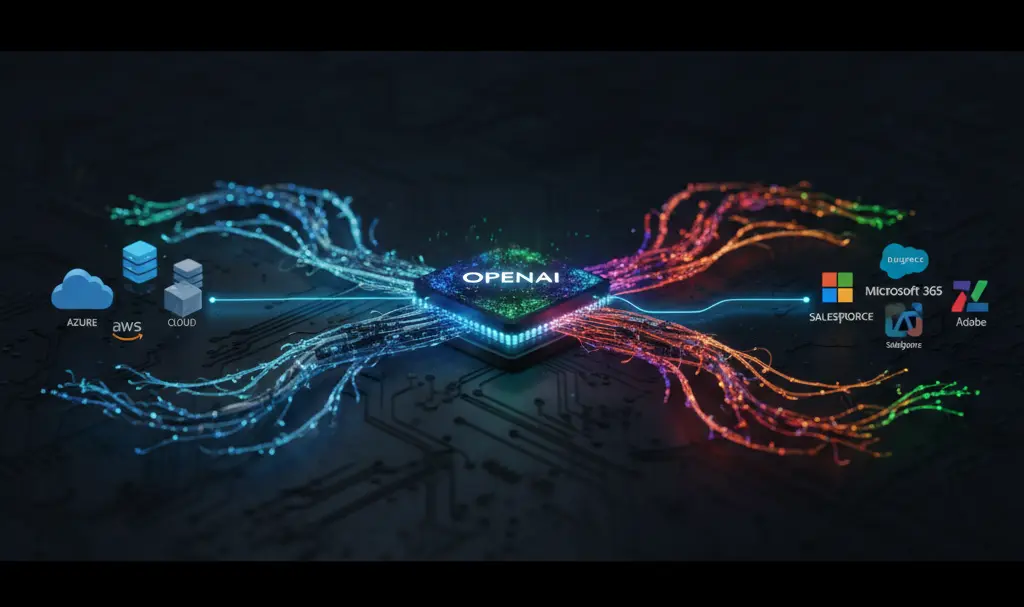
Microsoft and OpenAI have agreed to a major overhaul of their multi-year partnership. Previously, their contract granted Microsoft exclusive rights to sell and distribute the AI models developed by the creators of ChatGPT. The new agreement abolishes these restrictions.
Thanks to this newfound independence, OpenAI is actively negotiating contracts with other tech giants, most notably Amazon. A joint statement from Microsoft and OpenAI highlighted that the revised agreement aims to simplify their partnership, focusing on flexibility, certainty, and delivering the broad benefits of AI to the world.
Key Changes to the Collaboration Agreement
The revised terms bring several critical adjustments to how these two entities operate together. This strategic pivot highlights how Microsoft is shifting its strategy in the AI revolution to accommodate a rapidly changing competitive landscape.
- End of Sales Exclusivity: OpenAI can now host and offer its models through alternative cloud computing providers.
- Revenue Share Sunset: Reports indicate that Microsoft will stop paying a revenue share to OpenAI after 2030.
- Continued Cloud Reliance: Despite the new freedom, Microsoft Azure will remain a primary cloud partner on paper until 2032, securing Microsoft’s ongoing access to foundational technologies.
- Removal of the AGI Clause: A previous stipulation allowed OpenAI to renegotiate or dissolve obligations if Artificial General Intelligence (AGI) was achieved. This clause has been eliminated, providing a more predictable financial roadmap for both parties.
Why This Shift Matters for the AI Industry
OpenAI’s ability to collaborate with a broader spectrum of technological partners will send shockwaves through the cloud computing and enterprise AI sectors. Soon, OpenAI’s powerful language models are expected to be natively integrated and more widely accessible within Amazon Web Services (AWS) and other competing infrastructures.
Furthermore, OpenAI is aggressively expanding its footprint by partnering with data giants like Oracle and hardware leaders like NVIDIA. The company is even exploring the consumer hardware space, reportedly working with supply chain providers closely associated with Apple. This aggressive expansion is necessary to fulfill the broader vision of Sam Altman, where AI transforms the labor market on a global scale through widespread adoption.
Microsoft’s Strategic Rebalancing and Regulatory Relief
Microsoft is certainly not resting on its laurels. While loosening its grip on OpenAI, the enterprise giant is heavily investing in its proprietary AI models, such as the lightweight Phi series. It is also embracing open ecosystem principles by integrating models from rival companies—including Anthropic—directly into its business software suite.
Perhaps the most immediate benefit for Microsoft is regulatory relief. By moving away from an exclusive distribution model, Microsoft sends a clear message to antitrust regulators in the United States and the European Union. Relinquishing exclusive control demonstrates that the commercial AI market remains open, highly competitive, and free from monopolistic bottlenecks.

Frequently Asked Questions (FAQ)
Why was the AGI (Artificial General Intelligence) clause removed from the agreement?
The original AGI clause was designed to let OpenAI break ties with Microsoft if it achieved human-level AI, ensuring the technology benefited humanity rather than a single corporation. Removing it likely provides Microsoft with more financial certainty and reduces the risk of OpenAI suddenly severing the partnership, while giving OpenAI more immediate operational flexibility.
Will Microsoft Azure users lose access to OpenAI models?
No. Microsoft remains a primary cloud partner for OpenAI until at least 2032. Azure enterprise customers will continue to have full access to current and future OpenAI models, but they will now see these same models offered on competing cloud platforms like AWS and Google Cloud.
How does ending exclusivity help Microsoft with antitrust regulators?
Regulators in the US (FTC, DOJ) and the EU (European Commission) have been heavily scrutinizing the Microsoft-OpenAI partnership over concerns that it creates an unfair monopoly in the AI space. By allowing OpenAI to work directly with competitors like Amazon and Oracle, Microsoft can argue that it does not control the startup or stifle competition in the broader AI market.
Source: Reuters, independent elaboration. Opening photo: Gemini
About Post Author
