

Contents
Google Cosmo Leaked: Everything You Need to Know About the Offline AI Assistant
In early May 2026, something completely unexpected appeared on the Google Play Store: Google Cosmo, a brand-new application from the Mountain View tech giant. Even more intriguing, the app vanished from the platform just as quickly as it arrived. However, a few lucky users managed to download and test it before it was pulled. Here is a deep dive into what the app is and why it is generating so much buzz in the tech community.
What Exactly is Google Cosmo?
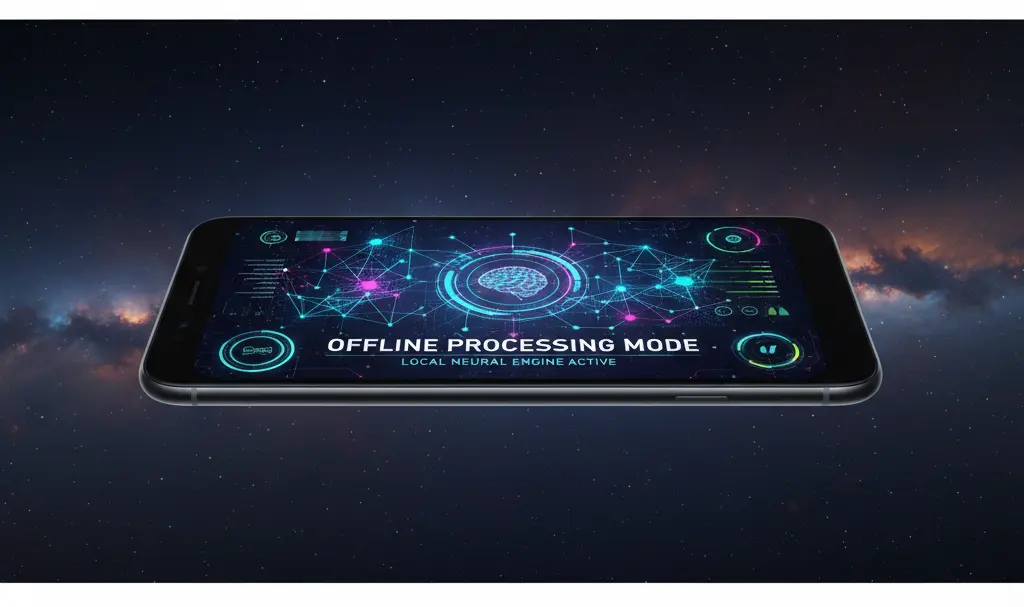
In its original leaked build, Google Cosmo occupied a substantial 1.13 GB of internal storage. While that is quite large for a standard mobile app, the massive file size exists for a very good reason. Unlike cloud-dependent assistants, Google Cosmo houses a powerful local AI model—specifically a variant of Gemini Nano—that allows it to function entirely offline without an internet connection.
This represents a massive shift toward on-device processing. While users have recently enjoyed server-side enhancements like the Google Gemini quick access update, Cosmo takes speed and privacy to a new level by keeping your data local.
Google just leaked COSMO…
> Local Gemini Nano
> Screen access
> Voice match
> Recall
> Browser agent
> Deep research
Then it vanished.
Android is becoming an AI agent👀— Min Choi (@minchoi) May 1, 2026
Key Features of the Leaked App
The brief release window gave tech enthusiasts enough time to uncover a comprehensive suite of powerful features. The leaked version of Google Cosmo included:
- Progress tracking: Seamlessly managing and monitoring different lists, such as ongoing grocery runs or project tasks.
- Automated drafting: Generating full documents and texts automatically on-device.
- Calendar integration: Instantly parsing context to add events and reminders directly to your schedule.
- Browser automation: Executing multi-step tasks using your mobile web browser.
- Time management: Automatically adding timers and stopwatches for time-sensitive activities.
- Deep research suggestions: Proposing comprehensive, deep-dive research whenever the user begins discussing complex or nuanced topics.
- Local media search: Scanning and retrieving specific photos stored strictly on the device’s internal memory.
- Integrated web queries: Sending traditional Google Search queries directly through the Cosmo interface.
- Contextual explanations: Breaking down complex jargon, slang, and acronyms in real-time.
- Enhanced local context: Providing background information on events and contacts based entirely on local device memory—a robust evolution similar to the Google Gemini memory import feature explained previously.
- Fact recall: Remembering past events, dates, and facts mentioned by the user.
- Local summarization: Condensing long, saved conversations into quick summaries using the offline AI model.
Flexible Operation Modes: Local, Hybrid, and Online
One of the most significant advantages of Google Cosmo is its flexibility. The application can operate in multiple distinct modes. Users who prioritize privacy or lack a stable connection can rely entirely on the local AI model (which would presumably receive periodic patches through Google Play updates).
Alternatively, there is a hybrid mode that processes basic text offline while tapping into advanced online models for heavier lifting. Finally, users can switch to a fully online mode, offering an experience parallel to what we currently expect from the standard Google Gemini application.
What Does This Mean for the Future of Gemini?
It remains difficult to predict exactly how Google will market Cosmo to mainstream users, especially since Gemini is already heavily integrated into the Android ecosystem. Will it be a premium, privacy-focused alternative, or an underlying system framework?
If Google plans to officially unveil this localized AI powerhouse, we can likely expect a grand announcement at Google I/O 2026, scheduled for May 19, 2026. Until then, Cosmo serves as a fascinating glimpse into the offline future of mobile artificial intelligence.
Frequently Asked Questions (FAQ)
How does Google Cosmo differ from the standard Google Gemini app?

Unlike the standard Gemini app, which relies primarily on cloud processing, Google Cosmo features a robust 1.13 GB local AI model. This allows it to perform complex, privacy-sensitive tasks—like summarizing personal conversations and automating device tasks—entirely offline without requiring an active internet connection.
Is Google Cosmo safe to use since it accesses local device memory?
Because Google Cosmo relies on a local, on-device AI model, your sensitive data (such as photos, private conversations, and calendar events) never actually leaves your phone. This offline-first approach significantly enhances user privacy by eliminating the need to send personal information to external cloud servers for processing.
Will Google Cosmo replace the current Google Assistant or Gemini?
It is currently unclear how Google intends to position Cosmo. Its heavy focus on offline processing and deep system access suggests it might serve as a specialized, ultra-private companion tool or a foundational Android framework rather than a complete replacement for cloud-based tools like Gemini. More concrete details are expected to be revealed at Google I/O 2026.
Source: 9to5Google | Opening photo: Gemini
About Post Author
