

Contents
A Revolutionary Plant-Based Source for Active Vitamin B12
A newly developed strain of spirulina is poised to become one of the most significant achievements in the field of sustainable nutrition. Scientists have announced that specially cultivated microalgae can now produce active vitamin B12 at levels comparable to high-quality beef.
For decades, finding a reliable, non-animal source of this vital nutrient has been the holy grail of plant-based nutrition. This breakthrough promises to reshape how we approach dietary supplements and sustainable food production on a global scale.
How Scientists Cracked the Spirulina B12 Code
An international team of researchers, led by Asaf Tzachor from Reichman University, has developed a novel method for cultivating spirulina that yields a biologically active form of vitamin B12. This is a monumental discovery for the nutritional science community.
Historically, traditional spirulina has been heavily criticized by nutritionists regarding its B12 content. Standard spirulina primarily contains “pseudo-B12″—a compound that structurally resembles vitamin B12 but is virtually useless to the human body. In fact, pseudo-B12 can sometimes interfere with the absorption of true B12, masking deficiencies in blood tests.
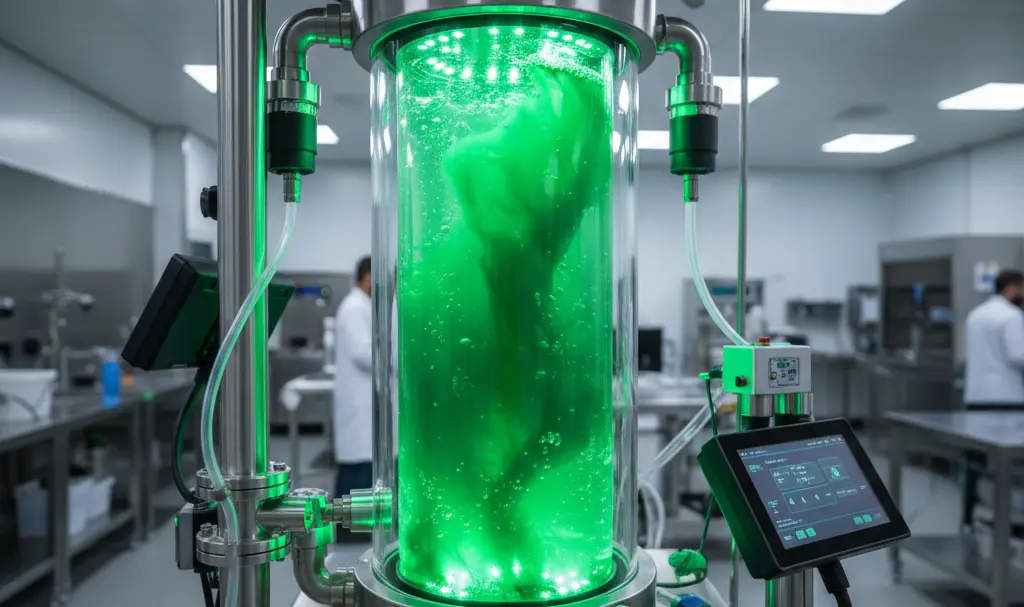
Recent studies demonstrate that precisely controlled environmental conditions can alter the metabolism of microalgae without the need for genetic modifications. The researchers utilized advanced closed photobioreactors to achieve this.
The Role of Closed Photobioreactors
Photobioreactors are enclosed cultivation systems that allow scientists to strictly manage environmental variables. By precisely controlling the light spectrum and intensity during the spirulina cultivation process, researchers successfully stimulated the algae to synthesize the highly sought-after active vitamin.
The results have been incredibly promising. Over 98% of the vitamin B12 present in this new spirulina strain is the biologically active form. Furthermore, its concentration is directly comparable to the levels found in beef. This is remarkable news, particularly for individuals who are actively reducing their intake of animal products.
As food technology scales up, maintaining material safety in cultivation and packaging is paramount. Just as researchers must use non-toxic, highly regulated materials to grow these algae, consumers must also be mindful of food storage safety at home—such as understanding why certain plastic containers should never be heated to avoid chemical leaching.
Why Vitamin B12 is Essential for Human Health
Vitamin B12 is naturally found almost exclusively in meat, dairy, eggs, and other animal-derived products. Because of this, deficiencies are widespread among vegans, vegetarians, and older adults who may have trouble absorbing the nutrient.

The human body cannot produce vitamin B12 on its own; it must be obtained through a proper diet or supplementation. The recommended daily intake for most adults is around 2.4 micrograms, but falling short can have severe consequences.
Vitamin B12 is absolutely crucial for maintaining optimal health, playing a primary role in several vital functions:
- Red Blood Cell Formation: It prevents megaloblastic anemia, a condition that makes people feel tired and weak.
- DNA Synthesis: It assists in the creation of genetic material within all of your cells.
- Nervous System Health: It maintains the myelin sheath, a protective covering around nerves, ensuring rapid signal transmission.
- Brain Function and Metabolism: It supports cognitive health, memory retention, and normal energy metabolism.
A prolonged deficiency can lead to chronic fatigue, anemia, memory problems, lack of concentration, and, in severe cases, irreversible nerve damage.
Scalability and the Future of Sustainable Nutrition
The implications of this discovery extend far beyond individual supplementation. Researchers estimate that by scaling up production, it would be entirely feasible to produce hundreds of thousands of tons of this bio-fortified spirulina biomass annually.
To put this into perspective, such an output could easily cover the daily vitamin B12 requirements of at least 14 million toddlers under the age of three, a demographic highly vulnerable to developmental delays caused by nutrient deficiencies.
Harnessing aquatic resources for human benefit without depleting natural ecosystems is a cornerstone of modern biotechnology. This responsible approach to biological science echoes other vital ecological efforts, much like the conservation success story of horseshoe crabs, proving that innovation and sustainability can go hand-in-hand.
While the technology requires further development, regulatory approval, and commercialization before it hits supermarket shelves, the initial research indicates a bright future. The way we produce food and dietary supplements may soon look drastically different—and far more sustainable—than it does today.
Frequently Asked Questions (FAQ)
Why is the “pseudo-B12” found in traditional spirulina not beneficial for humans?
Pseudo-B12 (or cobamide) is a structural analog of vitamin B12. While it looks similar molecularly, it binds to the same transport proteins in the human body without performing the essential metabolic functions of true B12. This competition can actually hinder the absorption of active B12 and mask a true deficiency during standard blood tests, making it a poor nutritional substitute.
How does light modulation in photobioreactors alter spirulina’s B12 profile without genetic modification?
By precisely controlling the light spectrum, intensity, and duration within closed photobioreactors, researchers can trigger specific metabolic pathways in the microalgae. This environmental conditioning acts as a targeted stressor or stimulant, prompting the spirulina to naturally synthesize the biologically active form of B12, completely bypassing the need to alter its genetic code.
Will this new spirulina strain be immediately available as a dietary supplement?
While laboratory results are incredibly promising, the technology is currently in the scaling and commercialization phase. Moving from laboratory photobioreactors to industrial-scale production requires rigorous testing, cost optimization, and regulatory approvals from food safety authorities before it becomes widely available to consumers.
Source: SciTechDaily | Opening photo: Gemini
About Post Author
