

Contents
Samsung Might Get Inside Your Head. Literally.
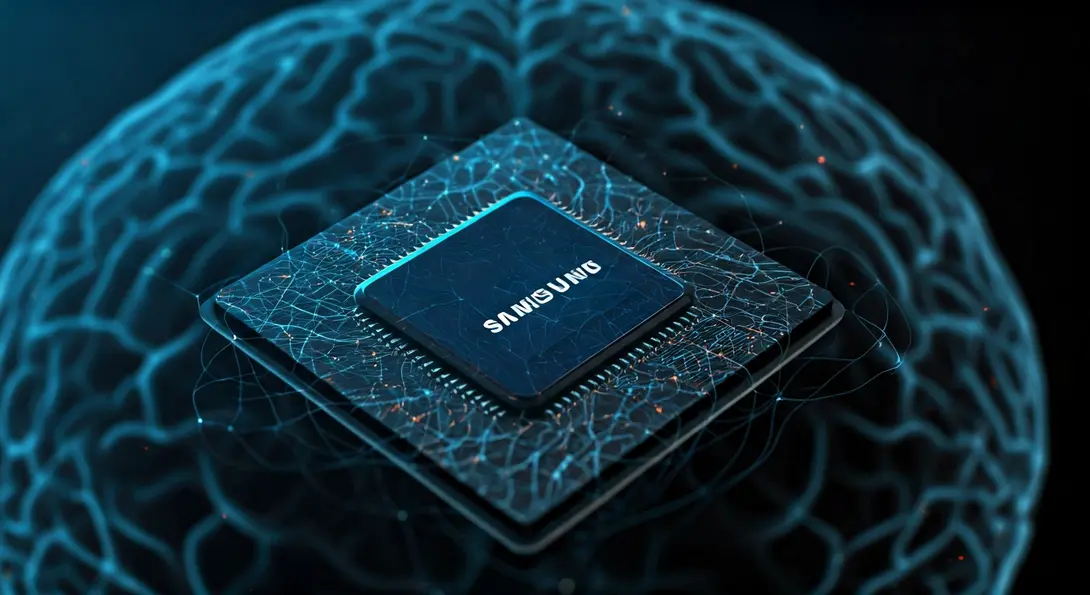
Surprising news has emerged from the tech world, suggesting a potential collaboration between South Korean electronics giant Samsung and Elon Musk’s neurotechnology company, Neuralink. According to unconfirmed reports, Samsung is poised to take on the crucial role of manufacturing the advanced chips destined for Neuralink’s cutting-edge brain implants. This development could signal a significant shift, as it implies Neuralink may be moving away from its current chip supplier, the renowned TSMC.
Neuralink and Samsung: A Potential Game-Changing Partnership
The prospect of Samsung producing chips for Neuralink is a major talking point in both the semiconductor and neuroscience communities. If these reports prove true, it would mark a historic first-time collaboration between the two innovative entities.
Samsung Foundry Reportedly Developing Neuralink Chips
According to unofficial sources, Samsung Foundry, the company’s chip manufacturing division, has already begun work on the specialized chips for the next generation of Neuralink implants. These critical components are reportedly being developed under the codename “01” and will utilize a sophisticated 4-nanometer manufacturing process. A 4nm process indicates extremely small and efficient transistors, allowing for more powerful and compact chips—essential for devices implanted within the human body.
A Deeper Alliance with Elon Musk?
An eventual contract between Samsung and Neuralink could signify a strategic move by the South Korean conglomerate to further strengthen its existing relationship with Elon Musk. Samsung already collaborates with Musk’s electric vehicle company, Tesla, in various capacities, including battery supply and potentially autonomous driving chip development. This new venture with Neuralink would expand Samsung’s involvement across Musk’s technology ecosystem.
Shifting Gears: From TSMC to Samsung?
Until recently, it was widely expected that Neuralink would continue its partnership with Taiwan Semiconductor Manufacturing Company (TSMC), a global leader in contract chip manufacturing. TSMC played a role in the development of Neuralink’s third-generation implant. A pivot to Samsung would therefore represent a notable change in Neuralink’s supply chain strategy, potentially driven by competitive advantages, production capacity, or strategic alliances. To understand the broader context of semiconductor industry dynamics and competition, you can read more about semiconductor opportunities and TSMC’s backlog.
Understanding Neuralink’s Revolutionary Technology
For many, the true implications of Neuralink’s technology remain a subject of fascination. At its core, Neuralink is developing ultra-high bandwidth brain-computer interfaces (BCIs) to connect humans and computers. The primary goal is to help individuals with severe neurological conditions regain independence and improve their quality of life, potentially by restoring lost sensory and motor functions.
Real-World Impact: Jon Noble’s Story
One of the most compelling examples of Neuralink’s potential was highlighted earlier this year. Jon Noble, a former British soldier who became paralyzed from the waist down due to a series of unfortunate events, received a Neuralink chip implant in late 2025. This groundbreaking procedure enabled him to return to a beloved pastime: playing his character in the popular online game World of Warcraft.
What makes this remarkable is that Noble controlled his in-game actions purely through his thoughts. As he described it, the synchronization of his brain with the BCI felt like “pure magic.” This incredible feat demonstrates the transformative potential of Neuralink’s technology, offering new hope for individuals living with paralysis and other neurological impairments. You can learn more about this incredible story in detail here.
Frequently Asked Questions (FAQ)
Neuralink is a neurotechnology company founded by Elon Musk that develops ultra-high bandwidth brain-computer interfaces (BCIs). Its primary goal is to create direct communication pathways between the brain and computers, aiming to help individuals with severe neurological conditions regain lost functions and improve their quality of life.

Samsung’s involvement would be significant because it suggests a shift from Neuralink’s previous chip supplier, TSMC, to Samsung Foundry. This could indicate strategic advantages in manufacturing, a deepening of Samsung’s partnership with Elon Musk’s ventures (including Tesla), and a major endorsement of Neuralink’s technology by a leading global semiconductor manufacturer.
Neuralink’s brain implants allow individuals with paralysis to control external devices, such as computer cursors, keyboards, or even game characters, using only their thoughts. This can restore a significant degree of independence and enable participation in activities that were previously impossible, as demonstrated by Jon Noble playing World of Warcraft.
A Brain-Computer Interface (BCI) is a direct communication pathway between the brain’s electrical activity and an external device. BCIs can interpret brain signals and translate them into commands, allowing individuals to control technology with their minds, or even potentially receive sensory input directly into the brain.
The 4-nanometer (nm) manufacturing process refers to the tiny size of the transistors on the chip. A smaller nanometer process means more transistors can be packed into a smaller space, leading to more powerful, energy-efficient, and compact chips. For an implanted device like Neuralink, a 4nm chip would offer superior performance and less heat generation, crucial for safety and functionality within the human body.
Source: Sammy Fans.
Opening photo: Gemini
About Post Author
