Google Pixel 11 Pro XL Review
-
Display Quality
-
Audio Quality
-
Camera Performance
-
Software & Performance
-
Battery Life & Charging
-
Value for Money
A Premium Android Experience with Minor Flaws
The Google Pixel 11 Pro XL offers an exceptional Android experience with a phenomenal display, impressive speakers, and a top-tier software suite. While its cameras are highly capable, they fall slightly short of some competitors in low light, and battery life is merely adequate. The Tensor G6 provides robust CPU performance but lags in graphics, and the increased price makes it a cautious recommendation, despite its overall excellence.
Advantages
- Exceptional Super Actua OLED display (up to 3600 nits)
- Phenomenal speakers with impressive deep bass
- Highly capable cameras with excellent software, fast capture, and stabilization
- Pure, smooth Android 17 experience with guaranteed 7 years of updates
- Robust everyday performance and improved thermal management
- Fast 45W wired and substantial 22.5W wireless charging
- Durable design with IP68 water resistance
Disadvantages
- Battery life is only adequate; daily charging is often required
- Graphics performance lags significantly behind other flagships, not ideal for serious gaming
- HiLight LED offers limited utility and replaces the practical thermometer
- Increased price makes it a less attractive value proposition compared to previous models
- Night photography, while good, falls slightly short of some ultra-flagship competitors
- Top speaker is quieter, impacting the overall stereo effect
Contents
Google Pixel 11 Pro XL Review: The Ultimate Android Experience?
The Made by Google event marked the launch of four new smartphone models. This Google Pixel 11 Pro XL review will delve into the software innovations and structural enhancements of the Mountain View giant’s flagship device. Is it truly the best Android smartphone available, and is it worth its premium price?
Google Pixel 11 Pro XL in a Nutshell
The Google Pixel 11 Pro XL is a flagship through and through, boasting an excellent display, powerful speakers, impressive cameras, and robust performance. Its software and useful additional features are equally remarkable.
Unboxing the Google Pixel 11 Pro XL
The Google Pixel 11 Pro XL arrives in the manufacturer’s signature compact box, identical in design and contents to the Pixel 9 and 10 series. Inside, you’ll find the smartphone nestled in a paper wrapper, along with a set of instructions, a SIM tray ejector tool, and a USB-C to USB-C cable. While some competitors, like the Sony Xperia 1 VIII, omit the cable, Google still includes this essential accessory.
In our review kit, we also received the distinctive, smooth-to-the-touch Pixelsnap case. Lined with soft material, its exterior color perfectly matches the smartphone’s available finishes. This thick case adds considerable bulk to the Pixel 11 Pro XL but offers excellent protection and features a built-in magnetic ring. However, it’s not cheap, costing around $60, a price point that remains unchanged from last year.
Design and Build Quality of the Google Pixel 11 Pro XL
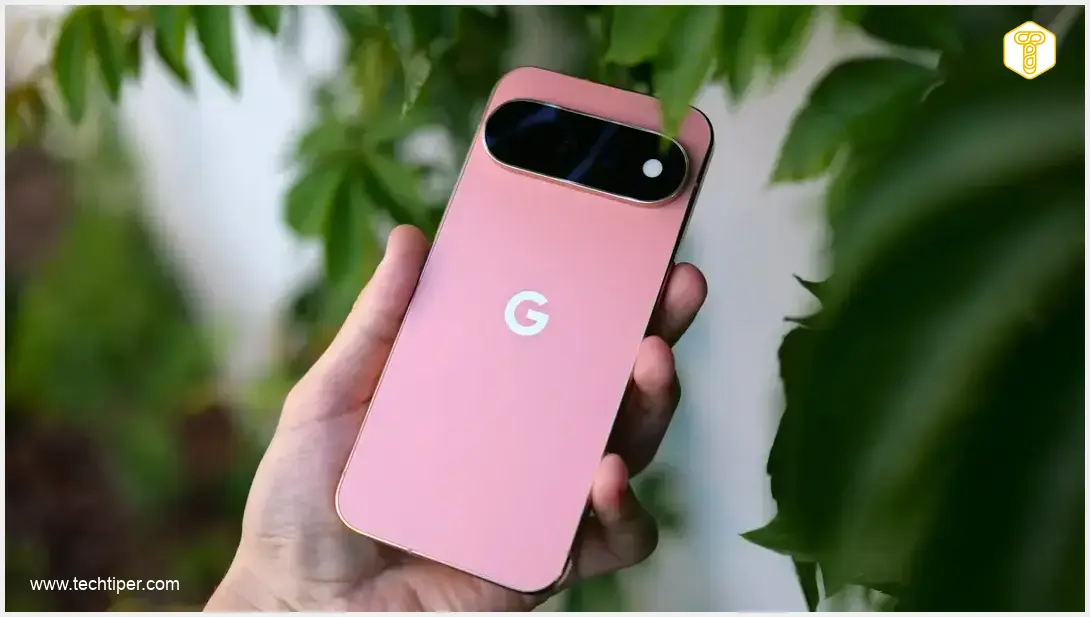
The Pixel 11 series maintains a largely familiar aesthetic compared to its predecessors. The most striking changes come in the form of new color options. Our review unit featured the ‘canyon rose’ variant, which truly evokes the hues of the Grand Canyon in Colorado.
The glossy, copper-toned frame beautifully complements the salmon-colored back panel. The perception of the rear panel’s color shifts with ambient light; it appears pinkish in dim environments but reveals saturated, almost orange tones in bright sunlight. The device is also available in classic black, light gray, and sage green.
Beyond the colors, the Pixel 11 visually distinguishes itself from the Pixel 10 primarily by its camera island, which is now entirely covered in glass. The thermometer, a feature on the right side of the camera island in the Pixel 10 Pro and 10 Pro XL, has been replaced by the new HiLight LED. In addition to a traditional flashlight with adjustable brightness, the HiLight offers colorful effects, which we’ll explore further in this review.

The camera island once again stretches almost across the entire width of the phone. While this design choice may divide opinions, it offers a practical benefit: the phone lies perfectly flat on surfaces, making it stable and comfortable to use when placed down.
The only other prominent feature on the rear is the glossy ‘G’ logo, characteristic of Pixel devices. Certifications have been moved to the side edge, leaving the back panel free of unnecessary markings.
The smartphone retains its IP68 water resistance rating, with Google claiming it’s the most durable Pixel to date. The design has also seen a slight reduction in weight; the Google Pixel 11 Pro XL weighs 226 grams, 6 grams lighter than its predecessor. While not the lightest phone on the market, its comfortably rounded corners ensure a pleasant in-hand feel.
The top edge houses a microphone opening and the SIM card tray. This tray accommodates a single physical SIM card, with dual SIM functionality achieved via eSIM. The left edge discreetly displays certifications and markings, barely noticeable.
On the opposite side, you’ll find the volume rockers and the power button. Pixel phones typically reverse the order of these buttons, which might require some getting used to. The bottom features speaker grilles (and likely a microphone) along with a USB 3.2 charging port.
The audio transducers on the Google Pixel 11 Pro XL are exceptional. While the top speaker is notably quieter, impacting the stereo effect, the bottom speaker is phenomenal. The deep bass, impressive for a smartphone, stands out. This is undoubtedly one of the best-sounding Android phones available.
Google Pixel 11 Pro XL Display
The Pixel 11 Pro XL also features a refreshed OLED display. This 6.8-inch Super Actua panel boasts a high resolution of 1344 × 2992 pixels and a dynamic refresh rate ranging from 1 to 120 Hz. Colors are vibrant, blacks are deep, and viewing angles are impressive. In practice, consuming content on the Google Pixel 11 Pro XL is a truly enjoyable experience, whether it’s casual social media scrolls or high-budget series.
With each new generation, Google has increased the display’s maximum brightness by 300 nits. The Super Actua panel can now reach an impressive peak brightness of up to 3600 nits. Readability is fantastic, even under direct summer sunlight, a significant advantage for activities like photography. The minimum brightness is also excellent, making it comfortable to check the time in the middle of the night.
Google Pixel 11 Pro XL Battery
The integrated battery performs adequately. It’s a slight disappointment that Google reduced the capacity from 5200 mAh to 5115 mAh, though this difference is barely noticeable in everyday use. While slightly larger than the battery in the Samsung Galaxy S26 Ultra, it falls short of some Chinese competitors, which often offer capacities exceeding 7000 mAh, translating to significantly longer endurance.
If you’re seeking record-breaking battery life, the Google Pixel 11 Pro XL might disappoint. The phone generally lasts from morning to evening without major issues, but even light users will struggle to achieve two days of use. Owning a Pixel 11 Pro XL means accepting that daily charging will likely be part of your routine. Demanding tasks like gaming or video editing can drain the battery in just a few hours.
However, the charging experience is positive. The tested version supports 45W wired charging and a substantial 22.5W wireless charging. While wired charging isn’t as fast as technologies like Super VOOC found in OPPO flagships, the battery percentage climbs quite rapidly. Plugging in the smartphone at 30% for 10 minutes replenishes 23% (almost 1200 mAh), which is a very solid result. We observed 50% charge after 27 minutes, and a full charge took 78 minutes. While the total time isn’t groundbreaking, the charging speed significantly slows down after reaching 80%, which occurs in approximately 45 minutes.
Google Pixel 11 Pro XL Cameras
While the cameras might seem similar to the previous generation, Google has made substantial changes. The main camera now features a new 50MP unit with a 1/1.3-inch sensor and an f/1.68 aperture. The telephoto lens also boasts a larger sensor, offering 48MP with 5x optical zoom. The ultrawide-angle lens remains unchanged, also featuring 48MP.
Previously, the camera interface was minimalist and well-organized, but it lacked some useful features found in Chinese flagships. This has changed, and the camera app is now essentially ideal. For the first time, ‘Styles’ have been introduced to the software, allowing users to capture photos in black and white, for example. You can also set a default style from four profiles: Original, Natural, Shadows, and Golden Glow. Photography is now as enjoyable as it is on ultra-flagship Chinese competitors.
Additionally, the excellent ‘Add Me’ feature (from the Pixel 9) returns, combining two photos to ensure everyone interested is included in the final shot. The ‘Photo Assistant’ (from the Pixel 10), which uses AI to aid with framing, is also present. Interestingly, a year after its debut, this tool is still in the testing phase.
The Pixel 11 series introduces the ‘Magic Shot’ function. The smartphone records a clip, from which algorithms extract and enhance frames, presenting them as still photographs. While intended for events, in practice, taking regular photos is often more convenient, as they offer higher quality and full user control. New tools for creators have also been added. During video recording, you can set up a teleprompter, an audio visualizer, and social media-specific frames that suggest which elements might be replaced by graphical interfaces, such as for YouTube Shorts. Aside from ‘Magic Shot,’ all these changes are excellent.
Image Quality
In good lighting conditions, you can expect phenomenal photos. Sharpness is abundant, and in the default mode, colors are very pleasing and quite natural. High-quality images can be captured with every camera. Personally, I’m not the biggest fan of 5x optical zoom, but the main camera handles the 1x to 5x range very well.
The Google Pixel 11 Pro XL features an even greater digital zoom compared to its predecessor. The Mountain View giant is increasingly confident in its algorithms, as the impressive 100x zoom has been extended to 120x. Interestingly, the ‘Professional Zoom’ mode is not available by default and requires downloading 1GB of files.
However, taking photos with over 50x zoom has more to do with generating than capturing frames, so I focused on lower magnifications. The 10x-30x zoom range offers significant capabilities during the day. Architecture looks great when zoomed in, but small text, even at 30x, starts to become noticeably AI-generated.
At night, several observations can be made. Firstly, all lenses offer similar quality. There’s no dark ultrawide angle or unusable telephoto lens. Unfortunately, the results fall short of ultra-flagship competitors, especially when comparing the main camera. However, the Google Pixel 11 Pro XL has a significant advantage in its highly effective algorithms. In the second night scene, my only criticism is the inconsistent white balance, which leads to significant color differences between photos.
The manufacturer has also improved the speed of night photography. While a competitor like the Sony Xperia 1 VIII was still setting parameters and exposing a photo, I could capture three complete review shots with the Pixel. The image capture speed is incredibly impressive, meaning almost every photo taken is suitable for social media publication.
The front camera likely remains unchanged from the previous generation. It’s a very solid sensor with a wide field of view, capable of producing good photos even in challenging conditions. I appreciate that the device doesn’t default to illuminating the face with the screen. The portrait mode effectively separates the background.
The smartphone records video at a maximum of 4K at 60 frames per second and 8K at 24 or 30 frames per second. While 8K is more of a novelty, 4K at 60 FPS performs exceptionally well for everyday use. The phone offers phenomenal image stabilization and effectively optimizes parameters.
Software and Performance of the Google Pixel 11 Pro XL
As a product from the Mountain View giant, it’s no surprise that the Pixel 11 Pro XL runs on the latest Android 17 right out of the box. Furthermore, the manufacturer guarantees seven major system updates. Pixel owners also benefit from priority distribution of even the smallest security patches, ensuring their device remains up-to-date and secure.
The interface is simply phenomenal in both appearance and operation. Annually, we test at least a dozen smartphones, many of which are flagships, but the system on Pixel phones consistently performs best. The device comes free of unnecessary bloatware, offering extensive home screen customization options.
The minimalist aesthetic of Material 3 Expressive design, already well-established in the system and Google apps, is now gradually making its way into third-party software. For AI tools, we have access to editing features in Google Photos, and Gemini can be invoked from anywhere within the interface. Users can interact with Gemini by circling an element of interest on the screen, as well as through text and voice commands.
Speaking of text input, the Google Pixel 11 Pro XL introduces the ‘Ramble’ feature, an enhanced speech-to-text conversion tool. Accessible directly from the Gboard keyboard (typically in the top right corner), Ramble operates instantly and effectively organizes spoken words, removing unnecessary fillers. This is a significantly better option than overly long but popular voice messages.
My only concern lies with HiLight. This new light feature replaces the practical thermometer, and unfortunately, its functionality falls short. The settings offer only two options: assigning one of five colors to a favorite contact, and visualizing Gemini’s activity. The latter is visually appealing but only visible when the Google Pixel 11 Pro XL is placed face down.
While navigating the system, I noticed the HiLight also signals the camera app’s self-timer. I couldn’t find any other applications utilizing HiLight. It’s a shame, as the light doesn’t even indicate battery charging status. The Mountain View giant still has work to do, as currently, HiLight simply doesn’t compensate for the removal of the thermometer.
The smartphone is powered by Google’s new proprietary Tensor G6 processor, paired with the Titan M3 coprocessor for enhanced security. The base model starts with 12GB RAM and 256GB storage, while our review unit features 16GB RAM and 512GB of file space. Google reports improved performance, with apps loading significantly faster, a difference that is truly palpable. A relatively demanding application like Pokémon Go loads approximately twice as fast as on the Pixel 10 Pro XL with the Tensor G5.
For everyday tasks, performance is undoubtedly robust. Everything happens instantly, and applications are highly responsive. Benchmarks indicate that the Tensor G6’s CPU power places it somewhere between MediaTek’s Dimensity 9500s and Qualcomm’s Snapdragon 8 Gen 5 (non-Elite version). However, the graphics performance significantly lags behind both flagship and even mid-range competitors, making this device decidedly not for serious gamers.
The Google Pixel 11 Pro XL remains pleasantly cool during normal daily use. The casing does warm up during more intensive use, such as video recording, photography, or video editing. However, the 11 Pro XL heats up much slower than the smaller 11 Pro, evident in the approximately 10% performance difference between the two devices.
Under full load, the tested smartphone outperforms flagships equipped with the Snapdragon 8 Elite Gen 5. After a 10-minute AnTuTu stress test, the hottest point on the casing reached 38 degrees Celsius. In comparison, the average casing temperature for a Snapdragon-equipped device is around 45 degrees Celsius.
Google Pixel 11 Pro XL Technical Specifications and Pricing
The Google Pixel 11 Pro XL is the only model in the series to see a price increase. The base 256GB variant’s price rose by approximately $110, bringing it to around $1500. Our tested 512GB version costs approximately $1630.
Considering how quickly previous generations depreciated after launch, this is a price point that makes it difficult to recommend, even for such a successful smartphone. It’s often more advantageous to utilize special trade-in programs for older devices, potentially acquiring the Pixel 11 series for up to 50% less. For those interested in previous models, you might find some great deals, for example, on the Google Pixel 10, where you could save over $325. Additionally, stay informed about the latest developments and future devices like the upcoming Google Pixel 11.
Key Specifications:
- System: Android 17
- External Screen: 6.8-inch OLED (Super Actua), 1344 × 2992 pixels resolution, 20:9 aspect ratio, 482 ppi, brightness up to 3600 nits (HBM: 2400 nits), 120 Hz refresh rate (LTPO), Gorilla Glass Victus 2
- Processor: Google Tensor G6 with Titan M3 coprocessor
- RAM: 12 or 16 GB LPDDR5 RAM
- Internal Storage: 256, 512 GB, or 1 TB UFS 4.0
- Rear Cameras:
- 50 MP (f/1.68, PDAF, OIS)
- 48 MP (f/2.8, periscope telephoto, PDAF, OIS, 5x optical zoom)
- 48 MP (f/1.7, ultrawide, PDAF)
- Front Camera: 42 MP (f/2.2, PDAF)
- Connectivity: 5G + Wi-Fi 7 + Bluetooth 6.0
- Other Features: In-display fingerprint reader, IP68 certification, stereo speakers, HiLight interface
- Battery: 5115 mAh, 45W wired charging, 22.5W wireless charging (Qi 2.2)
- Dimensions: 162.7 × 76.5 × 8.5 mm
- Weight: 226 g
Google Pixel 11 Pro XL Review: Summary and Our Opinion
The Mountain View giant has demonstrated that the Google Pixel 11 Pro XL didn’t require extensive improvements to impress. However, let’s revisit the initial question: Is it the best Android smartphone? Unfortunately, it falls short of perfection in several areas.
The battery capacity lags behind Eastern competitors, a difference noticeable in daily use. While the cameras are excellent and the app finally makes photography enjoyable, some ultra-flagship Chinese devices offer slightly superior optics. The Google Tensor G6 has caught up with the competition in processing power, but its graphics performance places it more in the mid-range than at flagship level.
However, no device is perfect, and the Google Pixel 11 Pro XL, in everyday use, shows that it doesn’t need to be. Most of the software innovations are outstanding. The display and speakers are phenomenal, and the relatively fast charging helps to overlook the slightly reduced battery capacity. While the price has increased, if you’re seeking the ultimate Android experience, the Pixel 11 series remains unrivaled.
Frequently Asked Questions (FAQ)
The Pixel 11 Pro XL features a brighter Super Actua OLED display (up to 3600 nits), a new 50MP main camera sensor, redesigned camera island with a HiLight LED replacing the thermometer, the latest Android 17 with 7 years of updates, and the more powerful Tensor G6 processor.
With a 5115 mAh battery, it’s generally sufficient for a full day of use but may struggle to last two days, especially with heavy usage. Its capacity is comparable to some flagships like the Samsung Galaxy S26 Ultra but is often surpassed by Chinese competitors with larger batteries.
While the Tensor G6 processor offers strong CPU performance, its graphics performance significantly lags behind other flagship and even some mid-range competitors. Therefore, it’s not the ideal choice for serious mobile gamers who demand top-tier graphical capabilities.
The camera app is now more comprehensive, introducing “Styles” for creative photography (e.g., black and white, golden glow), the “Magic Shot” feature for generating photos from video clips, and new creator tools like a teleprompter and social media framing for video recording.
While the price has increased, the Pixel 11 Pro XL delivers an exceptional Android software experience, top-tier display, excellent speakers, and highly capable cameras. For users prioritizing a pure Android experience and long-term software support, its value proposition remains strong, especially when considering trade-in options.
Source: Original article review. Opening photo: Krzysztof Wilamowski
About Post Author