Contents
The Truth About Fast Charging: Is Higher Wattage Always Better?
Common sense might suggest that a more powerful charger will always charge your smartphone faster. After all, most modern phones, including the latest models, now utilize universal USB-C cables, leading many to believe that any high-wattage brick will deliver top speeds. However, this common assumption isn’t always true. We conducted a simple, practical test to clear up any confusion and explore whether higher wattage truly translates to faster charging speeds.
The Charger Showdown: Four vs. One Smartphone
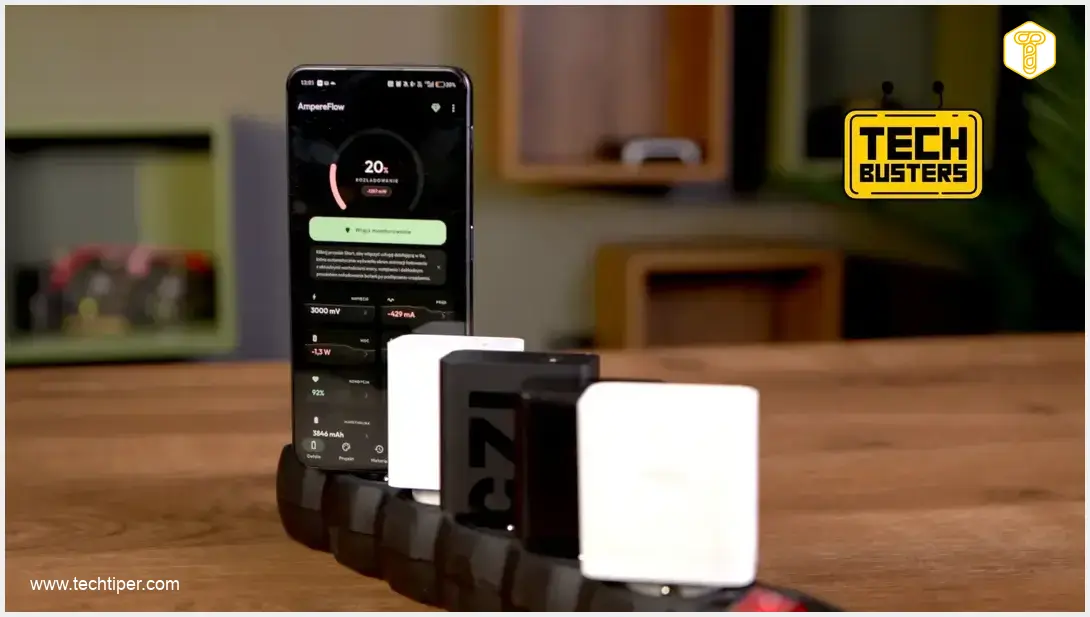
To put this theory to the test, we selected a OnePlus Nord 3 5G smartphone, drained to 15% battery capacity. We then evaluated four different chargers, varying significantly in power output, to determine how quickly they would charge the device. To accurately measure the charging speeds and power delivery, we utilized the free and widely available AccuBattery application.
Chargers Used in Our Experiment:
- Alcatel 5 W
- Samsung 45 W
- Xiaomi 67 W
- Motorola 125 W
A common question many users ask is whether a 125W charger will genuinely charge their smartphone faster than a lower-wattage option. Our test aimed to debunk or confirm this popular belief with empirical data.
Surprising Results: High Wattage Isn’t Always King
The results were quite intriguing and went against conventional expectations. The 5-watt Alcatel charger performed as expected, delivering only about 0.7 W to the device. However, the higher-wattage chargers—the Samsung 45 W, Xiaomi 67 W, and Motorola 125 W—also proved disappointing. In each of these cases, the AccuBattery app reported charging power hovering around a mere 5.5 W. This raises a critical question: why such low numbers from ostensibly powerful chargers?
The Importance of Dedicated Chargers: Meeting Your Smartphone’s Standards
The explanation lies in proprietary charging technologies. The OnePlus Nord 3 5G, a smartphone released in 2023, supports wired charging up to 80 W. However, there’s a crucial condition: the charger *must* comply with the proprietary SuperVOOC standard developed by OPPO. Without this specific compatibility, even the most powerful generic or brand-agnostic high-wattage chargers will not accelerate charging speeds.
When we connected the smartphone to its dedicated charger, AccuBattery displayed over 15 W – nearly three times higher than what the 125-watt Motorola charger achieved. This clearly demonstrates the impact of proprietary technology and the necessity of using the correct charging standard.
This situation can be particularly frustrating for consumers, especially since many manufacturers no longer include dedicated chargers with their devices. This means users often have to purchase them separately and must carefully verify compatibility to ensure they’re unlocking the full charging potential of their expensive smartphones. Avoiding common pitfalls, such as those encountered when trying to charge a device with a non-compatible powerful charger, is key. If you’re experiencing issues or looking for specific guidance, you might find our article on Samsung Galaxy S26 Ultra Charger Compatibility Issues helpful.
Therefore, it’s crucial to remember that a dedicated or officially compatible charger is often the most reliable choice. This helps avoid the mistake of purchasing seemingly superior models that ultimately prove incompatible with your smartphone and fail to deliver the expected charging performance. Understanding these nuances can help users make informed decisions about their charging accessories and even consider how new features like those being tested for Android 17 priority charging might interact with their specific charger setup.
Frequently Asked Questions (FAQ)
Many smartphones, especially those designed for ultra-fast charging, rely on proprietary charging standards (like OPPO’s SuperVOOC, OnePlus’s Warp Charge, or Qualcomm Quick Charge) that require specific chargers to activate their maximum speeds. Generic high-wattage chargers, while powerful, often lack these specific protocols and thus default to a lower, universal charging rate.

Always check your smartphone manufacturer’s official specifications for supported charging standards and recommended wattage. Look for chargers explicitly marketed as compatible with your phone model or certified to support the specific fast-charging technology your device uses. Purchasing from reputable brands or the phone manufacturer itself is often the safest bet.
Generally, modern smartphones are designed with internal circuitry to regulate incoming power. If a charger is too powerful or incompatible, the phone will typically negotiate a lower, safe charging speed rather than accepting excessive power. While it usually won’t damage your phone, it will result in slower charging than expected and may not be energy efficient.
USB-C Power Delivery (PD) is an open standard that allows for higher power delivery over USB-C, offering faster charging than older USB standards and is widely adopted. Proprietary fast charging, however, refers to brand-specific technologies (like SuperVOOC, Warp Charge, etc.) that often push charging speeds even further than standard PD but require compatible chargers and cables from the same ecosystem or licensed third parties.
Source: Original research.
Opening photo: Krzysztof Rojek.
About Post Author