

Contents
The Enormous Twelve-Axle Vladimir Lenin 85 Locomotive: A Symbol of Soviet Engineering Pride
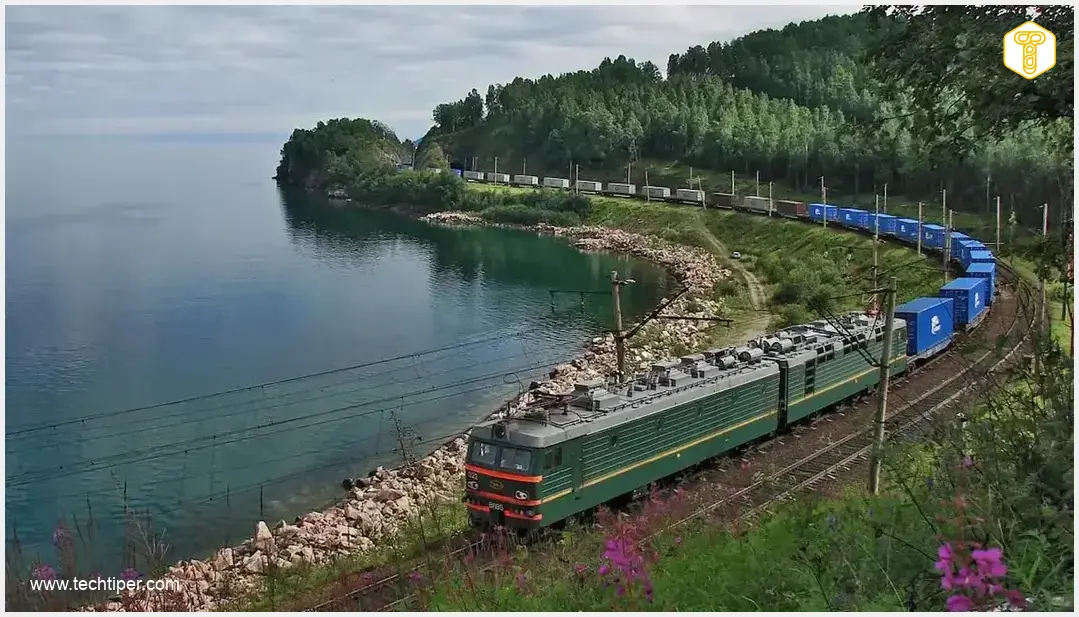
The vast expanses of the Soviet Union presented unique challenges for its railway system, demanding locomotives capable of hauling immense loads across enormous distances. Among these powerful machines, the legendary VL85 electric locomotive emerged as a symbol of Soviet ambition and engineering prowess. Yet, this story takes an unexpected turn when Finnish ingenuity stepped in, revealing how an already impressive design could be pushed to even greater heights.
The VL85: A Colossal Powerhouse of the Soviet Railways
In an era when railway engines were more than mere transport vehicles, locomotives often represented a nation’s technological might and industrial capability. Engineering parameters were compared with intense pride, reflecting national achievements. It was within this competitive atmosphere that the VL85 electric locomotive, named after Vladimir Lenin, was born. This colossal machine comprised two sections, stretching approximately 45 meters (148 feet) in length, making it a true behemoth of the rails.
Engineering Marvel: VL85 Specifications
Designed for heavy freight operations, the VL85 boasted formidable specifications:
- Driven Axles: Twelve, providing exceptional traction.
- Operating Weight: Nearly 290 tonnes (approximately 639,340 pounds).
- Continuous Power: A staggering 9,360 kilowatts (kW), capable of briefly exceeding 10,000 kW.
- Maximum Speed: 110 kilometers per hour (68 miles per hour), which, while seemingly modest by today’s passenger train standards, was more than adequate for a freight locomotive pulling hundreds of wagons.
Manufactured in Novocherkassk between 1983 and 1994, a total of 270 units were produced. Upon its introduction, the VL85 stood as one of the most powerful series-built locomotives in the world. However, Soviet engineers recognized the potential for further advancements, particularly in the drive system, leading them to seek external expertise.
The Finnish Connection: Unlocking Greater Potential with the VL86F
The quest for innovation led Soviet designers to Finland, where they partnered with Strömberg, a company renowned for its expertise in power electronics and asynchronous motor control. Strömberg had already demonstrated its capabilities in projects such as the Helsinki Metro rolling stock. This collaboration aimed to create an even more advanced locomotive based on the VL85 platform, resulting in the prototype VL86F.
While the mechanical design of the VL86F remained largely similar to its predecessor, the electrical system underwent a radical overhaul. The integration of cutting-edge asynchronous traction motors and modern converters promised a significant leap in performance and efficiency. This technological leap often reminds us of how different eras approach engineering challenges, much like exploring the evolution of automotive design when comparing a modern vehicle to its historic ancestors. Discovering the evolution of classics like the Opel Astra highlights how far technology progresses, even in seemingly similar machines.
VL86F: Enhanced Performance
The Finnish modifications elevated the locomotive’s capabilities:
- Continuous Power: Increased to 10,800 kW.
- Hourly Power: Reached an impressive 11,400 kW.
- Operating Weight: Slightly increased to approximately 300 tonnes (661,387 pounds).
- Axles: Maintained its twelve-axle configuration for optimal traction.
Beyond raw power, Finnish engineers also focused on practical improvements. The new electrical apparatus was designed to simplify both manufacturing and maintenance processes. Contemporary estimates suggested that production would require fewer labor hours, and servicing would become faster and more efficient. Plans were ambitious, envisioning the production of several dozen units, with key electronics manufactured in Finland and final assembly taking place in Novocherkassk.
A Vision Unfulfilled: The Decline of an Ambitious Project
Despite the promising developments, the VL86F never moved beyond the prototype stage. By the late 1980s, the Soviet economy was facing increasingly severe difficulties. Trade negotiations became complex and challenging, and what appeared to be a highly promising project from the Finnish perspective ultimately stalled. This period marked a time of significant economic constraints, where even innovative engineering solutions faced insurmountable real-world challenges, not unlike communities finding ingenious ways to overcome resource scarcity, such as a Cuban mechanic adapting a Maluch to run on charcoal during fuel shortages.

Today, all that remains is the history of a machine that had the potential to be even more powerful and efficient. The story of the VL86F serves as a poignant reminder that even the most robust engineering marvels can sometimes be overcome by economic realities and geopolitical shifts, far beyond the tracks they were designed to conquer.
Frequently Asked Questions (FAQ)
The VL85 was designed as a heavy-duty electric freight locomotive for the Soviet Union’s extensive railway network. Its primary purpose was to haul massive loads across long distances, supporting the country’s industrial and logistical needs.
While retaining similar mechanical components, the VL86F prototype featured a completely re-engineered electrical system. It incorporated advanced asynchronous traction motors and modern converters supplied by Finnish company Strömberg, which significantly boosted its power output and aimed to simplify manufacturing and maintenance compared to the original VL85.
The VL86F project was halted at the prototype stage primarily due to the deepening economic troubles of the Soviet Union in the late 1980s. These economic challenges led to increasingly difficult trade negotiations and ultimately prevented the ambitious production plans from being realized.
The VL85 was a landmark achievement in Soviet engineering, representing the nation’s capability to design and produce exceptionally powerful and robust locomotives. It was one of the strongest series-built locomotives globally at its introduction, symbolizing Soviet industrial might and technological ambition in conquering the vast logistical challenges of its territory.
Source: TrainStation, original work. Opening photo: Sorovas / Wikimedia Commons.
About Post Author
