

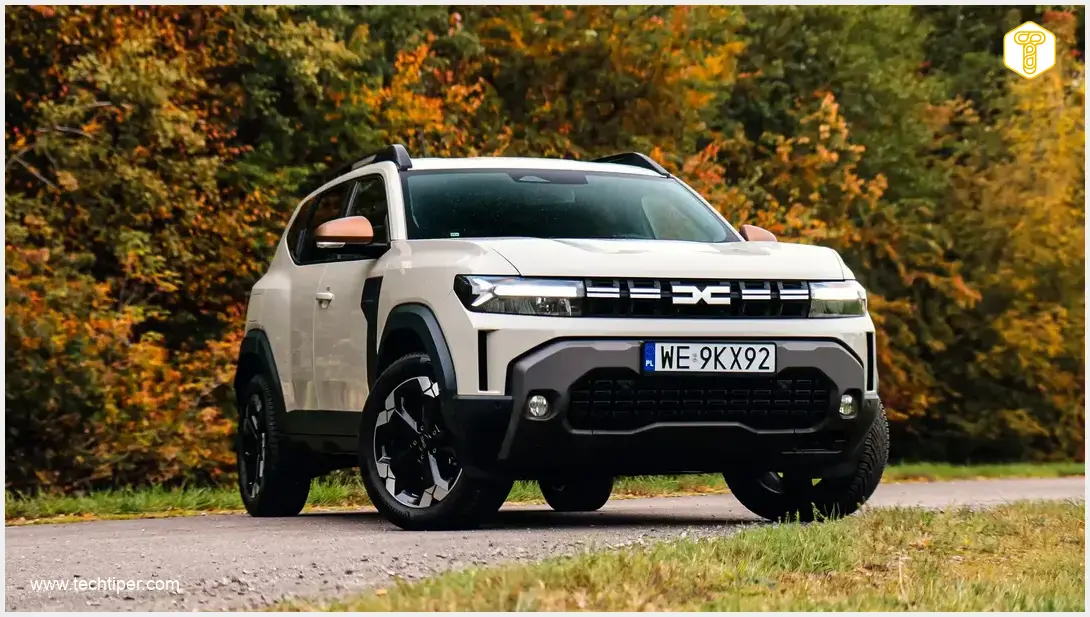
Dacia Duster Hybrid-G 150 4×4 (Tribrid) Review
-
Efficiency & Running Costs
-
Off-Road Capability
-
Interior Quality & Refinement
-
Multimedia System
-
Driving Dynamics (Engine & Transmission)
-
Practicality & Space
A Groundbreaking Tribrid with Practicality, But Compromises in Refinement
The Dacia Duster Tribrid offers a unique, cost-effective blend of petrol, LPG, and electric power for exceptional running costs and long range. It retains impressive off-road capability for its class and provides a highly practical, albeit plastic-heavy, interior. However, buyers must contend with a sluggish transmission, notable cabin noise, and a basic multimedia experience.
Advantages
- Unique “tribrid” powertrain (petrol + LPG + electric)
- Exceptionally low running costs and extended range
- Highly capable off-road for its class (good ground clearance, angles)
- Practical and well-thought-out interior design
- Spacious second row for adults
- Good value for money
Disadvantages
- Sluggish and unrefined transmission behavior
- Interior dominated by hard plastics with average fitment and creaking noises
- Noticeable cabin noise, especially at higher speeds
- Underwhelming native multimedia system (lacks Google Services, slow navigation)
- Compromised trunk capacity due to tribrid system
- Engine noise and vibrations (3-cylinder)
Contents
Dacia Duster Hybrid-G 150 4×4 (Tribrid) Review: A Unique Blend of Efficiency and Off-Road Capability
Welcome to our comprehensive review of the Dacia Duster Hybrid-G 150 4×4, a vehicle now proudly rebranded as the “tribrid.” This model represents a truly unique and pioneering engineering solution, standing out in the automotive landscape. It comes factory-equipped with an electric motor and an additional LPG (liquefied petroleum gas) tank, a combination that enables remarkably long journeys without incurring excessive fuel costs. In this review, we will also break down the total cost of ownership for a well-equipped Duster tribrid, starting right from the dealership.
Intriguingly, the tribrid variant is currently the sole all-wheel-drive option remaining in Dacia’s configurator, a strategic decision that has garnered significant attention. We will delve into the specifics of this move and its implications shortly. Join us as we meticulously examine the Duster tribrid, uncovering its myriad advantages and the areas where it makes compromises.
Pricing and Trim Levels
The Dacia Duster continues its legacy as an incredibly popular SUV, a status largely attributed to its competitive pricing strategy. At the time of this review’s publication, Dacia was primarily focusing on petrol engine options. However, it’s worth noting that all available powertrain configurations for the Duster can be categorized as “hybrids,” integrating petrol with LPG, electricity, or a combination of both (especially in conjunction with the 4×4 system). The Duster is offered across four distinct trim levels, resulting in the following price structure (all prices are in local currency units):
- Eco-G 120 (petrol+LPG, 4×2):
- Manual transmission:
- Essential: 82,000
- Expression: 90,000
- Extreme: 96,000
- Journey: 96,200
- Automatic transmission:
- Expression: 96,900
- Extreme: 102,900
- Journey: 103,100
- Manual transmission:
- Mild Hybrid 140 (petrol, 4×2):
- Expression: 97,600
- Extreme: 103,600
- Journey: 103,800
- Hybrid 155 (petrol, 4×2):
- Expression: 112,100
- Extreme: 118,100
- Journey: 118,300
- Tribrid 150 (petrol+LPG, 4×4):
- Expression: 119,900
- Extreme: 125,900
- Journey: 126,100
Dacia frequently provides various promotional discounts (potentially up to 9,000 local currency units), which are not factored into the prices listed above. Comprehensive details on the standard equipment differences across the various trim levels can be found in the manufacturer’s official materials.
The standard warranty coverage for the Dacia Duster spans 3 years or 100,000 kilometers, whichever comes first. This can be significantly extended up to 7 years or 150,000 kilometers through the Dacia ZEN program. The vehicle’s paintwork is protected for 2 years, while structural perforation of the body panels is covered for 6 years.
Insurance Costs
According to market data, the estimated cost for third-party liability (OC) insurance for the Duster Hybrid-G 150 4×4, as tested, for a driver with several years of driving experience, is approximately 680 local currency units. Opting for a comprehensive package that includes collision (AC) would typically bring the total to around 2,300 local currency units. Prospective buyers are encouraged to obtain personalized quotes for their specific Dacia Duster model.
Total Cost of the Reviewed Model
Our review vehicle, a Dacia Duster Hybrid-G 150 4×4 (tribrid) in the Extreme trim, had a base price of 125,900 local currency units. This particular model was further enhanced with the following optional extras:

- Sandstone metallic paint: 2,900 local currency units
- Techno Package (includes a 10-inch central screen with Android Automotive, an inductive smartphone charger, 6 speakers, and adaptive cruise control): 2,900 local currency units
- Winter Plus Package (features heated front seats, a heated steering wheel, a heated front windshield, and a passenger seat with height adjustment): 2,300 local currency units
- Parking Package (includes blind-spot monitoring sensors, parking sensors, and a 360-degree camera system): 2,200 local currency units
- 18-inch Tagasan alloy wheels: 1,000 local currency units
After totaling these additions, the final purchase price of our Duster reached 137,200 local currency units. This configuration represents Dacia’s most technologically advanced offering. With an additional promotional discount of 7,000 local currency units applied, the overall cost came to just over 130,000 local currency units.
However, the customization possibilities extend beyond these packages. Dacia offers an extensive range of practical accessories, notably including the versatile modular YouClip holders and various transport solutions such as tow bars and roof racks. Furthermore, beyond the standard configurator, specific options like an electrically powered tailgate can also be added through the dealership.
Dacia Duster Hybrid-G 150 4×4 (Tribrid) Specifications
Dacia distinguishes itself in the automotive market by offering factory-fitted LPG variants for its vehicles. A notable characteristic is that both power and torque figures are marginally increased when operating on liquefied petroleum gas. The tested tribrid variant further incorporates an electric powertrain, specifically a 48V system utilizing two electric motors.
The first electric motor functions as a reinforced starter (delivering 14 HP) and works in tandem with the 1.2-liter, 3-cylinder turbocharged internal combustion engine (producing 140 HP) and a 6-speed dual-clutch transmission. The second electric motor (generating 31 HP) is strategically positioned on the rear axle, which provides the vehicle with its 4×4 capability, known as eAWD. While this innovative setup foregoes a traditional driveshaft, which might slightly limit extreme off-road performance, the overall combined system output is a respectable 154 HP.
In terms of its physical dimensions, the Duster is positioned within the compact SUV segment, generally considered to be on the smaller side. This strategic sizing leaves ample room within Dacia’s lineup for larger vehicles, such as the upcoming Bigster, catering to customers who require more interior space.
Opting for the triple hybrid system does entail a compromise in trunk capacity. This is due to the necessary accommodation of both the electric powertrain components and the dedicated LPG fuel tank.
A Brief History of the Dacia Duster
Even individuals with minimal automotive knowledge are likely to have encountered the Dacia Duster on roads worldwide. It has achieved remarkable popularity, mirroring the success of many other Dacia models.
The Duster’s initial and enduring success has been predicated on its affordability, a cornerstone of the Dacia brand. For the Duster specifically, this value proposition was enhanced by surprisingly competent off-road capabilities, particularly when considered within the SUV segment. The first 4×4 Duster, launched in 2010, quickly became a favored choice for accessible overland travel, with its production extending in some international markets, such as India (where it was known as the Renault Duster), until 2022. In the European market, the second generation arrived in 2017, proving to be a resounding success by precisely meeting customer expectations for the model.
The third and latest generation of the Dacia Duster, which is the subject of this review, was introduced in 2024. Dacia continues its strategy of leveraging Renault’s proven technologies, though this generation notably marks a departure from diesel engines. Approximately two years after its initial launch, Dacia also phased out the traditional driveshaft-based 4×4 system. In its place, electric power has been integrated, featuring a full hybrid system. Despite these advancements, factory-fitted LPG variants continue to be a dominant presence in the Duster’s configurator.
The Dacia Duster firmly occupies the C-segment SUV category. When its triple hybrid powertrain and 4×4 system are taken into account, it represents a unique offering in the market, standing apart from competitors regardless of price. While new entrants, particularly from Chinese manufacturers like the MG ZS, Omoda 5, and Jaecoo 5, may offer a richer suite of equipment, the Duster’s price range often positions it against smaller, less-equipped vehicles such as the Skoda Kamiq, VW T-Cross, or Toyota Yaris Cross. For an alternative perspective on hybrid SUVs, you might also find our review of the Toyota Corolla Cross GR Sport: A Facelift Responding to Customer Needs to be of interest.
Dacia Duster Multimedia System
Renault has established a consistent trend of integrating Android-based software across its vehicle models, a practice that extends to Dacia. However, there are a few important distinctions. Firstly, the entry-level Essential trim of the Duster does not include a central display unit at all. It is only from the Expression trim upwards that an appropriate touchscreen panel is fitted, and while the system indeed operates on an Android base, it conspicuously lacks Google Services.
While numerous platforms successfully utilize Google’s operating system without its proprietary services, the Dacia Duster’s proprietary equivalents for the app store and navigation functionality are, to be frank, rather underwhelming. We will explore these limitations in more detail shortly. On a positive note, the overall interface is generally clear and user-friendly, although performance could undeniably be more responsive at times.
Central Display
As previously mentioned, the most affordable Duster trims do not feature a central screen, nor do they include digital gauges. Instead, these versions come equipped with a simple radio that offers Bluetooth connectivity. Moving up to the Expression trim, customers are greeted with a 7-inch display positioned behind the steering wheel and a 10-inch central touchscreen. The top-tier Journey trim further enhances this by including navigation as standard, whereas for the Extreme trim, navigation remains an optional extra.
The Duster’s multimedia platform, while based on Android, does not facilitate logging into a personal Google account. However, users can register a Dacia driver account, which provides access to remote vehicle management functionalities. This capability does not, however, unlock any supplementary in-system features, underscoring a rather conventional approach to its digital ecosystem.
Visually, the interfaces of Dacia and Renault systems appear largely identical. The lower section of the screen is dedicated to climate control readouts and quick access settings related to the climate system. The upper bar displays crucial icons, such as connectivity status, and can be expanded to reveal various notifications. A left-hand sidebar serves as a convenient collection of shortcuts to specific application sections, while the main dashboard area supports the display of a diverse range of widgets. A comprehensive list of installed applications is also readily available.
Notably, there is no integrated owner’s manual within the system. Furthermore, the voice assistant functionality is facilitated by invoking its equivalent on a wirelessly connected smartphone. The underlying philosophy here is simplicity, and this approach is largely effective, proving to be a more practical solution than attempting to implement cumbersome or ineffective proprietary features.
Dacia’s decision to incorporate physical switches for climate control is highly commendable. This design choice offers a user-friendly and, arguably, superior method of interaction. The secondary buttons located on the touchscreen primarily serve to activate features such as heated seats, the heated steering wheel, or the heated front windshield. Additionally, within the expandable notification bar, users will find a function for cabin air purification.
The system itself provides a limited number of additional options pertaining to driving comfort or general vehicle operation, mostly offering basic controls for central locking or windshield wipers. Users do, however, have the option to customize the accent color scheme of the software interface.
The Dacia Duster is designed with continuous internet connectivity, and it possesses the capability to link to external networks. However, a personal hotspot function was not identified during our testing. The internet connection is a critical component, as it powers an integrated app store. While the selection of applications is not extensive, it focuses on core utilities, particularly music streaming services. This allows users to access platforms like Spotify or Amazon Music directly, without the need to connect a smartphone.
In almost all Duster configurations, the standard sound system comprises four speakers. The highest trim level, Journey, elevates this to six speakers, featuring Arkamys 3D sound technology. This same enhanced sound system can also be optioned for the Extreme trim, a choice that was made for our test vehicle. The overall sound quality offered is, at best, acceptable. While it can occasionally deliver surprisingly positive audio moments, individual frequency bands tend to overlap, particularly if the equalizer settings are over-adjusted.
However, a more significant issue pertains to the fit and finish of the interior plastics. Even with moderately deep bass, an unavoidable creaking noise becomes an integral part of the listening experience, detracting from the overall audio quality.
Navigation, Android Auto, and Apple CarPlay
The navigation system in our tested Duster was an optional upgrade, typically bundled with the enhanced sound system, and featured solutions from HERE Technologies. While the underlying map databases are current and comprehensive, the performance of the navigation application itself was notably subpar. The primary issue lies in its poor efficiency, with all commands experiencing significant and frustrating delays.
Fortunately, reliance on the built-in navigation system is not compulsory, as the Duster offers wireless Android Auto and Apple CarPlay connectivity. In this regard, we encountered absolutely no issues; the performance was seamless and reliable. Furthermore, navigation prompts from external platforms (like Google Maps or Apple Maps) are intuitively and accurately relayed to the digital instrument cluster, establishing this as the most practical and convenient navigation solution available for the Duster.
Digital Instrument Cluster
Dacia adopted a minimalist approach to its digital instrument cluster, utilizing a straightforward variant from Renault’s offerings. This design choice is entirely appropriate, as the cluster is primarily simple, highly legible, and incorporates subtle, effective styling elements. This combination works exceptionally well. However, the presence of traditional analog gauges in the entry-level trim is a curious design decision.
Drivers have a choice of three display themes, which sequentially present: an overview of active driver assistance systems, an energy flow diagram, and a minimalist view showing only essential information. Across all themes, fundamental data such as current speed, selected gear, driving mode, and detected speed limits are prominently displayed. Given that the Duster operates on both petrol and LPG, the onboard computer dynamically adapts by adjusting the displayed range and fuel level information when switching between these two fuel types. This calculation is instantaneous. When operating on LPG, a corresponding indicator appears. The only minor omission is the lack of a real-time instantaneous fuel consumption display when running on LPG, a feature that is available for petrol operation.
The onboard computer is accessed through scrollable widgets, which are presented in the right-hand section of the digital instrument cluster. In addition to general trip data, it can display navigation directions, an eco-driving trainer, real-time energy flow monitoring, and basic information regarding body tilt. Furthermore, Dacia effectively utilizes this space to clearly display contextual notifications to the driver.
Dacia Duster Interior: A Reflection of Value
It’s important to establish from the outset: Dacia is fundamentally designed as an affordable automobile. While the Duster’s price points are gradually increasing, and our test model was equipped with nearly all available options, it is still unreasonable to expect an exceptionally luxurious interior finish. The cabin is predominantly constructed from hard plastics, which exhibit average levels of fitment and can produce creaking sounds, especially when subjected to low-frequency vibrations. However, from a purely practical perspective, there is very little to criticize; in fact, the interior is surprisingly well-thought-out.
As Dacia operates under the Renault brand umbrella, the Duster incorporates one of Renault’s distinctive keyless entry systems. Naturally, this feature is exclusively available in the higher trim levels (Extreme and Journey). Its operation is based entirely on the proximity of the key card to the vehicle, which automatically signals the central locking system to unlock the doors. There are no physical buttons or touch sensors on the door handles. It was observed that, compared to Renault or Nissan models, the system’s reaction time in the Duster appears to be slightly delayed until one actually reaches for the door handle, thus preventing premature illumination of exterior lights. Similarly, the vehicle locks itself automatically a few steps after the driver departs.
Front Row: A Comfortable SUV Experience
The Duster is more than just an SUV with elevated bodywork; it also features significantly greater ground clearance compared to many of its direct competitors. This design aspect facilitates easier and more comfortable entry and exit. The doors are engineered to almost entirely cover the sills, ensuring that clothing remains clean regardless of prevailing weather conditions.
The door panels serve as a clear indication of the plastic-heavy nature of the interior. Only the armrest section is covered in a soft-touch material, though it lacks additional padding underneath. Despite this, the overall ergonomics are well-executed, with logically placed switches and a practical, elongated storage compartment. Aesthetically, it is evident that Dacia made a considerable effort to create an appealing design.
Seats Designed for Durability
Turning our attention to the seats, specifically their upholstery material, the Duster in the Extreme trim stands out with its “MicroCloud” fabric. Dacia claims this material is exceptionally easy to clean. Indeed, it presents a tactile feel that is a hybrid between traditional fabric and eco-leather, further enhanced with rubberized elements. This composition should undeniably simplify maintenance, a crucial consideration for those who anticipate frequent off-road driving. Conversely, it is worth noting that such materials might offer slightly less breathability than conventional fabrics.
Returning to the seats themselves, they offer a very pleasant and supportive experience. I found it easy to settle into their contours, and the elevated side bolstering provided welcome support. The generously sized and adjustable headrest also proved comfortable due to its ergonomic profiling.
Seat adjustments are manual, and the available range of motion varies depending on the specific model and trim level. In the base configuration, only the driver’s seat typically offers height adjustment. The Extreme trim extends this functionality to the passenger seat, and in newer Duster models, the driver’s seat also gains two-way lumbar support adjustment. Furthermore, as an optional extra, available across all versions, a three-stage heating function can be added. Given its modest cost and the simultaneous inclusion of a heated steering wheel and heated front windshield, this package represents a highly worthwhile investment.
Steering Wheel: Simple Yet Ergonomic
Upon gripping the Duster’s steering wheel, one encounters a distinct, doubly flattened rim, which is upholstered in eco-leather. This steering wheel also features a heating function (an optional, single-stage feature), though the warmth provided is quite gentle. Despite the simplicity of its design, the steering system offers a good level of interaction and control. The manual adjustment for the steering column is quite extensive, offering two-way (reach and rake) movement.
Steering wheel controls are managed via large, tactile physical buttons. The left-hand cluster is dedicated to operating the adaptive cruise control system, while the right-hand cluster controls the digital instrument display, telephone functions, and the voice assistant. Multimedia functions are managed independently via a separate, conveniently located panel situated behind the steering wheel. Additionally, paddle shifters are present for manual gear selection.
To the driver’s left knee, an array of further physical buttons is located. Among these, the “Perso” button, which allows for personalized driver assistance system settings, is particularly noteworthy. Other controls in this area include headlight beam height adjustment and an option to deactivate traction control. Despite our test vehicle being fully equipped, one blank button remained. Below these controls, one finds the lever for the parking brake and a dedicated button for activating or deactivating the LPG system.
Dashboard: Surprising Details in a Practical Design
While hard plastic materials predominantly define the interior of the tested Dacia, it is commendable that Dacia refrained from adopting a bland, monochromatic color scheme. Instead, significant effort was invested in the design of the dashboard itself. The overall aesthetic harmonizes perfectly with the vehicle’s character and features distinctive design elements. Moreover, the dashboard’s practicality is beyond reproach.
Before focusing on the plastic elements, one’s gaze is drawn to the heated front windshield (an optional extra), which features visible heating filaments embedded within the glass. Moving further into the cabin, the A-pillars integrate components of the audio system, while the uppermost section of the dashboard solely houses air vents. In front of the passenger, a prominent “Duster” emblem serves as a clear reminder of the vehicle’s identity.
Beneath the central screen, which is subtly angled towards the driver for better visibility, another air vent is located. Below this, an exceptionally well-designed and user-friendly climate control panel is found, distinguished by its reliance on physical switches. Descending further, a rather deep, entirely plastic shelf is present, which unfortunately lacks a retaining lip to prevent items from sliding out. A subsequent shelf, positioned even lower, is rubberized and integrates an inductive charger, a 12V power socket, and two USB-C ports.
PS: It is worth noting that newer Duster models now feature a mandatory driver attention monitoring sensor integrated into the A-pillar. Our tested Duster, however, originates from a period before this EU regulation came into effect.
Particular attention should be paid to the area situated between the screens. Here, the first YouClip mounting point is visible, currently fitted with a smartphone holder. Optionally, an inductive charger can also be installed in this position. This “click-on” solution accommodates a variety of accessories, including cup holders, tablet mounts, hooks, portable lights, storage cases, and even specialized bags. Furthermore, a thriving community of enthusiasts has developed numerous 3D-printable designs compatible with the YouClip system. The Duster’s cabin boasts a total of six compatible YouClip mounting points.
Moving between the front seats to the central tunnel, one finds a straightforward gear selector accompanied by a separate ‘P’ (Park) button. Further back, a rotary knob facilitates the selection of various driving modes, alongside a dedicated button for the hill descent control system. Following these controls, two cup holders are positioned; the rearward holder might potentially interfere with the armrest if taller thermoses or containers are used. The armrest itself is tall, rubberized, but inherently firm. It is not adjustable for position but can be opened to reveal an interior storage compartment of average capacity.
A glove compartment is also provided in front of the passenger seat, which offers an acceptable amount of storage space. Furthermore, the front passenger will find a second YouClip mounting point conveniently located near their knee. Incidentally, the central tunnel design also includes provisions for additional speakers, although these are not factory-installed in this specific location within the Duster.
Mounted in the headliner is a rearview mirror. This mirror lacks an auto-dimming function, but the visibility it provides is generally acceptable. The cabin lighting controls are well-designed, utilizing physical buttons. However, a single master switch to simultaneously activate or deactivate all cabin lights would be a valuable addition for convenience.
Second Row: Surprisingly Spacious
Access to the second row is gained by opening the doors via a handle cleverly integrated into the B-pillar. From the interior perspective, it becomes evident that the trim materials have been minimized, primarily utilizing hard plastics, with even a visible screw securing the external door handle. The storage compartment within the door panel is minimal. Nevertheless, the doors open to a reasonably wide angle, ensuring that entering and exiting the rear seats is not problematic.
The rear seating area itself offers a generous amount of space. Two adults, each measuring approximately 1.9 meters (around 6 feet 3 inches) tall, can comfortably be accommodated. However, passengers should be aware that the seat base is somewhat short, and the backrest is positioned relatively upright. On the positive side, there is abundant footwell space, allowing even individuals wearing bulky or high footwear to comfortably position their feet beneath the front seats.
For convenience, Dacia has primarily equipped the second row with two USB-C ports. Above these, a third YouClip mount is integrated, and further up, a small storage tray is provided, though it lacks side walls to prevent items from sliding out. Additionally, the rear cabin includes two coat hooks, ISOFIX child seat anchors (discreetly hidden behind zippers), and magazine pockets on the backs of the front seats. Notably absent are rear air vents and a central armrest.
Exploring Dacia’s accessory catalog reveals a wide array of the aforementioned YouClip additions, including supplementary mounts designed to attach beneath the front headrests. Furthermore, the central tunnel area can be customized with additional storage compartments. It is highly recommended for potential buyers to review the full range of accessories available from Dacia, as many of these practical enhancements are not directly listed within the primary online configurator.
Lighting: Functional Minimum
When affordability is a primary design objective, one should not anticipate an abundance of supplementary lighting points. In this context, it is almost a bonus that ceiling lights have been incorporated into every row of the cabin. Externally, upon unlocking the vehicle, the exterior lights simply activate. The interior features only fundamental lighting, which, while exceptionally warm in tone, is surprisingly potent, particularly in the front cabin area.
Trunk Space: A Compromise for the Tribrid System
Dacia does not offer an electrically powered tailgate as a factory-installed option for the Duster. However, this feature can be added as an accessory through the dealership after the vehicle’s purchase (at an approximate cost of 2,500 local currency units). Nonetheless, the tailgate itself is lightweight and operates smoothly, presenting no difficulties in opening or closing. Furthermore, it opens to a considerable height, providing a generous loading aperture. The only minor critique pertains to the closing handle, which could benefit from a more ergonomic design, though this is a minor detail.
Regrettably, the inclusion of an electric motor on the rear axle and the placement of the LPG tank (which occupies the space typically reserved for the spare wheel beneath the floor) mean that the tested Duster tribrid offers the least cargo capacity among all powertrain variants. Its trunk volume measures 348 liters, a significant reduction compared to the Mild Hybrid 140 version, which provides nearly 170 liters more. Despite this, the available space is commendably well-shaped, allowing for efficient packing up to the roof, though the height to the parcel shelf is naturally limited. Another option for increased capacity involves folding down the rear seatbacks (a 40:60 split, though lacking a ski pass-through), which creates a flat loading floor and expands the total volume to 1,414 liters.
Convenience features within the trunk include two hooks, a 12V power socket, and additional potential mounting points via the YouClip system (also found on the tailgate). Dacia has also incorporated a deeper storage compartment near the left wheel arch. Optionally, a tow bar can be installed, enabling the vehicle to tow a trailer weighing up to 1,500 kg. Furthermore, factory-fitted roof rails are standard, enhancing the Duster’s versatility for carrying additional cargo.
Driving Impressions of the Dacia Duster
Comparing the tested third-generation Duster to its predecessors reveals a noticeable increase in refinement, which directly translates to improved ride comfort. However, when contrasted with its direct competitors, there is a subtle perceived lack of precision in its handling, though it would be inaccurate to characterize it as significantly poor. Therefore, from a broad perspective, the Duster tribrid presents itself as a comfortable SUV, albeit without exhibiting exceptional on-road driving dynamics that would set it apart from the competition.
The suspension system in the 4×4 variant differs notably from that of the 4×2 models; the traditional torsion beam at the rear is replaced by a more sophisticated multi-link setup. This enhancement positively influences the ride quality and shock absorption. Combined with the Duster’s inherently high ground clearance, this suspension configuration allows the vehicle to navigate various uneven surfaces with ease. Only minimal road imperfections are transmitted into the cabin, and generally, these do not significantly disrupt the vehicle’s composure, which maintains appropriate stability across diverse driving conditions.
The steering system is characterized by its lightness, featuring robust power assistance that is not adjustable by the driver. This attribute makes low-speed maneuvering particularly pleasant, further aided by a sensible turning circle of approximately 10.9 meters. However, as vehicle speed increases, the steering progressively stiffens. Despite this, it never conveys a sporty feel or exceptional precision. Consequently, the driving experience is safe and stable, but it does not inherently encourage dynamic or spirited driving. For comparison, you might find interesting insights in our review of the New Opel Astra and its 64-Year-Old Great-Grandfather.
Driving Dynamics of the Duster Triple Hybrid: Promising, But for the Transmission
The “tribrid” triple hybrid system, as Dacia now formally designates the Duster’s powertrain, represents a truly unique and innovative solution. The front axle is propelled by a 1.2-liter, 3-cylinder turbocharged internal combustion engine (producing 140 HP) paired with a 14 HP electric motor (which also functions as a generator) and a 6-speed dual-clutch transmission. Concurrently, the rear wheels receive power from a 31 HP (87 Nm) electric motor, resulting in an eAWD (electric All-Wheel Drive) 4×4 system.
The combined total system output is 154 HP and 230 Nm of torque. The distinctive nature of this powertrain arises from its factory-fitted gas installation; the internal combustion engine is primarily designed for direct-injection petrol but is also fully compatible with indirect-injection LPG. This dual-fuel capability is a significant advantage of the tested Duster, making it an exceptionally appealing purchase, particularly given its relatively low initial cost and even more economical running expenses.
Dacia specifies a 0-100 km/h acceleration time of 10.2 seconds, indicating that the Duster is not engineered for outright speed. In practical testing, we achieved times under 10 seconds on several occasions (with a best of 9.7 seconds), which is sufficient for smooth and confident driving. However, when attempting rapid overtakes, the transmission requires careful consideration. We will elaborate on the gearbox’s characteristics shortly.
Dacia provides a range of predefined driving modes, none of which are individually configurable, meaning drivers rely entirely on the factory settings. These include standard on-road modes such as Eco and Auto. For off-road conditions, dedicated modes are available: Off-Road, Snow, and Mud-Sand. The Duster explicitly avoids any pretense of sporting aspirations, as no such modes are included. Drivers retain the ability to independently select operation on either LPG or petrol. The EV (electric vehicle) mode engages automatically, determined by the vehicle’s computer, and the chosen fuel type has no influence on its activation. By default, the Duster always starts using the last selected fuel source, but the driving mode automatically reverts to “Auto” after each engine shutdown.
While the inclusion of off-road modes might suggest the Duster’s continued readiness for challenging terrain, it is crucial to remember the absence of a traditional driveshaft. This implies that the rear axle’s propulsion is exclusively provided by the 31 HP electric motor, which, while capable, may not offer the same robust performance as a mechanically connected 4×4 system in extreme situations. Nevertheless, the instant high torque delivered by the electric motor remains a valuable asset. However, practical experience often demonstrates that a mechanical connection typically proves more effective on loose surfaces, allowing for a broader and more flexible distribution of power between the axles.
Despite these considerations, the Duster’s ground clearance and its approach, departure, and ramp angles remain highly commendable, performing exceptionally well when compared to its rivals. This robust capability ensures that the Dacia Duster maintains its status as a popular and well-regarded choice for those looking to build an affordable and capable adventure vehicle. The aforementioned off-road modes primarily function by adapting the power delivery to the wheels and engaging the all-wheel drive system.
Despite its off-road prowess, the majority of Dusters are primarily driven on paved roads, where they navigate urban obstacles like curbs without issue. Drivers will, however, need to acclimate to the operational characteristics of the 3-cylinder internal combustion engine. It is distinctly audible within the cabin, and vibrations, particularly in the steering wheel, can be felt at lower RPMs. Despite this, the vehicle’s dynamics are respectable, a quality undoubtedly enhanced by the electric component of the powertrain.
The transmission software is in clear need of an update; it consistently struggles with selecting appropriate gear ratios and exhibits noticeable sluggishness. This is most pronounced in Eco mode and during city driving, where responses are significantly delayed. Its behavior is more reminiscent of older hydraulic torque converters than modern dual-clutch units. Fortunately, there are no harsh or jarring shifts, and drivers can attempt to mitigate some of these issues by utilizing the steering wheel-mounted paddle shifters.
It was also observed that the engine tended to operate more smoothly on petrol, particularly when not fully warmed up, and the transmission appeared less prone to confusion in this state. These differences largely diminished after driving for approximately ten kilometers. Conversely, the vehicle exhibited marginally, though truly minimally, better dynamic performance when running on LPG. However, it must be stated that after several days of testing the Dacia, I became accustomed to its behavior and the subtle differences, eventually paying little attention to the selected fuel type.
Owing to the plastic-intensive interior and limited sound insulation in areas such as the doors, engine bay, or wheel arches, cabin noise in the Duster is audible from virtually every direction. This becomes particularly pronounced at higher speeds, with the cabin becoming relatively loud even at just 100 km/h. Consequently, it is unsurprising that the aftermarket offers numerous accessories specifically designed to improve noise dampening, particularly around the wheel arches.
A final note on electric-only driving: it performs exceptionally well. While the driver cannot force the car to operate solely on its electric motors, the Dacia effectively demonstrates their advantages in urban driving scenarios. Naturally, more aggressive acceleration or exceeding approximately 60 km/h will cause the internal combustion engine to engage consistently. The electric drive maintains pleasant fluidity, although sustaining pure electric propulsion can be challenging. The petrol engine frequently activates, even when the vehicle is stationary or in traffic, to recharge the battery. The transition between electric and fossil fuel power is noticeable and cannot be overlooked.
Similarly, the recuperation system is perceived positively. It is not overly complex, and there is no option for the driver to manage the intensity of its operation. Nevertheless, the default tuning is excellent; when the accelerator pedal is released, the tested Duster noticeably decelerates (and the brake lights illuminate). By keeping this characteristic in mind, drivers can significantly enhance their overall fuel efficiency.
Fuel Consumption (Petrol, LPG) and Range
The Duster tribrid stands as a unique vehicle, ingeniously combining petrol, electricity, and LPG. Each power source is allocated its own dedicated tank, though it operates as a self-charging hybrid, precluding any plug-in capability. The battery itself has a capacity of 0.84 kWh.
Both petrol and LPG are traditionally stored in separate 50-liter fuel tanks. During our fuel consumption measurements, the ambient air temperature was approximately 15 degrees Celsius.
Dacia provides the flexibility to switch between LPG and petrol at any moment with a simple press of a button. The transition between fuel types is virtually imperceptible from within the cabin. The digital instrument cluster will merely display updated readings, accompanied by an “LPG” indicator when operating on gas. The absence of this indicator signifies that the vehicle is running on petrol. It is important to note that the engine always initiates startup using petrol, but it quickly transitions to LPG shortly thereafter.
Generally, it is to be expected that the Duster will consume more LPG than petrol under identical driving conditions, with the difference typically ranging from 1 to 3 liters per 100 km, depending on the speed. This characteristic is not unusual for LPG systems. Below are the specific fuel consumption figures recorded for the tested Dacia:
| Speed/Scenario | Fuel Consumption (Petrol) | Fuel Consumption (LPG) | Estimated Total Range (Petrol + LPG) |
|---|---|---|---|
| City | Avg: 5.5 l/100 km Min: 4.5 l/100 km Max: 9 l/100 km |
Avg: 6.5 l/100 km Min: 5.5 l/100 km Max: 12 l/100 km |
1,660 km |
| Suburban (~80 km/h) | 4.9 l/100 km | 6.7 l/100 km | 1,760 km |
| 100 km/h | 5.6 l/100 km | 7.8 l/100 km | 1,530 km |
| Expressway (120 km/h) | 6.5 l/100 km | 9.4 l/100 km | 1,280 km |
| 130 km/h | 7.4 l/100 km | 10.4 l/100 km | 1,290 km |
| Highway (140 km/h) | 8.4 l/100 km | 11.5 l/100 km | 1,020 km |
It is crucial to understand that the estimated ranges for petrol and LPG should not be directly added together. The Dacia Duster tribrid’s system is designed to seamlessly combine both fuels. When LPG is actively selected, petrol consumption becomes minimal, typically reaching a maximum of 0.5 l/100 km only in extreme driving scenarios. This minimal petrol usage is primarily attributed to the direct injection system for petrol, where the injectors require cooling, a characteristic distinct from older 1.0-liter engines that utilized indirect injection.
Nevertheless, the tested vehicle can confidently be regarded as highly economical, especially when considering current fuel prices, and it is exceptionally capable of covering extensive distances. Successfully completing a journey of 1,500 km without the need for refueling is entirely feasible, and even when driving briskly, a range of 1,000 km remains well within its capabilities.
Dacia Duster Driver Assistance Systems: Focusing on Essentials
On paper, the array of available driver assistance systems in the tested Dacia Duster appears quite comprehensive. However, upon closer scrutiny, it becomes apparent that some functionalities operate with certain limitations or offer restricted personalization options. Despite these points, there is genuinely little to find fault with.
The “Perso” mode warrants particular commendation. This feature allows drivers to personalize the operation of various individual functions, and the entire customized suite can then be conveniently activated with a single, physical button press.
As a standard and mandatory feature, the Duster includes a traffic sign recognition system, complemented by audible alerts that activate when the detected speed limit is exceeded. This system generally performs quite reliably, rarely making errors. However, the frequent audible notifications, which even occur when the speed limit changes, can be distracting. This is precisely where the aforementioned “Perso” mode proves invaluable, allowing drivers to customize these alerts to their preference.
The Dacia Duster’s exterior mirrors are generously sized, providing respectable visibility to the rear and sides. Blind-spot monitoring is offered as an optional extra. While the visual warning for this system is generally very clear, there were instances where it seemed to react too late or, occasionally, not at all. It is important to bear this in mind, as the indicator light sometimes illuminated only after another vehicle had already passed. Furthermore, the warning light occasionally appeared without any apparent reason.
Every Dacia Duster, regardless of its trim level, comes equipped with cruise control as standard. The Journey trim elevates this to an adaptive variant (available exclusively with an automatic transmission), whereas in the tested Extreme trim, it is an optional upgrade. Our review model was fitted with adaptive cruise control, and its operation was faultless, exhibiting very smooth and pleasant reactions.
As standard, all Dacia Duster versions incorporate precisely the same main headlight configurations. Consequently, LED daytime running lights and LED low beams are factory-installed. Regrettably, the performance of the basic light beam is quite average. The particularly low brightness is a significant drawback; if only this aspect were improved, the range and spread of the light would be entirely adequate.
While it would be unrealistic to expect matrix headlights in a Duster, Dacia has included an automatic high-beam switching function. However, its performance is inconsistent; there were several instances where I inadvertently blinded oncoming drivers. Interestingly, the high beams themselves utilize H7 halogen bulbs. Similarly, the front fog lights are also halogen, which contributes to their average quality and limits their effectiveness as active aids during maneuvering. The presence of these fog lights is linked to the Extreme or Journey trim levels, as is the automatic high-beam function.
The entry-level Essential trim of the Duster does not feature a reversing camera, as it lacks a central display. However, parking sensors are included as standard. With the inclusion of a central display, a reversing camera is added, and in the Extreme and Journey trims, a 360-degree camera system, complete with additional front and side sensors, can be opted for. Our tested model was equipped with this comprehensive camera setup.
The image quality provided by the camera system is generally acceptable. While neither the resolution nor the level of detail is particularly astounding, obstacles should be clearly discernible. A commendable feature is the side view from the cameras, which specifically focuses on the front wheels – a crucial perspective during tight maneuvers or off-road driving. Other camera views are automatically adjusted; however, a full, rotatable 360-degree bird’s-eye view is not available.
Summary and Our Opinion
Our comprehensive review of the Dacia Duster tribrid concludes. This vehicle represents a groundbreaking approach to hybrid technology, uniquely incorporating a factory-fitted gas installation. This exceptional combination translates into truly low running costs, which, alongside its affordable purchase price, stands as a primary advantage of this vehicle. Furthermore, it remains an exceptionally capable off-roader within its class and consistently delivers high levels of practicality.
The perceived drawbacks of the Duster largely stem from its deliberately low price point, a strategy that necessitates certain compromises. Consequently, buyers should not anticipate a lavish or highly refined interior. The cabin is characterized by its plastic construction and displays an average level of fit-and-finish. This is compounded by less-than-optimal sound insulation, which unfortunately amplifies the somewhat unrefined operation of the 3-cylinder engine residing under the hood. However, in our opinion, the most significant flaw lies with the transmission, which, through its sluggishness, unfortunately limits the full potential of an otherwise successful and innovative powertrain.
Frequently Asked Questions (FAQ)
The Dacia Duster Tribrid is unique for its factory-fitted ‘triple hybrid’ system, which combines a petrol engine, an electric motor, and an additional LPG (liquefied petroleum gas) tank. This allows the vehicle to run on three different energy sources, offering exceptional fuel economy and extended range, which is a rare combination in the current market.
The Duster Tribrid features an eAWD system where the rear wheels are driven by an electric motor, eliminating a traditional driveshaft. While this setup offers decent off-road capability for an SUV, especially with its commendable ground clearance and angles, it might not be as robust as a mechanical 4×4 system in extreme off-road conditions due to the limited power of the electric motor on the rear axle.
The Dacia Duster Tribrid’s affordability comes with a few compromises. These include an interior dominated by hard plastics with average fit-and-finish, noticeable cabin noise due to limited sound insulation (especially at higher speeds), and a somewhat sluggish dual-clutch transmission that struggles with gear selection, limiting the powertrain’s full potential. The multimedia system, while Android-based, also lacks Google Services and can be slow.
Absolutely. The Dacia Duster Tribrid is exceptionally well-suited for long-distance travel. With separate 50-liter tanks for both petrol and LPG, and the added efficiency of the hybrid system, it boasts an impressive combined range. It’s designed to cover distances of 1,500 km or more without needing to refuel, offering significant cost savings over extended journeys due to the availability of cheaper LPG.
Source: Our own analysis. Opening photo: Łukasz Pająk
About Post Author
