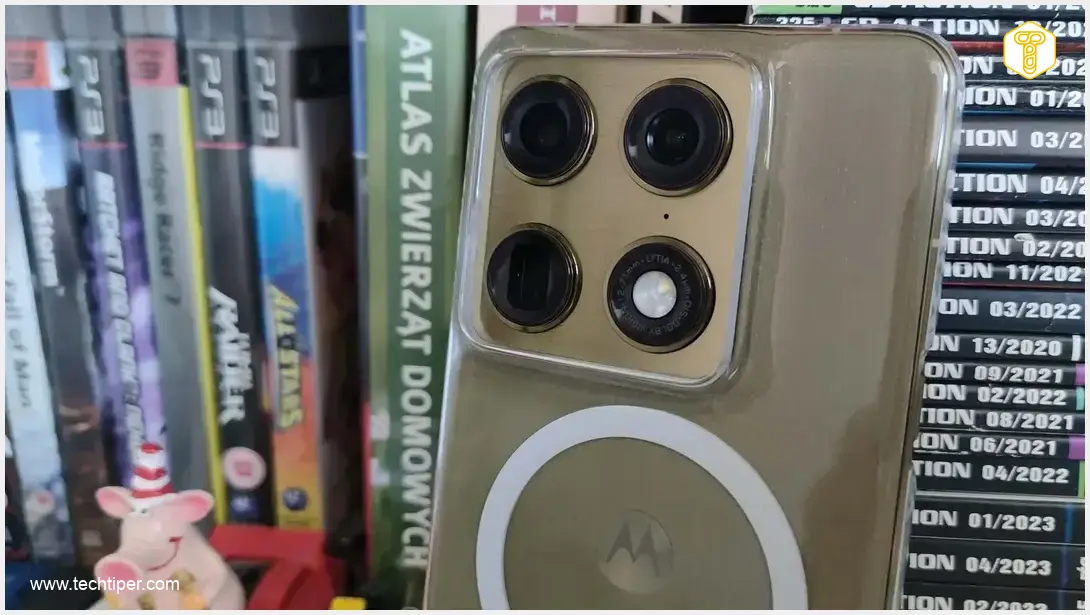
Motorola Signature Flagship Review
-
Battery Life
-
Overall Performance & Fluidity
-
Software Updates & Security
-
Value for Money (after price drop)
-
Charging Speed
-
Expected Longevity
A Worthwhile Flagship Upgrade
Upgrading to the Motorola Signature proved to be an excellent decision, primarily driven by a failing battery in the old mid-range device. The new flagship delivers exceptional battery life, unparalleled fluidity, and the assurance of 7 years of software and security updates. A significant price drop transformed it into a compelling value, making the transition to a premium experience both practical and satisfying, despite the need for a separate charger.
Advantages
- Exceptional battery life (up to two days on a single charge).
- Significantly improved overall performance and system fluidity.
- Guaranteed 7 years of Android updates and security patches.
- Excellent value after substantial price reduction.
- Fast 90W charging capability.
Disadvantages
- Charger not included, requiring a separate purchase.
- Initial high launch price was a significant barrier.
- Long-term longevity of the carbon-silicon battery is yet to be fully proven.
Contents
After 4 Years, I Swapped My Mid-Range Phone for a Flagship. Here Are 3 Reasons Why.
After a solid 4.5 years of service, I finally retired my realme GT Neo 2 smartphone. This mid-range device, which had always punched above its weight, has now been replaced by a true flagship: the Motorola Signature. Interestingly, my old phone wasn’t broken, so I wasn’t forced into an immediate purchase. However, a combination of smaller, yet ultimately crucial, factors led me to make this significant upgrade.
1. My Old Smartphone Worked, But the Battery Was Giving Up
For roughly the past year, my realme GT Neo 2 began exhibiting a noticeable decline in battery life. As an intensive smartphone user for years, this wasn’t entirely unexpected. Features like battery-saving modes and its 65W fast charging capability helped mitigate the effects of battery degradation for a while, making the experience somewhat manageable.
However, during a week-long trip in June 2026, the necessity of an upgrade became glaringly obvious. Having to charge my phone two to three times a day was incredibly frustrating. This was particularly annoying because, apart from the battery, every other aspect of the device still functioned perfectly. I initially thought I could hold out for a few more months, but other considerations soon accelerated my decision-making process.
For insights into how camera technology has evolved, you might be interested in our comparison of old vs. new smartphone camera capabilities.
2. A Price Drop Made the Motorola Signature My Top Choice
I had been eyeing several smartphones for a few months, including models like the POCO F8 Ultra, Nothing Phone (3), and Motorola Edge 70 Pro 5G. These were primarily “flagship killers” – devices offering high-end features without the full flagship price tag – rather than pure flagships themselves.
However, one phone consistently remained in my mind as the “dream option”: the Motorola Signature. Its initial launch price of 4299 currency units was a significant barrier, preventing me from making a purchase decision. This price point was comparable to premium devices like the hypothetical Samsung Galaxy S26+, making it a considerable investment.
Motorola had steadily earned my trust through the positive experiences of family members with their budget-friendly models. For instance, I recommended the Moto G82 5G twice, and more recently, my mother upgraded to a Motorola Edge 60, a solid mid-range option. This consistent positive feedback made me pay closer attention when I heard about Motorola developing a true flagship device, gradually solidifying my resolve to consider it.

The situation changed dramatically when the Motorola Signature received a substantial price reduction. Seven years of Android updates combined with top-tier specifications for just 3299 currency units? It was an offer too good to pass up. While my practical nature urged caution, the significant discount was compelling.
I first checked with my mobile service provider and discovered I could finance the device at exactly that reduced price by extending my contract. It’s always wise to compare the final cost of a device from your operator against market prices, as contract extensions can sometimes lead to paying more overall.
If you’re considering another mid-range option with excellent camera features, check out our 2-month review of the realme 16 Pro 5G.
3. Beyond Battery Life: Unexpected Performance Gains
As of writing this, I’ve had the new smartphone for less than a week. Yet, the sense of comfort and fluidity it provides is something you only truly appreciate when upgrading to a modern flagship device. The most striking improvement isn’t just battery life, but overall performance.
Primarily, the fluidity! While my realme GT Neo 2 already featured a 120Hz display, it’s only now – revisiting it to snap a few photos – that I notice the subtle interface stutters that gradually diminished the joy of browsing content. The Motorola Signature also handles background processes and file loading significantly better. This could partially be attributed to Android 16, but it also reflects a jump of three operating system versions, as my realme had stopped at Android 13.
This brings me to another critical point: cybersecurity. The promise of seven years of Android updates and seven years of security patches is invaluable. This cannot be underestimated in an era where our smartphones serve as both digital wallets and access points to all our most important online services, including banking. My previous smartphone had ceased receiving security patches in October 2024, leaving it more vulnerable over time.
What truly delighted me was the battery’s capability to last up to two days on a single charge (with careful usage). Seeing 35% battery remaining with an estimated 13 hours until the next charge is an experience I haven’t had in a long time. On a related note, I did have to purchase a dedicated charger separately. While I’m not a fan of this trend, spending less than 100 currency units for significantly faster charging (up to 90W) felt like a reasonable trade-off.
Ultimately, my primary issue—the failing battery—was resolved, and as a bonus, I now own a phone that should theoretically serve me well for several years. I’m particularly curious to see how the carbon-silicon battery impacts its long-term longevity. However, that’s a question I’ll only be able to answer after two or three years of actual use.
Frequently Asked Questions (FAQ)
Upgrading to a flagship often brings significant improvements in overall performance, including a smoother user experience, faster app loading, enhanced multitasking, and superior camera capabilities. You also typically gain longer software support, improved cybersecurity, and better battery optimization, even if the battery capacity isn’t drastically larger.
Long-term software and security support are crucial for both functionality and safety. Regular Android updates ensure you have access to the latest features and performance enhancements, while consistent security patches protect your device from emerging cyber threats. Given that smartphones are central to online banking, personal data, and communication, extended support is essential for maintaining privacy and device integrity.
If battery degradation is the sole problem and the phone otherwise meets your needs, consider a professional battery replacement as a cost-effective solution before buying a new device. However, if the phone is several years old, a new battery might only be a temporary fix if other components are also aging, or if you desire significant performance and security upgrades that a new flagship offers.
Source: Self-written. Opening photo: Szymon Balinski.
About Post Author