Contents
Motorola Embraces Android 17: A Look at the Moto Edge 60 Pro Beta
Motorola is making significant strides in its Android 17 adoption, with the Moto Edge 60 Pro becoming one of the first smartphones from the brand to receive this substantial beta update. The changes are numerous, ranging from visually apparent interface overhauls to more subtle, underlying improvements. This move clearly indicates Motorola’s commitment to aligning its “Hello UI” with the design trends set by Google and other premium competitors in the smartphone market.
The Android 17 beta update for the Moto Edge 60 Pro is a substantial download, weighing approximately 5 GB. While the official changelog primarily notes the inclusion of July security patches, user reports highlight a multitude of real-world changes that go far beyond this minimal description.
The firmware, identified as A171VVH.16, is currently being rolled out to a limited group of testers in regions like India and Brazil. These early user reports are crucial, offering the most accurate insights into the future direction of Motorola’s software overlay.
It’s worth noting that the Moto Edge 60 Pro initially launched with Android 15 and later received Android 16. Therefore, Android 17 is likely to be its final major system update, with future support primarily focusing on security patches. Beyond device-specific enhancements, Android 17 itself introduces a broader suite of platform-level innovations. These include improved memory management for smoother performance, enhanced security features to protect user data, and more granular control over notifications, giving users greater command over their device experience.
A Fresh Look: Interface and Notifications Redesigned
One of the most noticeable changes in the beta is the completely redesigned top bar and control center. Users will find refreshed icons for Wi-Fi, network connectivity, and battery status. The quick toggles now feature a new layout, including a “Classic Control Centre” option that bears a striking resemblance to the Pixel UI, indicating a clear move towards a more stock Android aesthetic. The volume panel has also been revamped, taking on a style familiar to Pixel users, further reinforcing Motorola’s strategy to align its interface with Google’s design principles.
A particularly intriguing innovation is the new presentation of “Live Updates” – real-time notifications and information. These updates have been relocated from the left side of the status bar to the vicinity of the front camera punch-hole. This solution is a clear inspiration from the “notification islands” or “Dynamic Island” features seen in competing smartphone ecosystems. However, early implementation by Motorola has drawn some criticism regarding its animation logic: when an application is minimized, it moves downwards, while the “island” remains active at the top of the screen, creating a somewhat disjointed visual experience. Despite this, the Android 17 beta on the Moto Edge 60 Pro also brings a noticeably stronger and more finely tuned haptic engine, which users describe as one of the most significant day-to-day improvements.
Enhanced Lock Screen, Hello UI, and Personalization Options
Motorola has also expanded the customization options for the lock screen, allowing for more adjustments to the layout and visual elements. However, it currently lacks the “depth effect” feature found in some other custom Android overlays.
Within the Hello UI’s app drawer, several improvements have been implemented:
- The background blur has been refined for a cleaner look.
- Folder layouts have been standardized to a 3×3 grid.
- A convenient button for creating new folders has been added.
- The redundant “Apps” header has been removed.
- All app icons now feature a more consistent and unified appearance.
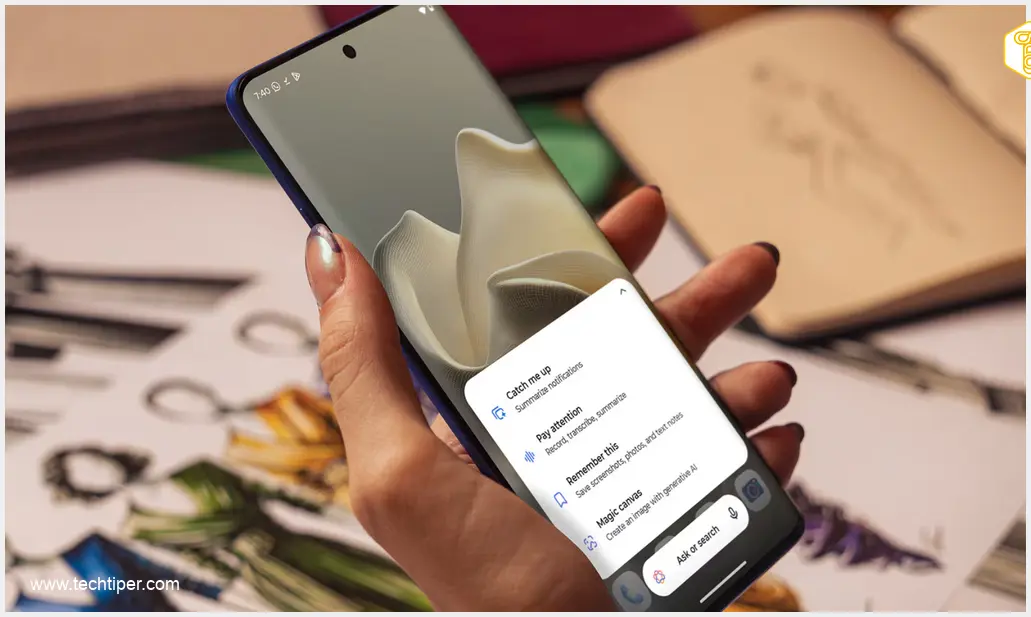
Significantly, the search functionality within the app drawer has been streamlined. It no longer displays a shortcut to MotoAI. This change suggests that Motorola intends to promote Qira and other AI features as integral system components rather than just another widget within the interface.

Qira: Motorola’s AI Assistant Takes Center Stage
One of the cornerstone features of this update is the integration of Qira, a system-wide AI assistant developed collaboratively by Motorola and Lenovo. Qira is designed to operate seamlessly across individual applications and to connect devices “from pocket to cloud.” For the Moto Edge 60 Pro, Qira is being introduced via an Over-The-Air (OTA) update.
Qira was extensively showcased at CES 2026, where it was presented as a system-level intelligence capable of handling voice, contextual, and multimodal tasks. Its goal is to integrate deeply with Lenovo services and the broader ecosystem of devices, promising a more interconnected and intuitive user experience.
Which Motorola Devices Will Receive Android 17?
Motorola’s update rollout strategy typically prioritizes its flagship devices, followed by the Edge series, and finally, the more budget-friendly Moto G line. This indicates that Android 17 will initially reach premium devices. The company is clearly extending its software support cycle, aiming to bring Android 17 not only to its latest flagships but also to newer mid-range and budget models.
Expected devices to receive the Android 17 update include:
- Razr Series: Razr 60 Ultra, Razr 60, Razr 50 Ultra, and Razr 50, alongside the new Motorola Signature model.
- Edge Series: Edge 70, Edge 70 Fusion, Edge 60 Pro, Edge 60 Ultra, Edge 60 Fusion, Edge 60 Neo, Edge 60, Edge 50 Ultra, Edge 50 Pro, Edge 50 Neo, and Edge 50.
- Moto G Series (potential): Moto G86, G86 Power, G75, G67, G57 Power, G57, and G56.
Availability and Future Update Prospects
Currently, the Android 17 beta for the Moto Edge 60 Pro remains exclusive to a limited group of users enrolled in Motorola’s community testing program. Broader deployment of Android 17 across Motorola’s entire portfolio – encompassing flagships down to select Moto G models – is anticipated to commence in the latter half of 2026, with a particular focus on key markets such as India.
Frequently Asked Questions (FAQ)
While the beta is currently limited, a broader official rollout of Android 17 for various Motorola models, from flagships to select Moto G devices, is expected to begin in the second half of 2026.
Qira is a system-wide AI assistant developed by Motorola and Lenovo. It integrates deeply with Android 17 to handle voice, contextual, and multimodal tasks across applications and devices, aiming to provide a more interconnected user experience.
Yes, the new Live Updates feature on the Moto Edge 60 Pro, which displays real-time notifications near the front camera punch-hole, is clearly inspired by the “notification islands” or “Dynamic Island” concepts seen in other ecosystems.
Motorola prioritizes updates for its flagships, followed by the Edge series, and then some Moto G models. While specific models like the Razr series, many Edge devices, and some Moto G phones are expected to receive it, you should check Motorola’s official update schedule for your specific model when it becomes available.
Source: Android Authority, X, Lenovo, Beebom, 91mobiles
Opening photo: Motorola / Press materials
About Post Author