

Contents
Breakthrough in Earth Observation from Space: A Leap Forward with Artificial Intelligence
We are witnessing a pivotal moment in Earth observation from space, marking a significant advancement in how we monitor our planet. Recently, a satellite achieved a remarkable feat: it independently identified and located specific objects on Earth without any direct human intervention from analysts. This groundbreaking accomplishment holds immense significance, not only for the immediate future of space technology but also for its long-term evolution.
AI Takes the Helm: Satellites Autonomously Identify Objects
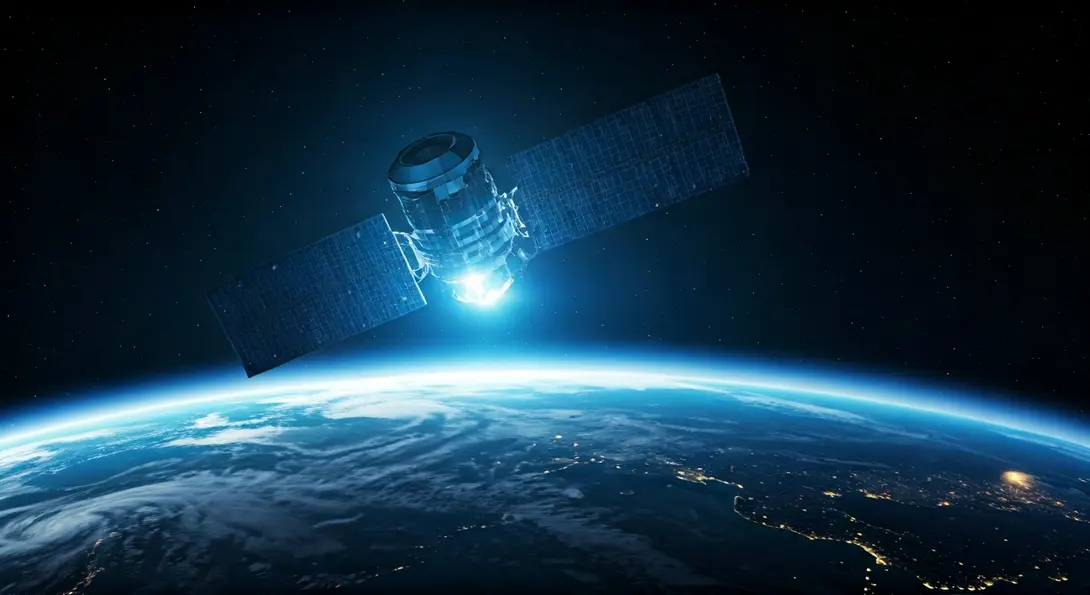
The Yam-9 satellite, developed by the innovative company Loft Orbital, has officially etched its name into history. This advanced machine became the first of its kind to autonomously analyze Earth imagery, successfully pinpointing specific objects without requiring assistance from human analysts.
To achieve this, the satellite leveraged a state-of-the-art vision-language model: Gemma 3, developed by Google DeepMind. This powerful AI tool demonstrated its ability to recognize various objects, including structures located near railway nodes, showcasing its advanced pattern recognition capabilities. The integration of NVIDIA’s Jetson Orrin AGX processor was instrumental in providing the necessary computational power for these complex on-board analyses.
Transforming Space Observation: Short-Term and Long-Term Impacts
This development is poised to deliver substantial benefits, both in the near future and over the long term. In the immediate perspective, we can anticipate a significant increase in the utility and efficiency of space-based sensors. This enhancement will directly benefit analysts, providing them with higher quality, pre-processed data and allowing them to focus on more complex interpretations rather than initial object identification. For more on AI’s role in search and visual understanding, see: Google Live Search AI Conversation Visual Search.
Looking further ahead, this technology paves the way for satellites to autonomously learn and detect suspicious or anomalous activity on Earth. This could revolutionize monitoring for various purposes, from environmental protection to disaster response. Moreover, future astronauts are expected to benefit from dedicated AI-powered agents designed to assist them, particularly in scenarios where traditional interfaces like keyboards are impractical. It’s important to note that this pioneering project was developed in close collaboration with NASA, underscoring its strategic importance.
Advancing National Space Capabilities: The Role of Independent Satellite Systems
Continuing the discussion on Earth-orbiting satellites and their capabilities, it’s pertinent to highlight the development of independent satellite infrastructure. Such systems, often involving national engineering expertise, play a crucial role in enhancing a country’s observational autonomy and capabilities.
For instance, an independent satellite system, potentially similar to the first military satellite developed by Poland, known as ICEYE and launched towards the end of 2025, signifies a major leap. The initiation of operations for such systems is profoundly important for the development of national space sectors. Historically, many nations have had to rely on data gathered by external commercial satellites, which can impose limitations on operational independence and data access.
Advanced satellite systems are typically equipped with sophisticated instruments like SAR (Synthetic Aperture Radar) radars. These radars are capable of conducting observations irrespective of challenging atmospheric conditions, such as clouds or fog, and can operate effectively both day and night. This capability is vital for continuous monitoring and rapid response needs. For further insights into national contributions to the space industry, explore: Poland’s Artemis II Mission Contribution Space Industry.
Frequently Asked Questions (FAQ)
AI on satellites, such as the Yam-9’s use of Google DeepMind’s Gemma 3 vision-language model, processes Earth imagery directly on board. Equipped with powerful processors like NVIDIA’s Jetson Orrin AGX, these systems analyze visual data to recognize and categorize specific objects, like railway infrastructure, without needing to transmit raw data back to Earth for human review. This real-time, on-board analysis significantly speeds up detection and reduces data transmission requirements.

AI-powered Earth observation offers numerous benefits across sectors. It enhances the efficiency of environmental monitoring by quickly identifying changes in land use or detecting illegal activities. In disaster management, it allows for rapid assessment of damage and identification of affected areas. For urban planning, it provides up-to-date data on infrastructure development. Furthermore, it improves national security through automated detection of anomalous activities, all while reducing the workload on human analysts.
Independent satellite systems, especially those equipped with Synthetic Aperture Radar (SAR) technology, significantly boost a nation’s autonomy and capabilities. SAR allows for high-resolution imaging through clouds, fog, and at night, providing continuous monitoring regardless of weather or light conditions. This independence eliminates reliance on external commercial satellites for critical data, ensuring direct control over information gathering for national security, economic development, and environmental protection.
Source: TechCrunch
Opening photo: Gemini
About Post Author
