

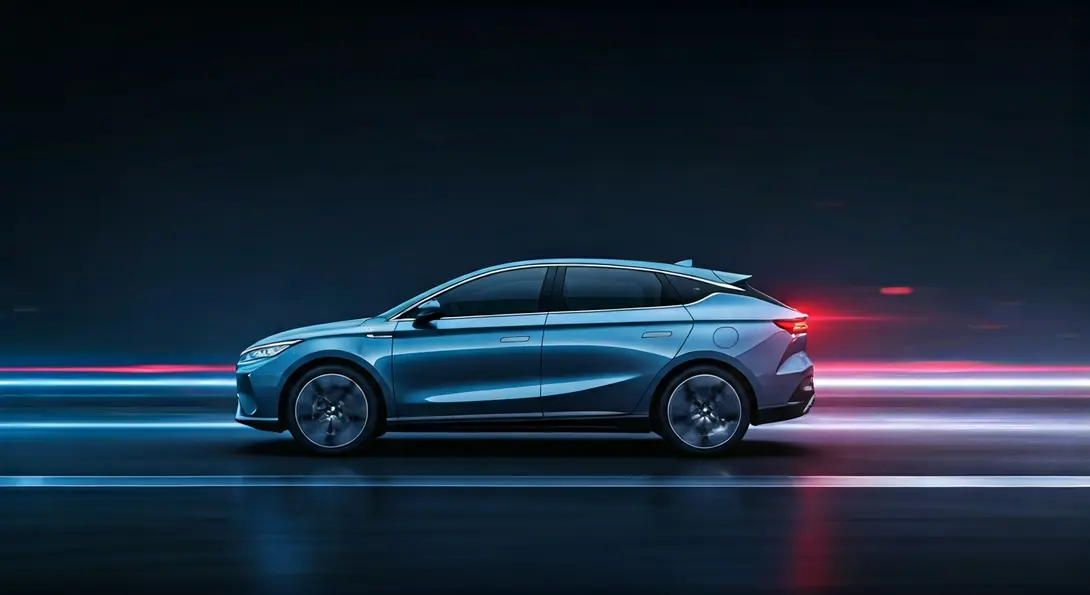
BYD, the Chinese automotive powerhouse, has solidified its status as the world’s largest producer of electric vehicles (EVs). Beyond its dominance in the EV sector, the company is rapidly ascending the global popularity ranks across all vehicle types, recently outperforming established players like Ford. This strategic ascent places BYD on the cusp of breaking into the top five largest car manufacturers worldwide, signaling a significant shift in the automotive landscape.

Contents

BYD’s Impressive Global Sales Performance
In the past year, BYD achieved remarkable sales figures, delivering over 4.6 million electric and hybrid vehicles. While this number might seem abstract initially, its significance becomes clear when contextualized against the performance of other major brands.
Currently, BYD, already the undisputed leader in EV production, stands as the sixth most influential force in the global automotive market, considering all powertrain types. This impressive trajectory recently saw them overtake the iconic Ford brand in overall sales rankings, underscoring their rapid expansion and increasing consumer appeal across various markets.
Market Dominance and Future Ambitions
BYD’s success isn’t uniform across all regions; certain markets have shown exceptional growth. The company reported particularly strong performance in Brazil, the United Kingdom, and Australia, where it has emerged as the preferred manufacturer of electric cars. This regional dominance highlights BYD’s ability to effectively compete and surpass traditional automotive titans and new EV players alike, including Tesla and Kia, in key international markets.
The company’s ambition extends far beyond its current achievements. Wang Chuanfu, BYD’s CEO, reportedly stated in a shareholder meeting that the ultimate goal is to surpass Toyota as the world’s largest automaker. Achieving this would necessitate a substantial increase in production, reaching at least 11.4 million vehicles annually, a target that underscores BYD’s long-term vision and aggressive growth strategy.
For more insights into BYD’s infrastructure expansion, consider reading about BYD’s Megawatt EV Charging Europe initiatives.
Pioneering the Future: Solid-State Battery Technology
BYD is not only focused on sales volume but also on technological innovation, particularly in battery development. The company is on the verge of implementing significant advancements in the batteries used in its vehicles, with a strong focus on solid-state batteries. This groundbreaking technology, known for its potential to offer higher energy density, faster charging, and enhanced safety compared to traditional lithium-ion batteries, is being introduced in two distinct phases.
- Phase One (2027): Partial production of solid-state batteries is scheduled to commence. This initial phase will allow BYD to integrate the new technology into a limited number of vehicles, gather real-world data, and refine manufacturing processes.
- Phase Two (2030): Three years later, the company plans to initiate mass production of solid-state batteries, signaling a full-scale deployment across its vehicle lineup.
Interestingly, the introduction of solid-state batteries does not mean BYD will abandon its conventional liquid-electrolyte batteries. Lian Yubo, BYD’s chief scientist, confirmed that both technologies would coexist and complement each other. This approach suggests a strategic diversification, allowing BYD to cater to various market segments and performance requirements while gradually transitioning towards more advanced battery solutions.
The development of solid-state batteries is a critical area of innovation across the automotive industry. Other manufacturers are also making strides; for instance, read about MG Electric Cars and their semi-solid-state battery developments.
Frequently Asked Questions (FAQ)
BYD’s approach to solid-state batteries is notable for its phased implementation (partial production by 2027, mass production by 2030) and its commitment to complementing, rather than entirely replacing, traditional liquid-electrolyte batteries. This strategy, confirmed by Chief Scientist Lian Yubo, allows for a more flexible and gradual integration of new technology, potentially balancing cutting-edge performance with established reliability and cost-effectiveness. Many other manufacturers are also exploring solid-state tech, but BYD’s dual-technology roadmap offers a distinct path to market.
Source: Electrek. Opening photo: Gemini
About Post Author
