

Contents
Mastering Your Air Fryer: Avoiding Common Mistakes and Converting Recipes
While you can spend hours reading about various air fryer models, nothing truly teaches you how to operate these relatively new kitchen appliances like hands-on practice. I learned this the hard way, making a significant mistake myself when preparing a simple dish. The losses were minimal, but it could have been much worse. This comprehensive guide will help you avoid similar pitfalls and get the most out of your air fryer.
Understanding How an Air Fryer Works
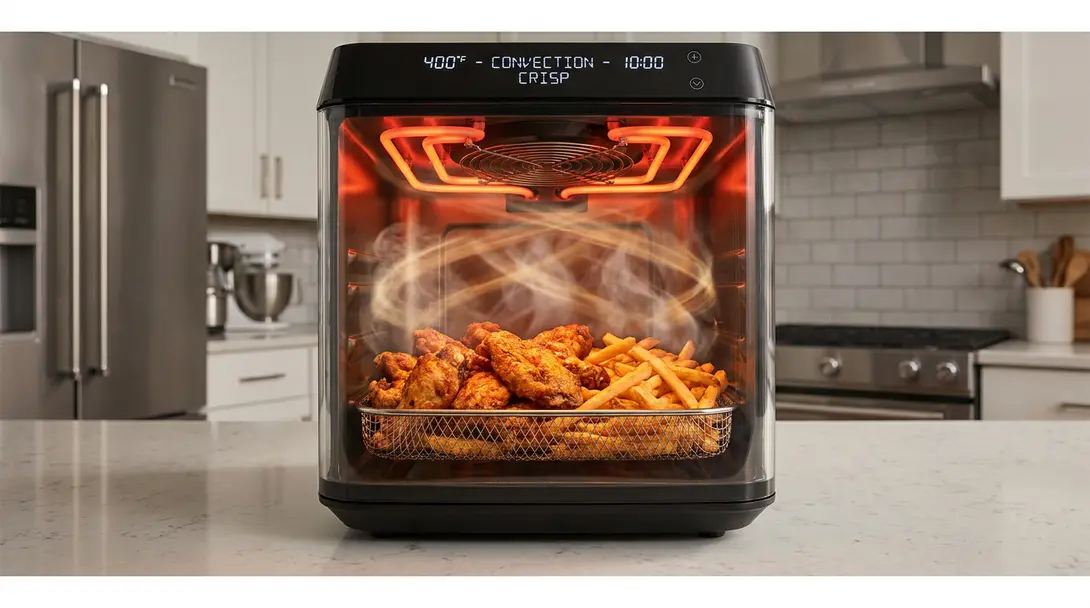
An air fryer is essentially a miniature convection oven. When we discuss how air fryers operate, we often highlight their function as compact hot-air circulation devices. If you regularly use a conventional oven with a convection (fan-assisted) setting, you might already be familiar with results similar to those achieved with an air fryer. The primary difference lies in scale; while the operating principle is the same, an air fryer offers a more intense and efficient cooking environment due to its smaller size. This intensity is key to its speed and effectiveness.
It’s crucial to remember this distinction because, especially without experience using convection cooking, you should never convert oven times and temperatures 1:1 for an air fryer. In an air fryer, the hot air circulates much faster and more intensely due to the confined space. In the mildest scenario, this oversight will lead to overcooked or burnt food. In a worse situation, you’ll end up with charred remains and a lot of cleaning.
For more insights into the growing popularity of these appliances, read about The Rise of the Air Fryer: Replacing Microwaves and Ovens.
Converting Oven Temperatures and Times for Your Air Fryer
This brings us to the core challenge. You likely have a wealth of recipes with cooking times and temperatures already “translated” for conventional ovens. Moreover, the vast majority of pre-packaged foods still don’t provide air fryer instructions. Fortunately, there are several effective approaches to adapt these recipes:
- Use an Online Converter: A practical solution is to bookmark a reliable website that converts oven cooking times and temperatures to air fryer settings. Many such tools are available, allowing you to input your conventional oven settings and receive optimized values for your air fryer instantly. Look for one with a user-friendly interface for quick conversions.
- Apply a General Conversion Rule: If you prefer a less tech-dependent method, you can use a simple rule of thumb. Generally, reduce the temperature by approximately 15°C (or 25-30°F) and decrease the cooking time by about one-third. For example, if a recipe calls for 200°C for 30 minutes in a conventional oven, you might try 185°C for 20 minutes in your air fryer.
It’s important to note that these guidelines typically apply to conventional oven baking without a convection setting, unless the specific recipe or online converter indicates otherwise. The intense circulation within an air fryer means food cooks faster and often crisps better than in a large oven.
However, the truth is that you’ll learn the most through practical experience. Instead of blindly adjusting settings, it’s wise to start with the suggested conversion methods. Always err on the side of caution by setting a shorter cooking time initially. An undercooked dish can easily be returned to the air fryer for a few more minutes, but burnt food cannot be salvaged. This iterative approach allows you to perfect your cooking for any recipe.
Considering an upgrade or curious about specific models? Check out our Tefal Easy Fry Infrared Air Fryer Review and Features.
Frequently Asked Questions (FAQ)
Air fryers operate as compact convection ovens. Their smaller cooking chamber and powerful fan circulate hot air much more rapidly and directly around the food compared to a full-sized oven. This intense and even heat distribution significantly reduces cooking times and often results in crispier textures.

Yes, you can generally use aluminum foil or parchment paper in an air fryer, but with some precautions. Ensure that the foil or paper is properly secured under the food to prevent it from flying around and obstructing the air circulation or coming into contact with the heating element, which could pose a fire risk. Always leave enough space for air to circulate freely around the food for optimal cooking.
For most air fryers, the cooking basket and drawer are dishwasher-safe. For manual cleaning, allow the unit to cool completely. Wash the basket and drawer with warm, soapy water and a non-abrasive sponge. For the main unit, wipe the interior and exterior with a damp cloth. Always refer to your air fryer’s manual for specific cleaning instructions and to ensure longevity.
About Post Author
