

Contents
China’s Submerged Supercomputers: A Leap Forward in Data Management
China has long been recognized as a global leader in implementing innovative technologies. A testament to this pioneering spirit is their recently opened data center, which operates entirely underwater. Interestingly, this isn’t the first such solution deployed within the nation.
Underwater Data Centers: A Functional Reality
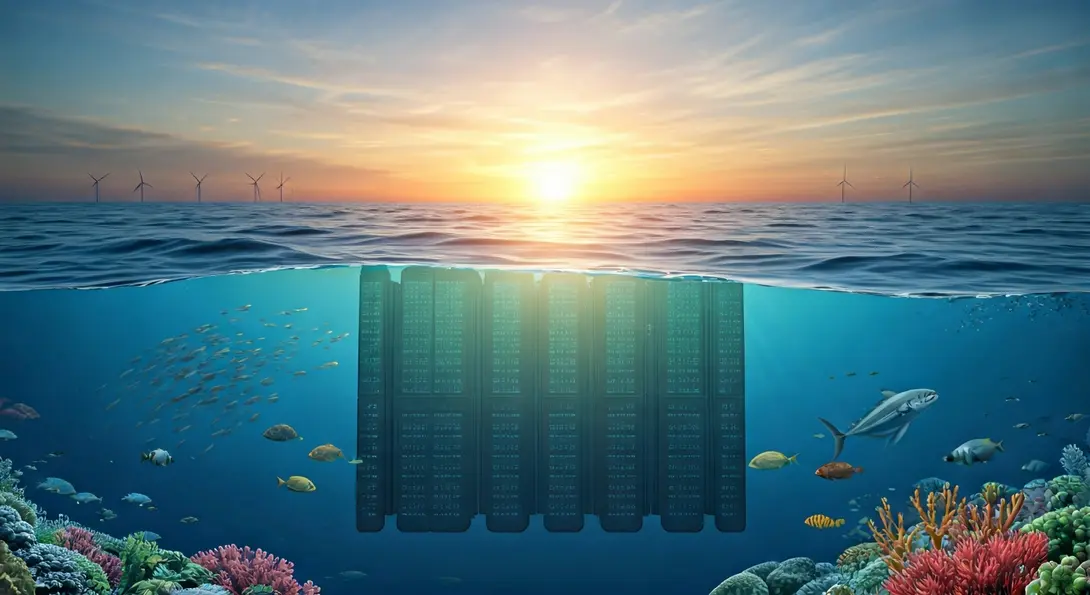
Off the coast of Shanghai, a sophisticated data center with a capacity of 24 MW has been operational for some time, situated within the Lingang economic zone. What makes this infrastructure truly remarkable is its placement ten meters beneath the surface of the water.
Located approximately ten kilometers from the shoreline, this facility can consume up to 20% less energy than comparable land-based data centers. This efficiency is primarily due to the natural cooling provided by the surrounding seawater. Underwater data centers also offer significant advantages in reducing the demand for fresh water, a critical resource often consumed by traditional cooling systems.
Intriguingly, the Shanghai facility is not China’s inaugural underwater data center. An earlier submerged data center commenced operations in 2023 in the Hainan province. What, then, distinguishes the Lingang infrastructure as unique? Its power supply is entirely reliant on offshore wind energy, making it a fully renewable solution.
While the concept is revolutionary, it’s important to address potential downsides. The heat generated by the submerged data center could negatively impact the local marine ecosystem. Fortunately, continuous and appropriate monitoring can help mitigate these adverse consequences.
For more insights into cutting-edge technological advancements and their implications, explore topics like AI server deletion experiments and the nuclear option, and understand how bots and AI are generating significantly more internet traffic.
Public Concerns Regarding Data Center Development
The expansion of data center infrastructure is a market where many regions globally aim to establish a strong presence. However, such projects can sometimes face local opposition. For instance, a proposed data center near a major metropolitan area in another country encountered significant resistance from local residents.
The community expressed concerns regarding various issues, including electricity consumption (which could be comparable to the amount used by a large city) and perceived lack of transparent communication from the developers. The future operational timeline for that specific data center remains uncertain.
Frequently Asked Questions (FAQ)
Underwater data centers primarily save energy through natural cooling. The surrounding cold seawater efficiently dissipates the heat generated by servers, significantly reducing the need for energy-intensive mechanical cooling systems common in land-based facilities.

Beyond energy savings, these centers drastically reduce the demand for fresh water, which is often used for cooling in traditional data centers. Additionally, when powered by renewable sources like offshore wind, as seen in the Lingang facility, their carbon footprint is further minimized.
A primary concern is the potential impact of heat dissipation on local marine ecosystems. While the ocean can absorb heat, concentrated heat release in specific areas could affect marine life. Continuous monitoring and careful site selection are crucial to mitigate these effects.
Currently, underwater data centers are an emerging and experimental technology, though China has already deployed multiple operational facilities. Companies like Microsoft have also explored similar concepts (Project Natick), indicating growing interest in their potential.
Source: The Guardian. Opening photo: Lin-gang Special Area / press materials
About Post Author
