

Contents

Beat the Heat: The Emergency Role of Aluminum Foil in Home Cooling
Summer often brings sweltering temperatures, frequently exceeding 30 degrees Celsius (86°F). Such heat can be oppressive not only outdoors but also within our homes. Fortunately, a surprisingly simple solution exists to combat this discomfort: the humble aluminum foil.

The Unexpected Cooling Power of Aluminum Foil
Can aluminum foil genuinely protect us from intense heat? For some, the answer might be astonishing, but it’s a resounding yes. Residents in various cities, like Liza Ebbecke and Amanda Rollins, have personally experienced its effectiveness, with their stories even featured in publications like USA Today.
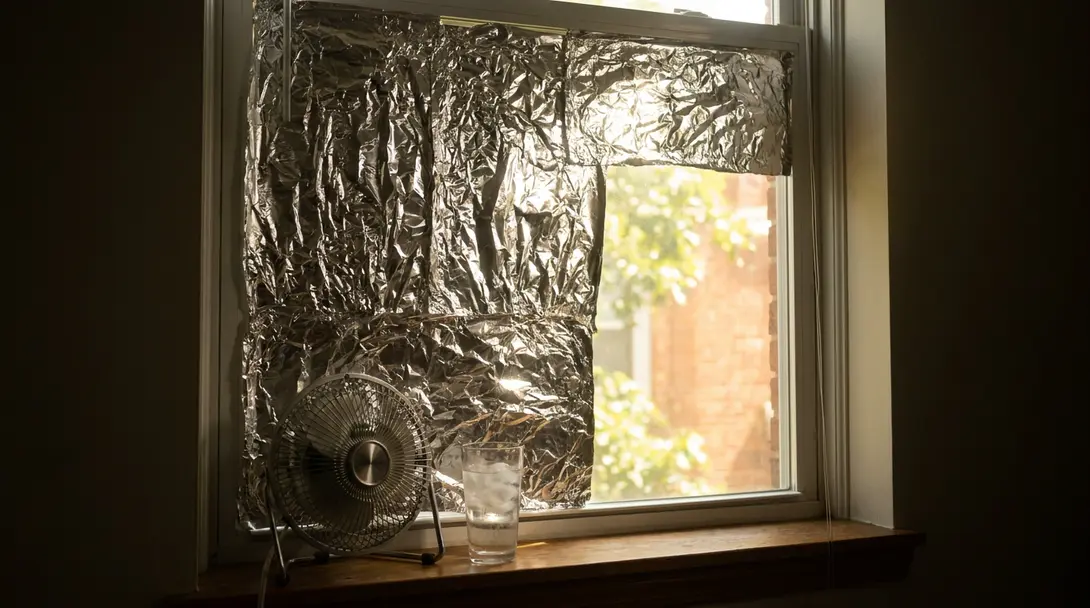
During recent heatwaves, both women opted for an unconventional method to “cool” their homes: covering their windows with aluminum foil. You might be wondering, “Why does this actually work?” The explanation is far simpler than it appears.
How Aluminum Foil Keeps Your Home Cooler
Aluminum foil is highly effective at reflecting solar radiation. By covering your windows, the foil bounces away the sun’s intense rays, preventing them from penetrating and heating your indoor spaces. This can lead to a noticeable reduction in room temperature.
However, many experts point out that while this solution offers immediate relief, it’s generally considered a temporary or emergency measure. It’s not a long-term strategy for home cooling due to several reasons:
- Aesthetics: Foil on windows can significantly impact the appearance of your home, both inside and out.
- Light Blockage: It completely blocks natural light, making rooms dark and potentially impacting mood.
- Window Damage: In some cases, prolonged exposure to trapped heat between the foil and the glass could potentially cause thermal stress or damage to certain types of windows, especially if they are old or single-paned.
- Residue: As noted by users, removing the foil can leave behind stubborn, sticky residues that are difficult to clean.
Beyond Windows: Protecting Your Car Keys
Let’s briefly explore another innovative use for aluminum foil. Did you know it can also effectively protect your car keys? In this context, aluminum foil acts as a rudimentary Faraday cage.
When wrapped around your key fob, the foil creates a protective barrier that reflects or blocks electromagnetic waves. This makes it significantly harder for criminals using “relay attack” devices to intercept the signal from your key fob to your car, thus preventing unauthorized access and theft. This is particularly relevant for modern keyless entry systems. For more detailed information on preventing such theft, you might find our guide on keyless car theft protection helpful.
While this method offers a simple, temporary layer of security, it should also be viewed as a stop-gap measure. Ideally, the automotive industry will continue to implement more robust, built-in security features to protect keyless entry systems and ensure the safety of our vehicles.
Frequently Asked Questions (FAQ)
Yes, aluminum foil can be surprisingly effective as an emergency measure to reduce indoor temperatures during extreme heat. It works by reflecting sunlight and solar radiation away from your windows, preventing heat from entering your home. However, it’s considered a temporary solution due to aesthetic and potential long-term drawbacks.
While effective, aluminum foil on windows has several downsides. It blocks all natural light, making rooms dark. It can also be aesthetically unappealing from both inside and outside. Furthermore, some users report that removing the foil can leave behind sticky, hard-to-clean residue. In rare cases, trapped heat might even cause thermal stress to certain types of window glass over extended periods.
When wrapped around a car key fob, aluminum foil can create a makeshift Faraday cage. This barrier blocks or significantly weakens the electromagnetic signals emitted by the key. This makes it much more difficult for thieves using relay attack devices to intercept the key’s signal and trick your car into unlocking or starting, thus protecting against keyless car theft.
Absolutely. For long-term home cooling, consider options like energy-efficient windows, reflective window films, insulating curtains or blinds, proper attic insulation, and professional air conditioning systems. Planting shade trees around your home can also significantly reduce heat gain. These solutions offer more sustainable and aesthetically pleasing alternatives to aluminum foil.
Source: USA Today. Opening photo: Gemini
About Post Author
