

Contents

Ice Maker vs. Store-Bought Ice: Which is More Cost-Effective and Chills Better? [TEST]
During the warmer months, there’s nothing quite like a cold drink to beat the heat, especially when temperatures soar. For me, ice is an indispensable part of summer; even a refrigerated beverage won’t stay cool for long enough in scorching weather. Many times, I’ve reached into the freezer for ice, only to find it empty. Frustrated, I decided “never again” and invested in a home ice maker. Was it a good decision?

Understanding the Home Ice Maker: What It Is and How It Works
Online marketplaces offer a wide array of ice-making devices. I opted for a mid-range product capable of producing eight ice cubes simultaneously, though versions making six are also available. The specific model I purchased, from a reputable brand, cost approximately a few hundred units of local currency.
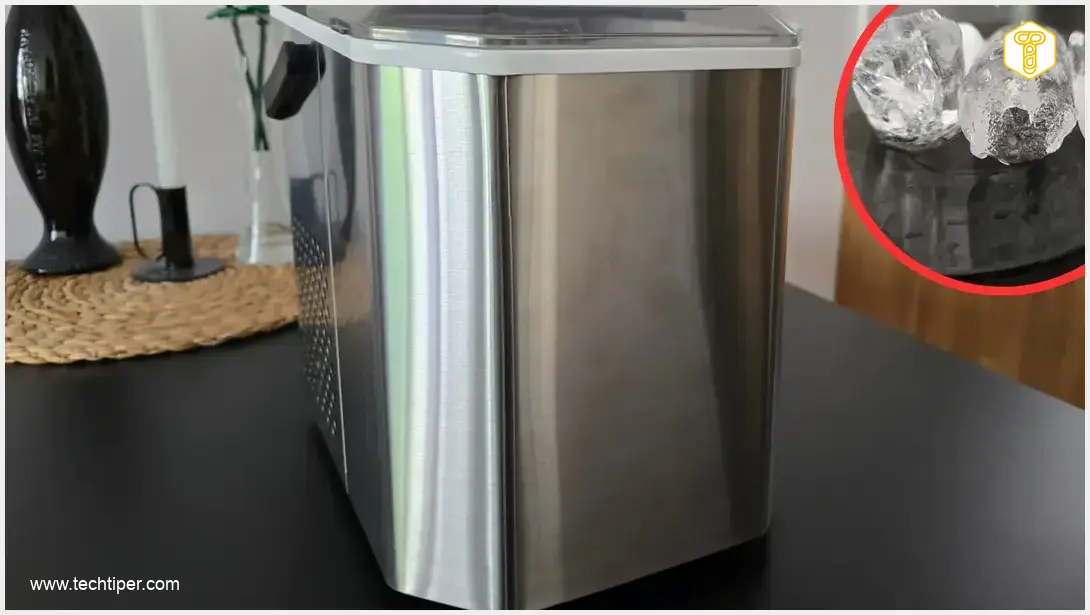
The ice machine, while efficient, is quite substantial in size, measuring roughly 24x30x30 centimeters (approximately 9.4 x 11.8 x 11.8 inches). This means it might not fit comfortably in every kitchen. Its sleek silver and black finish, however, should blend well with most interior designs.
As the manufacturer advises, it’s crucial to handle the machine gently during initial setup, avoiding vigorous shaking or tilting. If mishandled, you might need to wait for the coolant liquid to settle back into place within the system, similar to setting up a new refrigerator.
This particular ice maker operates at 150 watts, has a water reservoir capacity of about 1.2 liters (approximately 0.3 gallons), and promises to produce 12 kilograms (approximately 26.5 lbs) of ice in 24 hours. While I’ve never operated it for a full day—which would be quite an undertaking—this specification provides a useful benchmark for comparing different models on the market.
Rapid Production: The Magic Happens in Just 8 Minutes
Operating the machine is remarkably straightforward. Simply plug it in, select your desired ice size (small or large cubes; there’s also a cleaning mode), and pour in water. For optimal performance, it’s best to give it a head start by using pre-chilled water from the refrigerator rather than tap water.
After a mere 8 minutes, you’ll hear the distinctive sound of ice cubes dropping into the collection basket. The first batch of ice is usable but typically smaller in volume than subsequent batches. This is a common phenomenon, much like the “first pancake rule” where the initial one often turns out a bit imperfect.
This initial size difference occurs because the machine needs to cool itself down during its first cycle. A useful trick is to avoid placing the ice basket immediately. This allows the first few cubes to fall back into the water reservoir. Not only are these initial, smaller cubes repurposed, but the water itself becomes significantly colder, sustaining lower temperatures longer and thus improving the efficiency of subsequent ice production. I’ve adopted this method ever since discovering its effectiveness.
Regarding noise levels, the freezing process is audible but remains relatively low. While I wouldn’t recommend taking a business call with it running in the background, casual activities like watching a movie or other light entertainment will quickly make you forget it’s even there. However, the most noticeable sound is the dropping of finished ice cubes into the basket, which occurs like clockwork every 8 minutes, given the machine’s rapid output.
I decided to test the manufacturer’s claims against actual performance. After one hour of operation with large cubes, the machine produced 350 grams (about 0.77 lbs) of ice. After two hours, this increased to 650 grams (about 1.43 lbs). By the end of the third hour, I had almost exactly 1 kilogram (about 2.2 lbs) of ice. This translates to an output of 300-350 grams per hour, totaling 7.2 to 8.4 kg (15.8 to 18.5 lbs) per 24 hours – a figure somewhat below the advertised 12 kg. While ice makers offer convenience, assessing the actual efficiency of kitchen appliances is always key, whether it’s for chilling drinks or cooking with devices like the Tefal Easy Fry Infrared Air Fryer.
The discrepancy in output could stem from several factors. Smaller cubes might freeze faster, potentially yielding more kilograms over 24 hours. Alternatively, the machine might become more efficient after several hours of continuous operation. It’s also possible that manufacturers measure efficiency under ideal environmental conditions, though it’s unlikely anyone would use an ice maker in extreme cold.
Another practical aspect is the 1.2-liter water tank, which typically provides enough water for about two full baskets of ice. The machine operates continuously until either the water runs out or the ice basket is full, both conditions indicated by warning lights.
Ice Maker vs. Store-Bought Ice: A Cost-Benefit Analysis
Having established the ability to make ice at home, the next logical step is to evaluate if this purchase was truly worthwhile. While it’s too late for me to reconsider, my findings might help you make an informed decision. The aspects of cost-effectiveness, efficiency, and quality are all significant here.
Is an Ice Maker Worth It? When Does It Pay Off?
Let’s start with the most basic comparison. Ice, essentially frozen water, is readily available and affordably priced at most grocery stores. I could purchase a kilogram of store-bought ice for a few units of local currency. I initially thought it would be hard to beat such a low price, but I was surprised by my findings.
Revisiting the performance calculations from earlier: three hours of machine operation yielded one kilogram of ice. A quick calculation reveals that a 150-watt device running for 180 minutes consumes approximately 0.45 kWh of electricity. While electricity costs vary, I estimated the production of 1 kg of ice cost me a fraction of a unit of local currency. This means that homemade ice is significantly cheaper—up to eight times less expensive—than its store-bought counterpart.
Expanding on these economics, albeit with more scientific curiosity than strict financial prudence: to spend an equivalent of the ice maker’s purchase price (say, a few hundred units of local currency) on store-bought ice, one would need to buy approximately 87.5 kg (about 193 lbs) of ice. Over this period, the ice maker would consume around 13.5 kWh, costing about 14 units of local currency in electricity. Therefore, to break even on the device’s cost and operational expenses, you’d need to produce slightly over 91 kg (about 200 lbs) of ice with your home unit.
Even if you host frequent barbecues and fully embrace the summer, it’s unlikely a home ice maker will “pay for itself” within a single season, unless you operate a bar or restaurant. However, its value often lies beyond pure financial return, offering unparalleled convenience. This brings to mind how some gadgets, like those featured in our ranking of technology gadgets that sound like a joke but are real, initially seem like novelties but prove their worth through unexpected utility and convenience.
What Kind of Ice Does an Ice Maker Produce?
The ice produced by these machines is quite distinct. Instead of a solid, square cube, it typically forms a small, hollow “thimble” or “nugget” shape. This design is a direct result of the machine’s freezing mechanism and carries both advantages and implications.
The fact that a batch of eight cubes freezes in just eight minutes remains a minor technical marvel to me. I grew up accustomed to ice taking at least an entire night to freeze in traditional trays. With an ice maker, I can literally fill my freezer to the brim with ice in a relatively short amount of time.
However, even on the “Large” setting, ice maker cubes are generally smaller than standard tray-made cubes, not to mention the larger commercial ice you might buy. Without a physics degree, I had a hunch that these smaller, hollow cubes might melt faster in a drink than traditional solid cubes.
Their design provides a larger surface area for heat exchange, and their cup-like shape allows them to transfer cold from both internal and external surfaces. Traditional solid cubes, on the other hand, primarily melt from the outside, which theoretically should allow them to last longer in a beverage. Furthermore, larger individual mass can contribute to extended melting times. Naturally, this called for an experiment.
Store-Bought Ice vs. Ice Maker Ice: A Cooling Test
The conditions for this test were straightforward. In a room at approximately 25 degrees Celsius (77 degrees Fahrenheit), I placed two identical cups, also at ambient temperature. Into each cup, I added precisely 100 grams (about 0.22 lbs) of ice: large store-bought cubes in one and smaller ice maker cubes in the other. I then filled both with an equal amount of water (250 ml) straight from the refrigerator, which had an initial temperature of about 7 degrees Celsius (44.6 degrees Fahrenheit).
Temperature measurements were taken after quickly stirring the contents and specifically in the lower part of the cup, ensuring no direct contact with the ice cubes themselves or the warmer bottom of the container. My goal was to measure several aspects: which type of ice cooled the water faster, which beverage stayed colder for longer, and whether the smaller ice maker cubes indeed melted more quickly than their larger counterparts. The results were quite surprising.
After just about 2 minutes, the ice maker cubes took the lead, cooling the water by 0.6 degrees Celsius more than the store-bought ice. After 10 minutes, this advantage grew further to a 0.7-degree Celsius difference in their favor. At the 20-minute mark, the difference was 0.4 degrees Celsius. Thirty minutes into the experiment, the temperatures of both beverages had dropped, which was an interesting observation, with a 0.7-degree Celsius difference still favoring the ice maker ice.
I assume that 30 minutes is ample time to enjoy a drink with ice. Within this timeframe, the ice from the ice maker not only started cooling the water faster but also maintained lower temperatures for a longer duration. Remarkably, the remaining ice mass in both cups after 30 minutes was comparable.
Since neither cup was completely devoid of ice, I continued the experiment. The second round of the showdown yielded further insights.
In summary, it took approximately 57 minutes for the ice to reduce to negligible remnants in both cups. By this point, the beverage temperatures had risen significantly (5.2 degrees Celsius vs. 5.4 degrees Celsius) but still remained below the initial temperature of water directly from the refrigerator (7 degrees Celsius).
Conclusion: Convenience, Cost, and Performance
What can be concluded from all this? I won’t pretend that the primary reason for purchasing an ice maker was purely economic. I’m not a habitual buyer of store-bought ice, but I periodically need larger quantities—both for chilling carbonated drinks and for mixing cocktails. This machine primarily offers unparalleled convenience and 24/7 availability.
When not needed, my freezer can be completely ice-free, saving valuable space. If I suddenly crave an iced drink, it takes a maximum of 15 minutes from turning on the machine to satisfying that craving. For entertaining a small group, I can prepare a couple of bags of ice in advance, perhaps the day before. And if ice runs out during a larger party, the ice maker can operate continuously for hours, replenishing supplies in real-time.
The true power of an ice maker isn’t necessarily massive savings, although a kilogram of ice for a fraction of a unit of local currency is certainly appealing. It’s about ending the common dilemma of “Sorry, I’m out of ice, but I’ll make more, and it’ll be ready just as you’re leaving.”
Frequently Asked Questions (FAQ)
A typical home ice maker with a power rating of 150 watts, like the one tested, consumes approximately 0.45 kWh to produce 1 kilogram (about 2.2 lbs) of ice over three hours. This translates to a minimal cost per kilogram, often significantly less than buying ice.
The freezing process of an ice maker produces an audible but generally low-level hum. The loudest part of the operation is the dropping of finished ice cubes into the collection basket, which occurs periodically (e.g., every 8 minutes). While not ideal for quiet, focused activities like online meetings, it’s typically easy to ignore during casual entertainment.
Yes, surprisingly. While smaller, hollow ice maker cubes might seem like they’d melt faster, tests show they can cool beverages more rapidly and maintain lower temperatures for longer compared to larger, solid store-bought cubes. This is because their unique shape offers a larger surface area for heat exchange, both internally and externally.
Using pre-chilled water from the refrigerator instead of tap water can significantly improve an ice maker’s efficiency. It helps the machine cool down faster initially and can speed up subsequent ice production cycles, leading to more ice in a shorter amount of time.
Opening photo: Krzysztof Sobiepan
Source: Krzysztof Sobiepan
About Post Author
