

Contents
The Viral Spoon Unlock Myth: Fact or Fiction?
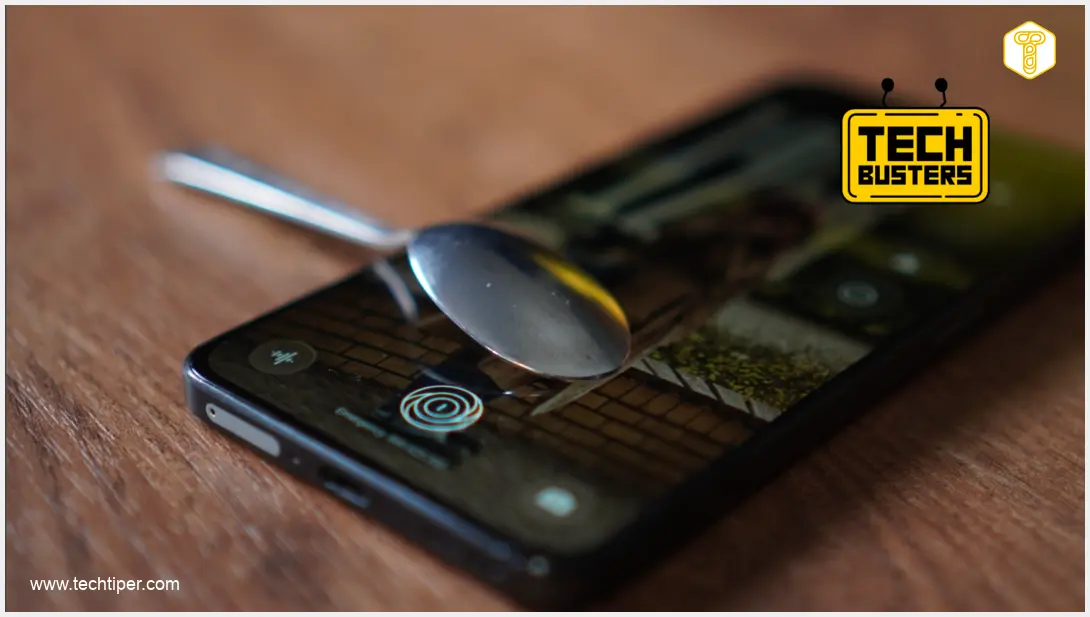
Recently, a peculiar trend has swept across TikTok, with some creators claiming that a simple spoon can unlock a smartphone. The theory posits that a spoon can conduct the biometric signal from a finger pressed into its curve, thereby fooling the device’s fingerprint sensor. While these videos often make it appear as though the trick works, we decided to put this claim to the test ourselves.
Unpacking the Smartphone Spoon Unlock Phenomenon
In a TikTok video posted by user “aasurek,” featuring a OnePlus 11 5G (2023 model), the spoon-unlocking method seemingly works. However, such demonstrations often employ clever video editing or specific, non-standard smartphone settings to create the illusion. It’s crucial to remember that what appears on screen isn’t always what’s happening in reality.
Our Independent Verification
To verify this claim, we conducted our own experiment using a smartphone from the same brand and year: a OnePlus Nord 3 5G. We confirmed that this device, like many modern smartphones, utilizes an optical in-display fingerprint sensor. These sensors work by capturing an optical image of your fingerprint, analyzing its unique ridges and valleys. They require the actual physical contact of a registered finger to accurately read the biometric data.
Each attempt to unlock the phone by placing a spoon with a registered finger on its surface resulted in an error. This is because a spoon, despite being conductive, cannot replicate the intricate biometric pattern of a human fingerprint required by an optical sensor. The spoon simply acts as a barrier or an inconsistent surface, preventing the sensor from obtaining a clear and accurate scan.
Why Do These Deceptive Videos Exist?
Considering the ineffectiveness of the spoon trick, one might wonder why creators invest time in producing such misleading content. The answer often lies in the nature of viral online trends and the pursuit of engagement.
The Art of Digital Manipulation
Faking such a video is relatively straightforward. A creator might record a screen unlock sequence, then replay that recording while simultaneously placing the spoon on the screen at the opportune moment. The viewer, unaware of the pre-recorded footage, perceives a successful unlock.
Understanding Online “Bait” Content
The simplest explanation for these videos is that they are designed as “bait” or “clickbait.” Creators intentionally fabricate such content to provoke strong reactions: surprise, disbelief, amusement, or even frustration. This strategy is highly effective for generating views and engagement, as evidenced by the original video’s impressive 3.9 million views on TikTok.
Beyond mere engagement, there can be more concerning motives. The profile “aasurek” includes a suspicious link to a bio page on “FakeCrime,” a platform that can create custom landing pages, often for influencers. Despite the user claiming to be from “Poland,” the site features sped-up techno music with Russian lyrics, and a link to a Discord server – which we advised against exploring due to potential risks. For more on how such deceptive tactics are used, explore our article on fake ads and TikTok scams in cybersecurity.
The Importance of Cybersecurity Vigilance
These types of videos can sometimes serve as a subtle lure to draw users into clicking suspicious links, often preying on curiosity. This highlights a critical cybersecurity reminder: always exercise caution before clicking on unfamiliar links, whether from TikTok, other social media platforms, emails, or text messages. Be aware of the broader landscape of misleading tech claims; you might be interested in our ranking of technology gadgets that sound like a joke but are real to see how far real innovation can go.

Other Tech Myths Debunked by Our Team
Our “TechBusters” series regularly investigates and debunks common technology myths. Here are a few more we’ve explored:
- Does placing a coin on your Wi-Fi router really boost internet speed?
- Does a more expensive HDMI cable truly improve picture quality?
- Do aluminum foil caps protect against 5G waves?
- Does a charger consume electricity when not connected to a device?
- Do clothes shrink in a dryer?
- Does repeatedly pressing a pedestrian crossing button make the light change faster?
- Can you unlock a smartphone with a photo of a face?
Frequently Asked Questions (FAQ)
How do modern smartphone fingerprint sensors actually work?
Modern smartphones typically use either optical or ultrasonic fingerprint sensors. Optical sensors, like the one in the OnePlus Nord 3 5G, take a 2D image of your finger’s unique ridge pattern. Ultrasonic sensors use sound waves to create a 3D map of your fingerprint. Both technologies rely on recognizing the distinct pattern of your actual finger, making it impossible for a smooth, non-biometric surface like a spoon to fool them.
What are the potential risks of engaging with “bait” content or clicking suspicious links from viral videos?
Engaging with “bait” content can lead to exposure to phishing attempts, malware, or scams. Clicking suspicious links could direct you to malicious websites designed to steal personal information, install unwanted software, or compromise your device. Always verify the authenticity of content and links, and avoid giving out personal data to unverified sources.
Beyond the spoon trick, what are some common misconceptions about smartphone security?
Many people believe that complex passwords are unnecessary if they use biometric locks, or that public Wi-Fi is always safe if a password is required. In reality, strong, unique passwords are vital as a backup, and public Wi-Fi, even password-protected, can be vulnerable to eavesdropping without a VPN. Another misconception is that “incognito mode” makes you completely anonymous online; it merely prevents local browsing history from being saved.
Source: Internal research. Opening photo: Krzysztof Rojek
About Post Author
