

Contents

DeepRoute.ai’s Rapid Expansion: Redefining the Future of Autonomous Driving
An innovative autonomous driving technology company is aggressively expanding its footprint on the roads. With hundreds of thousands of vehicles already utilizing its advanced systems, the company’s ambitions for the coming months are even more groundbreaking.

DeepRoute.ai Gains Momentum in the Global Market
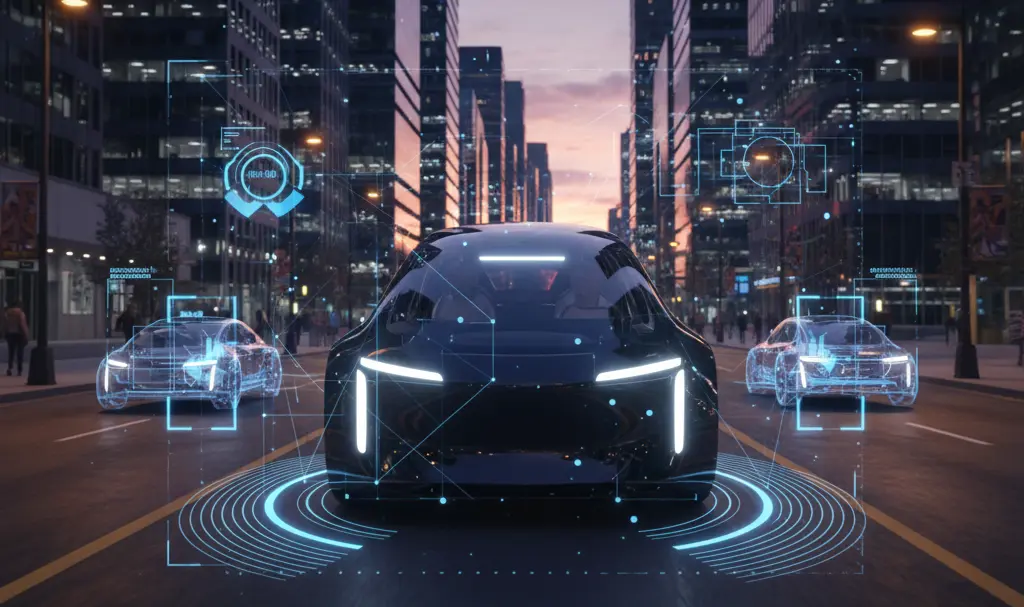
DeepRoute.ai recently announced a significant milestone: surpassing 300,000 vehicles equipped with its Advanced Driver Assistance System (ADAS). The technology developed by the company centers around a sophisticated software suite that significantly enhances driving safety, efficiency, and overall comfort.
In major automotive markets worldwide, the deployment of such advanced solutions is accelerating at an unprecedented pace. The dynamic increase in vehicles utilizing DeepRoute.ai’s system demonstrates that automakers are increasingly eager to integrate highly capable AI software as standard equipment.
This rapid adoption brings several distinct advantages to the automotive landscape:
- Enhanced Safety: Real-time environmental monitoring and automated emergency responses drastically reduce the risk of collisions.
- Scalable Architecture: Automakers can seamlessly deploy the software across various vehicle models without requiring prohibitively expensive hardware redesigns.
- Market Disruption: The surging demand signals intensifying competition in the autonomous mobility sector, pushing legacy brands to innovate faster.
The Road to Full Autonomy: Challenging the Titans
During a recent industry address, DeepRoute.ai’s CEO, Maxwell Zhou, announced that the number of vehicles utilizing the company’s technology could surge by another million by the end of this year. This ambitious forecast would represent a more than threefold increase in their current deployment scale within a remarkably short timeframe.
If DeepRoute.ai’s projections materialize, the company will solidify its position as a dominant player in the global race for autonomous driving supremacy, potentially outpacing industry giants like Elon Musk’s Tesla. In the long term, this rapid pace of development will fundamentally alter how society views daily transportation and road safety.
This technological evolution is part of a broader global shift. As we witness a revolution in transport with commercial robotaxis arriving in Europe, the benchmark for what constitutes a standard consumer vehicle is rapidly changing.
Why DeepRoute.ai’s Technology Stands Out
What makes DeepRoute.ai particularly competitive is its strategic shift towards a “map-free” autonomous driving solution. Unlike traditional systems that rely heavily on expensive, difficult-to-maintain High-Definition (HD) maps, DeepRoute.ai utilizes advanced machine learning and real-time sensor perception. This allows vehicles to navigate complex, changing environments much like human drivers do—relying on real-time visual and spatial data rather than pre-programmed routes.
This leap in artificial intelligence is crucial for widespread global adoption. As the industry advances toward major milestones like Europe’s first commercial robotaxi service, flexible and cost-effective perception systems will be the key to scaling self-driving fleets universally.
Frequently Asked Questions (FAQ)
How does DeepRoute.ai’s “map-free” technology differ from traditional autonomous systems?
Traditional autonomous systems rely heavily on pre-loaded, highly detailed High-Definition (HD) maps to navigate. DeepRoute.ai’s map-free technology uses advanced real-time perception and AI algorithms to interpret the road environment on the fly. This makes the system more adaptable to changing road conditions, cheaper to scale, and capable of operating in unmapped areas.
Is DeepRoute.ai’s current system considered fully autonomous driving?
No, the system currently deployed in hundreds of thousands of consumer cars is an Advanced Driver Assistance System (ADAS), typically classified as Level 2+ autonomy. While it handles complex driving tasks like steering and braking, the human driver must remain attentive and ready to take over. However, this technology acts as a foundational stepping stone toward Level 4 fully autonomous robotaxis.
Why is the integration of ADAS becoming standard in new vehicles?
Automakers are making ADAS standard because it significantly improves road safety by preventing accidents caused by human error. Additionally, consumer demand for intelligent, comfortable, and tech-forward vehicles is at an all-time high, prompting manufacturers to partner with software providers like DeepRoute.ai to stay competitive.
Source: Reuters, own elaboration. Opening photo: Gemini
About Post Author
