

Contents
EU Adjusts Stance on Battery Replacement Mandate for Wearables and More
The European Union’s journey towards more sustainable electronics took an interesting turn with recent amendments to its battery regulations. Initially, the goal was clear: extend the life of consumer devices and empower users with easy battery replacement. However, the European Commission has now introduced significant exceptions to these rules, particularly impacting wearable technology.
The EU Softens Its Stance on Batteries
On July 14, 2026, the European Commission adopted Delegated Act C(2026)5031, which refines Article 11 of the Battery Regulation (EU 2023/1542). This act significantly expands the list of devices exempted from the easy battery replacement requirement. Signed by Commission President Ursula von der Leyen, the document specifies that in certain situations, batteries may only be replaceable by independent professionals if user access to the cell could compromise the equipment’s safety, durability, or water resistance.
This represents a notable shift from earlier plans, which, by February 18, 2027, mandated that all batteries in consumer devices should be “easily removable and replaceable” using simple tools. The original intent was to foster a circular economy by allowing users to extend the life of their devices without needing specialized repairs.
Exceptions for Wearable Gadgets
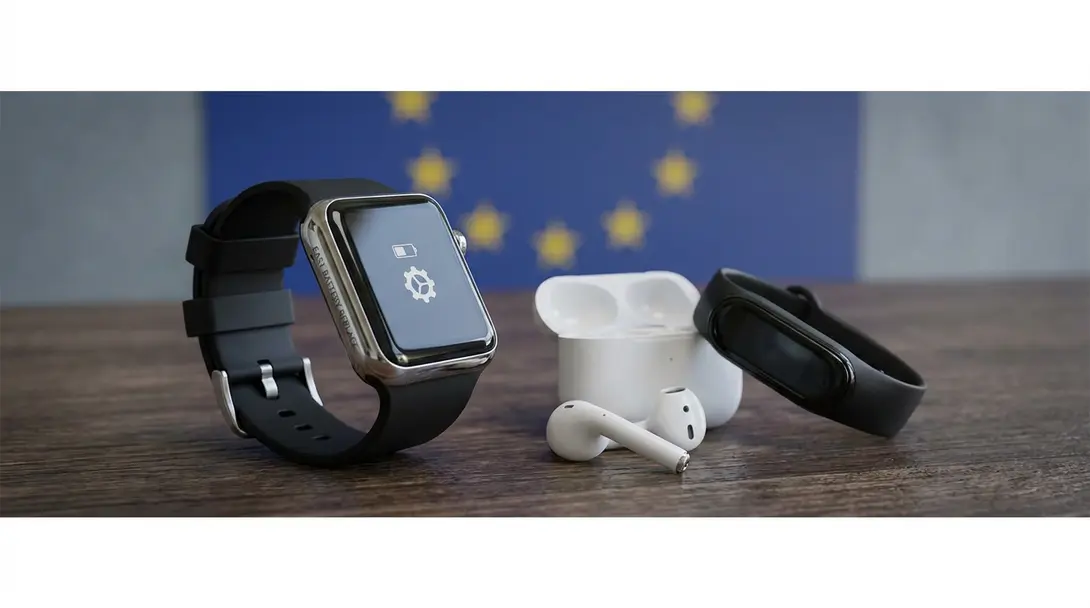
The most visible change for consumers is the exemption of electronic wearable accessories. This includes a broad spectrum of devices:
- Smartwatches
- Fitness trackers
- Smart rings
- True Wireless Stereo (TWS) headphones
- Various augmented reality (AR), virtual reality (VR), and mixed reality (MR) headsets and glasses
Practically, this means manufacturers of these devices will not be required to design their casings in a way that allows an average consumer to easily remove and replace the battery with simple tools. This exemption acknowledges the unique design challenges presented by these miniature devices.
Justification for Wearables Exemption
The Commission’s reasoning for these exemptions primarily focuses on two key aspects:
-
Miniature Size: The compact nature of these devices makes safe handling of battery cells by untrained users difficult and potentially risky. Device teardowns often reveal complex, tightly packed internal components.
-
Design Integrity: The necessity of maintaining a compact, sealed construction is paramount for ensuring high resistance to water, dust, and shocks, which are critical for the durability and functionality of wearables.
Similar arguments previously led to the exemption of other products, such as electric toothbrushes, which require a high degree of water resistance for daily use. Smartphones are also exempt from the easy battery replacement obligation, provided they use very long-life batteries and feature high IP-rated resistance, thereby reducing the need for user intervention and the associated risk of damage.
What Other Devices Are Exempted?
The new delegated act adds eight product categories where batteries can remain non-user-replaceable, provided this is essential for the safety of the equipment and the user. Beyond wearables, these include:
- Professional diagnostic imaging and radiotherapy equipment, including medical devices covered by Regulations 2017/745 and 2017/746.
- Rechargeable electric toys (until July 31, 2030).
- Wireless thermometer probes for food contact.
- Equipment operating in potentially explosive atmospheres (ATEX).
- Subcutaneous drug delivery systems.
- Telematics modules mounted on the roofs of agricultural and construction machinery exposed to strong vibrations and harsh environmental conditions.
In each of these instances, the European Commission argues that allowing users to replace batteries independently would compromise functional integrity or introduce additional safety risks.

Continuous Power and Data Integrity Exemptions
The regulation change also permits a complete departure from user-replaceable batteries when continuous power supply and a constant connection to the battery are necessary for safety reasons. This covers, for example:
- Medical implants (pacemakers, defibrillators).
- Certain high-risk in vitro medical devices.
- Hearing aids.
- Smoke, carbon monoxide (CO), and gas detectors designed for more than 10 years of continuous operation with a battery of similar lifespan.
A second case for exemption relates to the requirement for continuous power supply due to data integrity. This includes:
- Measurement devices in weather stations and laboratories.
- Batteries that maintain volatile memory or clocks (e.g., CMOS batteries).
- On-board toll collection devices.
- Point-of-sale (POS) payment terminals.
- Equipment for storing payment tokens.
The Act was adopted in Brussels on July 14, 2026, based on Article 11(4) of Regulation 2023/1542. It will enter into force on the twentieth day following its publication in the Official Journal of the EU and will be directly applicable in all member states.
Frequently Asked Questions (FAQ)
The original goal was to extend the lifespan of consumer electronics and facilitate self-repair by mandating easily removable and replaceable batteries in all devices, promoting a more circular economy and reducing electronic waste.
Wearables were exempted primarily due to their small size, which makes safe handling of battery cells by users difficult, and the need to maintain a compact, sealed design for crucial features like water, dust, and shock resistance. These design constraints are essential for their functionality and durability.
While the regulation exempts manufacturers from designing for easy user replacement with simple tools, it doesn’t necessarily mean batteries are entirely non-replaceable. In some cases, they may still be replaceable by independent professionals or authorized service centers, as specified by the delegated act.
The Delegated Act was adopted on July 14, 2026. It will enter into force on the twentieth day following its publication in the Official Journal of the EU and will then be directly applicable across all EU member states.
Source: Europa.eu, LinkedIn, ECOPV-E, Repair.eu
Opening photo: Gemini
About Post Author
