

Contents

The Future of Mobility: Xpeng’s Push into Flying Cars and Robotics
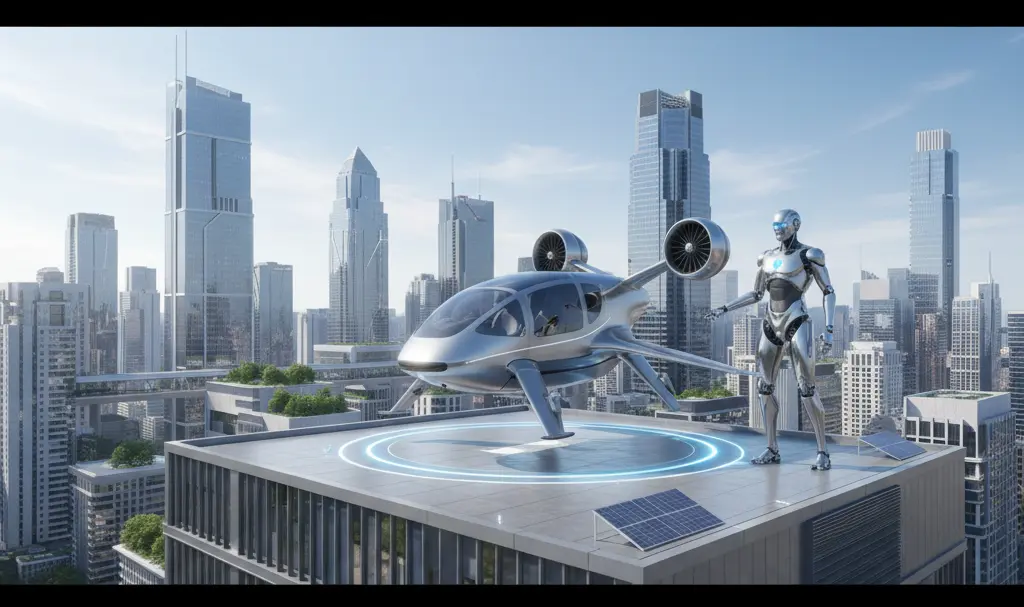
If you thought flying cars were a vision reserved for the distant future, Chinese electric vehicle manufacturer Xpeng is here to prove otherwise. The company has officially announced that the mass production of its flying vehicles is set to begin within the next few years, a bold declaration straight from the company’s executive leadership.

Is an Automotive Revolution on the Horizon?
After years of teasing flying car concepts through its AeroHT subsidiary, Xpeng is preparing to turn its ambitious promises into reality. In a recent interview with Reuters, Xpeng’s Co-President, Brian Gu, stated that the first vehicles of this type are expected to roll off the production lines as early as 2027.
The market demand is already evident. Xpeng has received 7,000 confirmed pre-orders for its futuristic flying vehicles. However, before the company can fulfill these orders and begin widespread manufacturing, they must first secure the necessary aviation licenses and safety certifications from domestic regulatory authorities.
Autonomous Driving and Global Expansion
Electric vertical takeoff and landing (eVTOL) vehicles are not the only modern innovations Xpeng is developing. Later this year, the company will begin testing its proprietary autonomous robotaxis in Guangzhou, China. This aligns with a broader global shift, much like the revolution in transport as commercial robotaxis arrive in Europe and other major international markets.
Xpeng also has aggressive international expansion plans. Currently operating in over 60 markets worldwide, the brand aims to have global markets account for more than 50% of its total profit within the next decade. Strengthening its existing strategic partnership with automotive giant Volkswagen is expected to play a crucial role in achieving this milestone.
Beyond Vehicles: The Rise of Humanoid Robots
Flying cars are just one piece of the puzzle. During the Reuters interview, Gu also highlighted a second highly ambitious project: humanoid robots. Xpeng plans to begin the mass rollout of advanced humanoids from its factories in the fourth quarter of this year.
The company sees immense potential in the robotics sector. The tech giant’s leadership clearly emphasizes that the humanoid market is critical to their long-term strategy. They predict that within the next 10 to 20 years, humanoids will be produced in far greater numbers than traditional passenger cars. This reflects a growing industry trend, similar to how tech giants are making heavy investments in child-sized robots for new eras in homes and industrial spaces.
What This Means for the Future
Gu noted that society will soon see a massive increase in practical applications for humanoid robots in everyday life. While we have to wait and see how accurately these timelines unfold, Xpeng’s trajectory is clear:
- Diversified Mobility: A transition from traditional EVs to a multi-modal transport ecosystem featuring ground-level robotaxis and low-altitude flying cars.
- AI Integration: Leveraging artificial intelligence not just for autonomous driving, but for general-purpose robotic automation in homes and factories.
- Regulatory Milestones: Success will heavily depend on navigating complex aviation and AI regulations on a global scale.
Frequently Asked Questions (FAQ)
What exactly is Xpeng’s “flying car”?
Xpeng’s flying vehicle, developed by its affiliate AeroHT, is generally categorized as an eVTOL (electric vertical takeoff and landing) vehicle. Their recent designs include a modular “Land Aircraft Carrier” concept, which consists of a ground vehicle that houses and deploys a separate two-person flying module.
When will Xpeng’s humanoid robots be available to the public?
Xpeng plans to start mass-producing its humanoid robots in the fourth quarter of this year. Initial models will likely be utilized for industrial and manufacturing purposes before transitioning into consumer-facing household roles in the coming years.
How will Xpeng secure approval for flying cars?
Before consumer deliveries can begin, Xpeng must undergo rigorous safety testing and acquire type certificates and airworthiness approvals from national aviation authorities, starting with the Civil Aviation Administration of China (CAAC).
Source: Reuters | Opening photo: Gemini
About Post Author
