

Contents
Understanding Ford BlueCruise: Hands-Free Driving in the Puma and Kuga
Ford’s innovative BlueCruise system represents a significant step forward in driver-assistance technology, offering hands-free driving capabilities while requiring the driver to remain attentive to the road. Having experienced this technology firsthand in two distinct models – the Ford Puma and the Ford Kuga – this article will delve into how BlueCruise operates and highlight the differences between these two vehicles.
What is Ford BlueCruise and How Does It Work?
Ford BlueCruise utilizes a sophisticated array of sensors, including cameras and radar, combined with high-definition map data to manage vehicle control. The system is designed to keep the vehicle centered within its lane, automatically adjust speed to prevailing traffic conditions, and maintain a safe following distance from other vehicles.
Its operational philosophy is “hands-off, eyes-on.” This means drivers can remove their hands from the steering wheel, but their gaze must remain fixed on the road ahead. A forward-facing camera monitors the driver’s attention. Should the system detect that the driver is no longer looking at the road, it issues a series of escalating warnings. If there’s no response, the vehicle will gradually decelerate, ultimately bringing it to a controlled stop if necessary.
BlueCruise is not universally available; it functions exclusively on pre-qualified sections of major highways, known as “Blue Zones.” Across Europe, these designated Blue Zones encompass over 135,000 kilometers (approximately 84,000 miles) of roads in numerous countries, including Germany, the UK, France, and others. For vehicles purchased as special BlueCruise Edition models, access to the system is typically included in the vehicle’s price, negating the need for an additional monthly subscription fee.
BlueCruise Edition Models and Available Powertrains
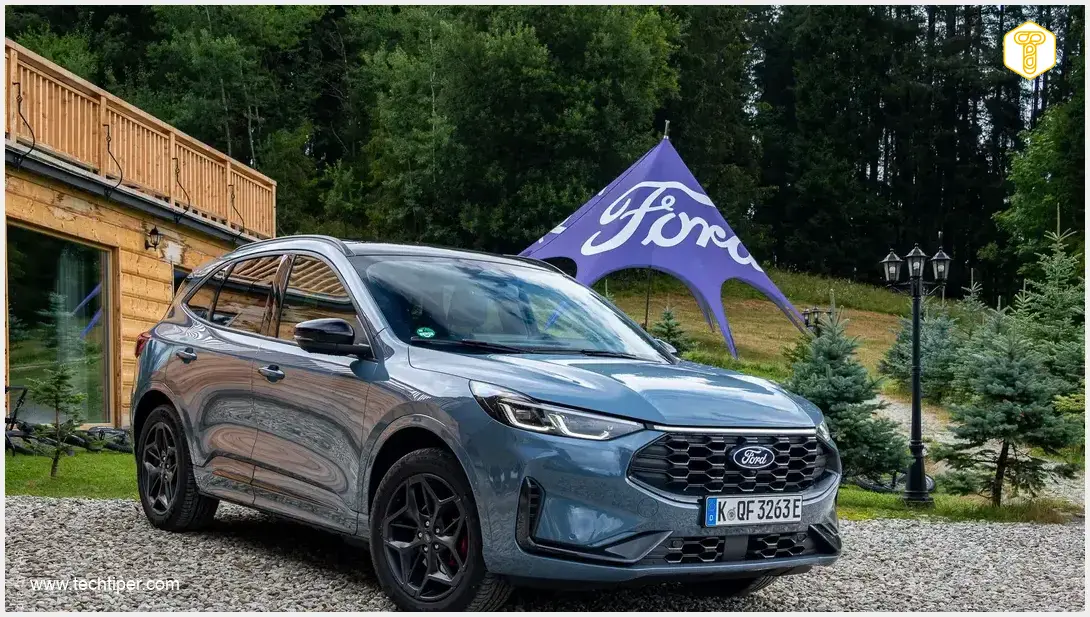
Both the Ford Puma and Kuga in their BlueCruise Edition trims feature distinctive aesthetic elements. These include a striking Vapor Blue paint finish, a contrasting black roof, black mirror caps, and dark alloy wheels – 18-inch on the Puma and 19-inch on the Kuga. Inside, both models boast complementary contrast stitching and blue accents, creating a cohesive and sporty feel.
- Ford Puma BlueCruise Edition: This variant can be ordered with the efficient EcoBoost Hybrid petrol engine, a mild-hybrid setup paired with an automatic transmission. Additionally, the fully electric Puma Gen-E will also offer this edition.
- Ford Kuga BlueCruise Edition: The Kuga offers a broader range of powertrain options, including a Plug-in Hybrid (PHEV) for electric-only driving capability, a conventional Full Hybrid (FHEV), and an EcoBoost petrol engine with an automatic transmission.
Regardless of the chosen powertrain, access to the BlueCruise system remains consistent across all BlueCruise Edition variants.
Ford Puma: Agile and Connected
The Ford Puma is positioned as an urban crossover, a compact and stylish vehicle measuring just under 4 meters (approximately 13 feet) in length. Its practical boot capacity ranges from 456 liters (16.1 cubic feet) with the rear seats up, expanding to 1216 liters (42.9 cubic feet) when the rear seats are folded flat. The specific model tested featured a sportier suspension tuning compared to other variants within the Puma lineup, enhancing its dynamic driving characteristics.
The Puma’s trim levels offer a wide array of choices, including Titanium, ST-Line, ST-Line X, the performance-oriented ST, and the special BlueCruise Edition. The conventional petrol powertrain is built around a 1.0-liter EcoBoost engine with 48V mild-hybrid technology, available in 125 PS (horsepower) and 155 PS outputs. These can be paired with either a six-speed manual gearbox or a seven-speed PowerShift dual-clutch automatic transmission. The ST version utilizes a more potent 170 PS variant of the same engine, exclusively paired with the automatic transmission. Beyond these internal combustion options, the range now includes the all-electric Puma Gen-E.
Even the entry-level Puma comes well-equipped, featuring Full LED headlights, rear parking sensors, a reverse camera, and tinted rear windows. Moving up to higher trims, such as the ST-Line X, introduces premium features like 19-inch alloy wheels, a leather-wrapped steering wheel, a 12.3-inch virtual instrument cluster, automatic climate control, and a premium sound system. For enhanced safety and convenience, an optional Driver Assistance Pack is available, expanding the suite of driver assistance systems.

Modern vehicles like the Puma increasingly integrate advanced electronics, and innovations such as wireless charging for electric cars are becoming standard in many new models, reflecting the rapid technological advancements in the automotive sector.
Ford Kuga: Spacious and Versatile
The Ford Kuga is a larger compact SUV, designed for greater space and versatility. It measures over 4.6 meters (approximately 15.1 feet) in length. The boot capacity varies by powertrain, offering between 420 to 645 liters (14.8 to 22.8 cubic feet) with the rear seats in place, expanding significantly to 1534 liters (54.2 cubic feet) when the rear seats are folded. A notable feature in some Kuga variants is a sliding rear bench seat, which can move by over a meter (approximately 3.3 feet), adding an extra 208 liters (7.3 cubic feet) of cargo space at the expense of rear legroom.
Kuga trim levels include Titanium, ST-Line, ST-Line X, Active X, and the BlueCruise Edition, offering a diverse selection to suit various preferences. The powertrain lineup is more extensive than that of the Puma:
- Petrol: A 1.5-liter EcoBoost engine, available with 150 PS (horsepower) paired with a manual gearbox or 186 PS with an eight-speed automatic.
- Full Hybrid (FHEV): A 2.5-liter FHEV system producing 180 PS with front-wheel drive or 183 PS with all-wheel drive.
- Plug-in Hybrid (PHEV): A 2.5-liter PHEV system delivering 243 PS, capable of an estimated electric-only range of up to 56 kilometers (approximately 35 miles).
For those requiring towing capabilities, Kuga versions equipped with all-wheel drive (AWD) and the plug-in hybrid powertrain offer a substantial maximum towing capacity of up to 2100 kg (4629 pounds).
Standard equipment varies by trim. For instance, the ST-Line X variant typically includes advanced features such as adaptive cruise control, 360-degree cameras for enhanced parking and maneuvering, and an electrically operated tailgate for added convenience. These features, along with innovative interior designs, contribute to making the Kuga a strong contender in the compact SUV market, similar to how vans like the Nissan Primastar Combi L2 review highlight practicality in a different segment.
Limitations of the Ford BlueCruise System
It is crucial to understand that BlueCruise is not a fully autonomous driving system. The ultimate responsibility for operating the vehicle always rests with the driver, who must constantly observe the road and be prepared to take immediate control. The system’s operation is restricted to designated Blue Zone sections of highways that feature clear and visible lane markings and other necessary infrastructure. Drivers should never rely solely on BlueCruise and must remain engaged and attentive at all times.
Summary
The Ford Puma and Kuga, particularly in their BlueCruise Edition guises, represent two distinct automotive propositions. The Puma, an agile urban crossover, appeals to drivers seeking compact dimensions and efficiency, while the Kuga, a spacious compact SUV, caters to those needing more room and versatility. Despite their differing characteristics and powertrain offerings, both models share the common advantage of integrating the advanced BlueCruise semi-autonomous driving technology. This system provides enhanced convenience and safety on designated highway stretches across numerous countries.
Frequently Asked Questions (FAQ)
Ford BlueCruise is a sophisticated driver-assistance system that allows for hands-free driving on designated highway sections. It uses cameras, radar, and high-definition maps to maintain lane position, adjust speed, and keep a safe distance from other vehicles.
BlueCruise operates exclusively on pre-qualified sections of major highways, known as “Blue Zones.” These zones cover extensive road networks across various countries. Drivers must ensure the system is activated and conditions are suitable.
A camera monitors the driver’s face to ensure they remain attentive and focused on the road. If the system detects a lack of attention, it provides warnings and, if necessary, will slow the vehicle down to encourage the driver to regain full control.
The Ford Puma is a smaller, urban-focused crossover, ideal for city driving and agile handling, while the Ford Kuga is a larger, more versatile compact SUV offering greater space and a wider range of hybrid powertrain options, suitable for families and longer journeys. Both, however, offer the same hands-free BlueCruise technology on compatible roads.
Source: Original research
Opening photo: Paweł Szczepański
About Post Author
