

Contents
Does Constantly Changing Lanes Actually Speed Up Your City Commute? A Real-World Test
Navigating bustling city streets efficiently is a common goal for drivers. While adhering to traffic regulations, most drivers aim for a smooth and timely journey. A popular belief among some is that frequent lane changes, especially when approaching intersections or traffic lights, can significantly cut down travel time. But is this strategy truly effective, or does it merely add stress without much benefit?
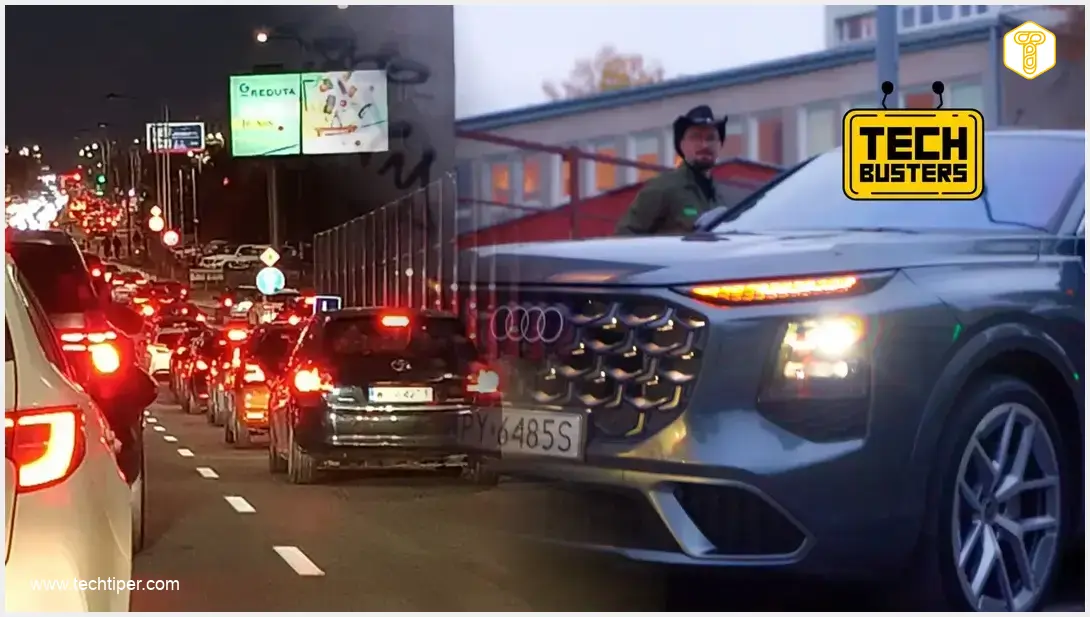
To put this theory to the test, the TechBusters team conducted a practical experiment. We pitted two vehicles against each other in a controlled “race” designed to simulate everyday urban driving conditions:
- An Audi Q7, generously provided by a partner.
- A privately-owned Renault Megane 3.
The Lane-Changing Challenge: Audi Q7 vs. Renault Megane 3
The core of our experiment was to observe the impact of different driving strategies on identical routes within a busy urban environment. The rules for our test were straightforward:
- Both the Audi Q7 and Renault Megane 3 followed a pre-determined route through city streets. The objective was simple: the first car to reach the destination wins.
- The driver of the Renault Megane 3 was instructed to maintain a single lane throughout the journey, making no lane changes unless absolutely necessary for safety or to follow traffic flow (e.g., merging due to a lane closure).
- The driver of the Audi Q7 was tasked with changing lanes as frequently as opportunities arose, actively seeking out what appeared to be faster-moving lanes.
The Intriguing Results
The outcomes of our urban driving test provided interesting insights. The Renault Megane 3, adhering to its single-lane strategy, completed the route in approximately 13 minutes. In contrast, the Audi Q7, with its aggressive lane-changing approach, finished slightly faster, clocking in at just under 12 minutes.
While the Audi Q7 technically “won” the challenge by a narrow margin, the driver’s experience painted a different picture. Łukasz Skałba, the test driver, offered a clear and unequivocal conclusion:
“It’s absolutely not worth it. I was constantly stressed, and there was a much higher risk, a much greater chance of colliding with someone.”
Observing the continuous lane changes, it became evident that such a driving style can often be impractical, leading to increased cognitive load and potential hazards rather than substantial time savings.
Beyond Speed: The Role of Dynamic Turn Signals
This experiment wasn’t just about speed; it also highlighted how vehicle technology can influence urban driving. The Audi Q7 used in our test was equipped with dynamic turn signals, a feature that enhances communication with other road users.
Dynamic turn signals illuminate sequentially, creating a visual “wiping” effect in the direction of the turn. This distinct visual cue communicates the driver’s intention more clearly and quickly than traditional blinking indicators. By making the intended maneuver more obvious, dynamic turn signals can potentially:
- Reduce reaction times for other drivers.
- Improve overall traffic flow by minimizing uncertainty.
- Enhance safety by making lane changes and turns more predictable.
This technology ensures that your intention to change lanes or turn is conveyed not just through light activation, but also through a more intuitive visual indication directly on the road surface, allowing nearby drivers to react more promptly.

Audi Q7: A Glimpse at Performance and Features
The Audi Q7, a luxury SUV, offers a blend of performance and advanced technology. Its specifications include:
- Starting Price: Approximately 90,000 to 100,000 USD (prices vary by region and configuration).
- Fuel Consumption: Combined cycle ranges between 7.1 and 7.8 liters per 100 kilometers (approximately 30 to 33 miles per gallon).
- Acceleration: 0 to 100 km/h (0 to 60 mph) in around 7.2 seconds.
- Maximum Engine Power: Up to 180 kW (approximately 241 horsepower) achieved between 3500-4750 RPM.
These features underscore the vehicle’s capability, but as our test showed, even advanced vehicles can’t negate the fundamental trade-offs between aggressive driving and safety.
More Myths Debunked by TechBusters
At TechBusters, we love to test common assumptions and provide practical insights. Check out some of our other investigations:
- Can a smartphone genuinely function as a metal detector? Read our findings here.
- Does a specific Windows 11 setting impact gaming performance (frame rates)? Find out more in our detailed guide.
- Is wireless charging truly more expensive in the long run?
- Can you register two fingerprints on a phone simultaneously?
- Is your smartphone displaying an inaccurate battery life percentage?
Stay tuned for more myth-busting from TechBusters!
Frequently Asked Questions (FAQ)
Our test showed a marginal time saving (less than a minute over a 13-minute drive) when frequently changing lanes. However, this small gain often comes at the cost of increased stress, higher risk of accidents, and potentially more aggressive driving behavior, making it generally not worthwhile for most commutes.
Frequent lane changes increase the likelihood of collisions due to reduced reaction time for other drivers, increased blind spot incidents, and erratic vehicle movements. It also elevates driver stress levels, leading to a less comfortable and potentially more dangerous driving experience.
Dynamic turn signals provide a clearer and more intuitive indication of a driver’s intended maneuver. By illuminating sequentially in the direction of the turn, they allow other road users to perceive intentions more quickly, potentially reducing reaction times, improving traffic flow, and enhancing overall road safety.
Yes, driving style significantly impacts fuel efficiency, especially in urban areas. Aggressive driving, including frequent acceleration, braking, and lane changes, consumes more fuel than smooth, consistent driving. Maintaining a steady speed and anticipating traffic flow can lead to substantial fuel savings.
Source: Original research. Opening photo: Editorial team / custom assembly.
About Post Author
