

Contents
Italy’s Contactless Revolution: Simplifying Public Transport Payments and Inspiring Change in Poland
My recent travels through Italy unveiled a surprisingly advanced landscape for everyday technology. For an entire week, I encountered no location where contactless payment wasn’t an option, a significant leap forward compared to just a couple of years ago when smaller shops often posed challenges. However, it was the efficiency of their public transportation system that truly stood out, prompting a realization that I had been overcomplicating my daily commute back home.
Seamless Travel with Italy’s ‘Tip-Tap’ System
Navigating cities like Bologna, Florence, and Livorno frequently required me to use local buses. During my trip planning, a consistent piece of advice emerged: “Use the Tip-Tap system.”
How Tip-Tap Works: Effortless Transit Payments
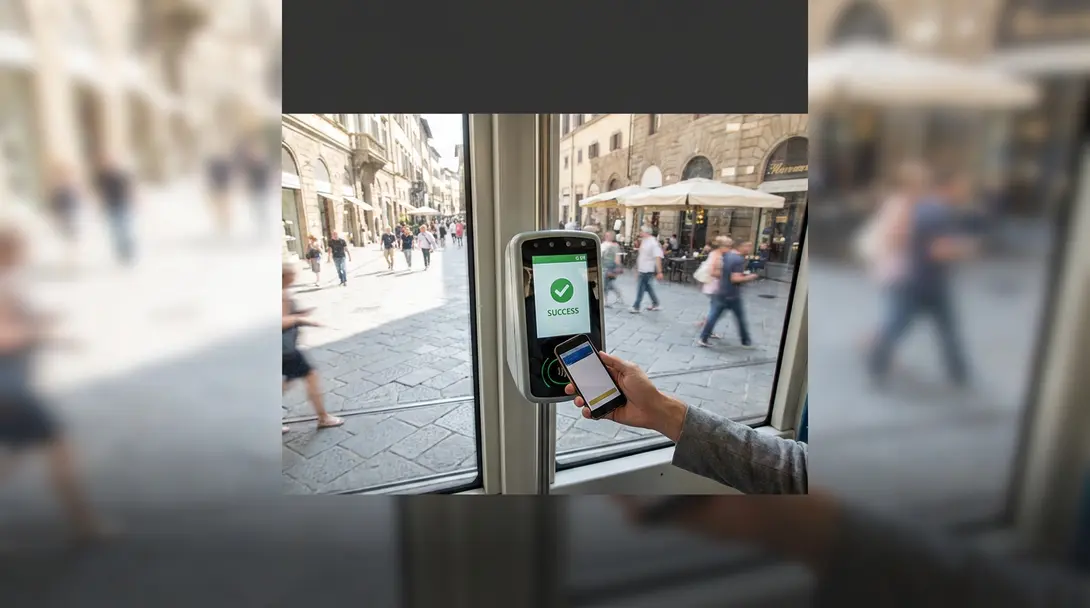
The beauty of Tip-Tap lies in its simplicity. To pay for a ride, passengers merely tap their payment card or smartphone onto an NFC reader. The system then links the purchased ticket to the unique number of the payment card used. If a ticket inspector approaches, all you need to provide are the last four digits of your card, allowing them to instantly verify your payment.
Moreover, this system is remarkably intelligent. If you accidentally tap your card a second time, it recognizes the active ticket and prevents any duplicate charges. There’s a nuance, however, concerning urban and suburban zones. If your journey takes you into a new zone, a re-tap is necessary to account for the change in service type and associated fare.
Understanding the Nuances: Transparency and Convenience
While highly convenient, the Tip-Tap system isn’t without its quirks. It doesn’t always provide immediate notification of each deduction. Several rides might accumulate into a single transaction processed at the end of the day, making it difficult to track your current balance in real-time. This can be a bit disorienting, especially for first-time users trying to understand their expenditures. Despite this minor drawback, the overall convenience and efficiency of not needing to buy physical tickets or load separate transport cards vastly improve the travel experience.
Poland’s Evolving Transit Payment Landscape: Catching Up to Contactless Convenience
Back in Poland, I had long adhered to a specific routine: installing a transit app, configuring my city profile, topping up an account, and scanning a QR code every time I boarded a bus or tram. Yet, it turns out Poland is also actively implementing systems similar to Italy’s Tip-Tap, potentially rendering such dedicated apps unnecessary for many.
The Rise of Card-Linked Ticketing in Polish Cities
The concept of linking a ticket directly to a payment card is gaining traction across Poland:
- Kraków: This system is set to be fully operational from February 2025, promising a more streamlined payment experience for commuters.
- Tricity and Surrounding Areas: The FALA system, launched in late 2023, has brought this solution to a wider region including Gdańsk, Gdynia, Sopot, and nearby towns like Słupsk, Władysławowo, Chojnice, Lębork, and Wejherowo.
- Poznań: Introduced similar enhancements in 2022, offering residents modern payment options.
- Wrocław: An early adopter, Wrocław pioneered such solutions as far back as 2018.
This shift reflects a broader trend towards digital transactions, highlighting the evolving landscape of cash vs. card payments and Poland’s financial future. Such seamless integration is increasingly common, with features like Google Pixel’s Transit Mode further enhancing the mobile commuting experience.
However, it’s important to note that these systems aren’t yet universal across all major Polish cities. Interestingly, the capital city stands as a notable exception; Warsaw is scheduled to introduce such a solution only in 2027, as part of its new Warsaw Ticket System.

The journey through Italy truly highlighted how simplifying payment methods in public transport can significantly enhance the travel experience. It underscored a global movement towards greater convenience and efficiency, a trend that Polish cities are increasingly embracing to modernize urban mobility.
Frequently Asked Questions (FAQ)
Contactless payment for public transport typically involves tapping a payment card (credit, debit, or prepaid) or a mobile device (smartphone, smartwatch) with NFC capability onto a dedicated reader at the bus stop, tram, or metro station. The system then charges the appropriate fare to your account without the need for a physical ticket or separate transport card.
The primary benefits include unparalleled convenience, as there’s no need to purchase or validate physical tickets. It also speeds up boarding times, reduces queues, and simplifies travel for tourists or infrequent users who might not have local transport cards. Furthermore, some systems offer fare capping, ensuring you always pay the optimal price for your journeys within a given period.
Yes, contactless transit systems are rapidly becoming a global standard. Major cities worldwide, including London, New York, Singapore, and Sydney, have successfully implemented or are in the process of implementing such systems, recognizing their efficiency and positive impact on urban mobility.
Cities face several considerations, including ensuring secure data handling, integrating with existing fare structures, and public education. For zone-based pricing, systems often require passengers to tap in and out, or automatically calculate the fare based on GPS or station taps. To address transaction visibility, many systems provide online portals or linked apps where users can view their journey history and accumulated charges, often summarizing daily or weekly travel costs into single transactions.
Source: Gemini
Opening photo: Gemini
About Post Author
