

Contents
Unlocking Home Security: Why Leaving Your Key in the Lock Can Be a Costly Mistake
Many homeowners believe that leaving a key in the inside of a door lock overnight enhances security. Counterintuitively, this common practice can sometimes make a burglar’s job significantly easier. A seasoned security expert from Ślusarz TV, a popular online channel dedicated to locksmithing insights, sheds light on why it can take mere seconds for an intruder to gain entry when a key is left unattended in the lock.
The Hidden Dangers of Leaving a Key in the Lock
The notion that a key left in the lock ‘blocks’ the mechanism from the outside is a widespread misconception. While it might feel like an added layer of security, the reality often proves otherwise, especially with older or less robust lock cylinders. The Ślusarz TV expert demonstrates how simple tools can bypass these seemingly secure setups.
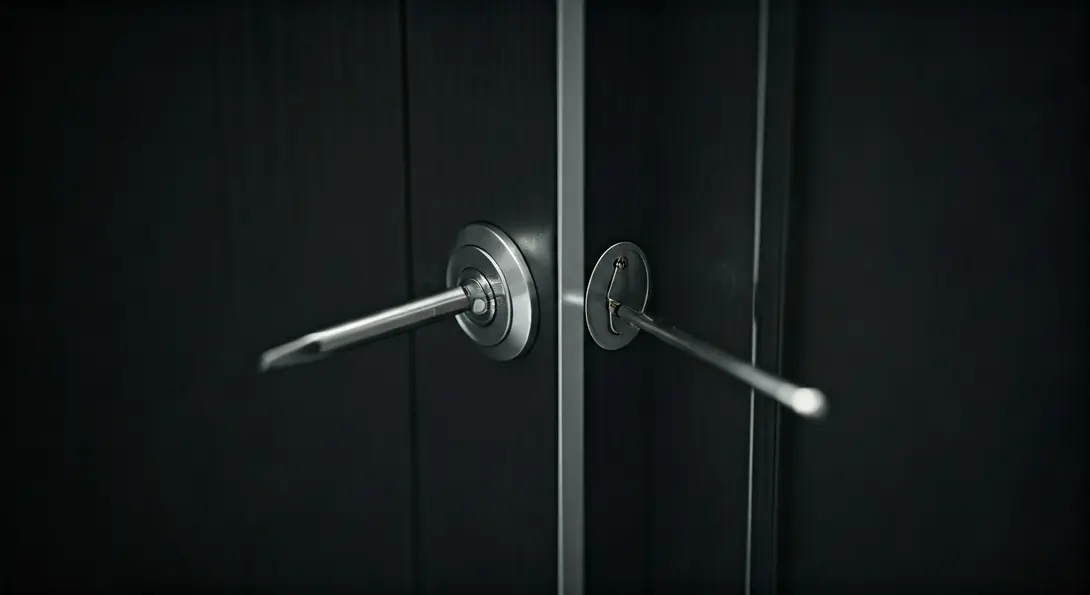
In one of their informative videos, the expert illustrates how just two thin wires can be employed to manipulate a lock. One wire stabilizes the key on the inside, while the other is used to move the lock cylinder’s mechanism. An experienced intruder, with this technique, can open the door in a matter of seconds.
“The risk primarily applies to locks equipped with double-bit key cylinders,” explains the Ślusarz TV expert. “Even though these often boast high security ratings, it’s crucial to avoid leaving the key in the inside. Otherwise, a burglar can use the key to open the door – and it doesn’t matter if you turn it once or several times.”
The Problem with Internal Knob Locks and Lower Security Cylinders
Furthermore, locks featuring an internal knob or thumbturn don’t always offer a complete solution. “If you have a model with a lower security rating, a burglar can insert a thin tool from the outside, engage the clutch mechanism, and unlock the door,” the expert adds. This critical insight underscores the importance of prioritizing robust security features over mere convenience when selecting a lock cylinder.
Beyond the Key: Other Common Burglar Methods
The Ślusarz TV expert emphasizes that burglars frequently employ other, even more prevalent methods, such as ‘cylinder snapping.’ This technique involves forcibly breaking the lock cylinder itself, a vulnerability often exposed by poor-quality escutcheons.
- An escutcheon is a protective plate covering the lock cylinder, designed not only to conceal the hole but, more importantly, to deter forced entry.
- Basic models, screwed in from the outside, can be easily removed, allowing the burglar to snap the cylinder with relative ease.
- Anti-burglary escutcheons, secured with screws from the inside, offer significantly better protection by making external removal nearly impossible.
According to the expert, a significant majority of the repairs they perform after break-ins are directly attributable to inadequately secured cylinders. In such cases, forcing entry requires neither specialized tools nor time-consuming drilling. “As a result, a burglar can quickly and relatively quietly bypass the door,” they state. “My experience shows that poorly secured cylinders and low-quality locks are responsible for approximately 98% of burglaries I encounter during post-break-in repairs.”
Vulnerabilities Beyond Doors: Windows and Other Entry Points
It’s also crucial to remember that burglars can gain access through other entry points, such as balcony windows, patio doors, garages, or basements. For ground-floor residents or those in single-family homes, the risk of such intrusions is significantly higher.
- Inexpensive tools designed to open tilted windows can be purchased for a very low cost, making them an accessible investment for an intruder. “The cost of such tools likely pays for itself after just one successful break-in,” explains the Ślusarz TV expert.
- Simply closing a window doesn’t always guarantee security. “If you have a standard window handle, a small hole drilled into the window frame can allow a burglar to manipulate the mechanism with a wire and open the window from the outside.”
- Locking handles or those with a push-button mechanism eliminate this specific risk. “Replacing a standard handle with a secure one is one of the most affordable ways to improve home security,” they advise.
Decreasing Burglaries, Increasing Vigilance: Essential Home Security Tips
While the news is positive regarding declining burglary rates, sustained vigilance remains crucial. National police data indicates a consistent decrease in home and apartment burglaries over recent years. For instance, there were over 20,000 reported burglaries in 2019, which dropped to 14,000 by 2024—a reduction of over 6,000 cases, or approximately 30% over five years. This positive trend continued into 2025, with over 9,500 burglaries recorded from January to October, about 12% fewer than the nearly 11,000 in the same period the previous year.

Despite this encouraging trend, it’s essential not to become complacent. Beyond robust locks, adopting good security habits is paramount:
- Always remember to close windows before going to bed or leaving the house.
- Avoid displaying valuable items conspicuously where they can be seen from outside.
- Limit sharing travel plans on social media, as this can alert potential intruders to an empty home.
Additional property safeguards, such as monitoring systems, alarms, or motion sensors, can also be highly beneficial. For related smart home security tips, consider learning how to protect your digital entry points, such as by following advice in how to change device names for better Bluetooth home security.
The Ultimate Defense: Certified Security Doors
However, all these individual measures may prove ineffective without proper security doors. “The best option is anti-burglary certified doors, featuring an internal truss structure, a multi-point locking system, anti-jemmy bolts, and certified cylinders. The cylinder itself should be top-tier with a restricted key profile, and crucially, it must be protected by a certified escutcheon,” explains the Ślusarz TV expert. For further reading on other theft prevention, you might find valuable insights on securing your vehicle in how to protect your keyless car from theft with aluminum foil.
The expert often observes the security measures of entire buildings during client visits. “When I walk through a stairwell, I notice many apartments have very basic door security. I suspect a burglar observes the stairwell in the same way I do and can quickly identify the easiest target,” they conclude, emphasizing the importance of a comprehensive security approach.
Frequently Asked Questions (FAQ)
Even with high-security locks, particularly those with double-bit key cylinders, leaving the key in the inside can provide a burglar with a way to manipulate the lock from the outside. Using thin tools, an intruder can engage the key and unlock the door, sometimes in a matter of seconds. This bypasses the lock’s inherent security features by using the key itself against you.
Cylinder snapping is a common burglary technique where the lock cylinder is physically broken to gain entry. This method is often facilitated by low-quality external escutcheons (protective plates) that can be easily removed. To protect against cylinder snapping, it’s crucial to install high-quality, anti-burglary certified escutcheons that are securely fastened from the inside of the door, making them inaccessible to intruders from the exterior.
Yes, window security is just as vital as door security. Burglars frequently target windows, especially on ground floors or easily accessible areas like balconies. Even tilted windows can be opened with inexpensive tools. Replacing standard window handles with locking or push-button models significantly enhances security by preventing external manipulation and making it much harder for intruders to gain entry through windows.
Source: National Police Data, Security Experts
Opening photo: Magnific
About Post Author
