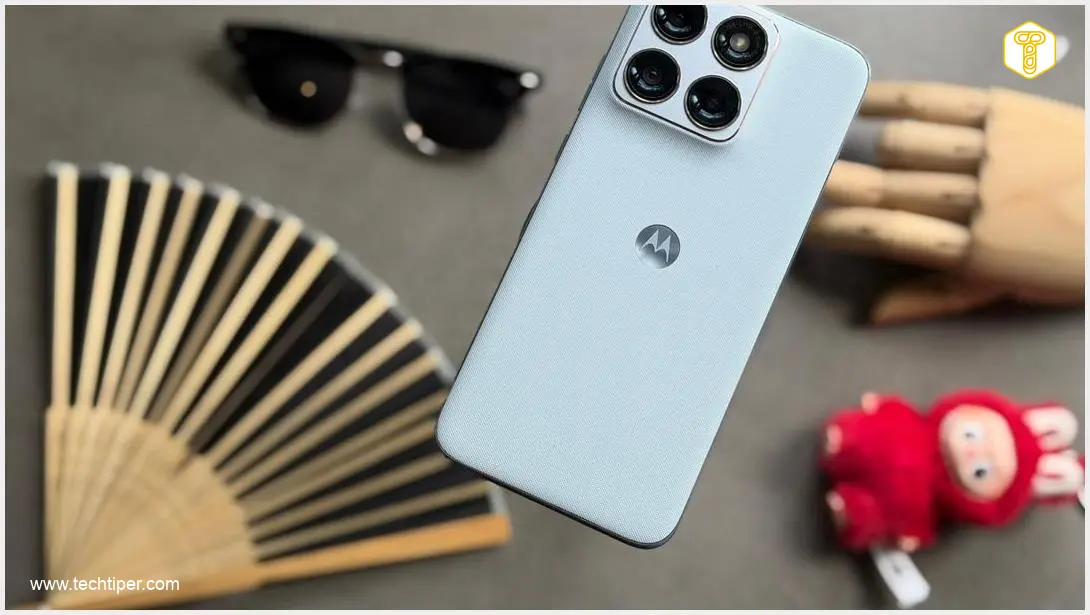
Motorola Edge 70 Fusion Review
-
Display Quality
-
Performance
-
Camera Capabilities
-
Battery Life & Charging
-
Build & Design
-
Software Experience
Motorola Edge 70 Fusion: A Balanced Mid-Range Powerhouse
The Motorola Edge 70 Fusion excels with its stunning 144Hz AMOLED display, robust battery life, efficient performance, and durable design, all offered at a competitive price. While lacking wireless charging and a telephoto lens, its comprehensive features, including OIS camera and IP68/IP69 rating, make it a top contender in the mid-range market.
Advantages
- Excellent 144Hz AMOLED display with high brightness and HDR10+
- Robust battery life (especially 7000 mAh variant) and 68W fast charging
- Slim profile, lightweight, and durable design (IP68/IP69, MIL-STD-810H)
- Capable 50MP main camera with OIS
- Smooth and optimized software experience (HelloUI, Moto AI)
- Strong commitment to software updates (3 OS, 5 years security)
- Comprehensive connectivity (5G, Wi-Fi 6E, NFC, eSIM)
- Competitive pricing for its feature set
Disadvantages
- No charging brick included in the box
- No wireless charging
- No dedicated telephoto lens (only digital zoom)
- Ultrawide camera performance diminishes in low light
- Bloatware during initial setup (cannot be skipped)
- In-display fingerprint reader position is slightly low
Contents
Motorola Edge 70 Fusion Review: A Comprehensive Look at a Mid-Range Contender
The Motorola Edge 70 Fusion boasts a slim profile, an excellent AMOLED screen, a decent camera with Optical Image Stabilization (OIS), and enough battery life to last a full day. All of this comes at an appealing price, positioning it as a strong contender in the mid-range market. During several weeks of use, I never felt it was lacking in any significant way. It undoubtedly stands as one of the most well-rounded devices in its price segment. But does this smartphone truly warrant attention amidst a sea of competitive models? Let’s find out in this in-depth review of the Motorola Edge 70 Fusion.
Understanding the Motorola Edge 70 Fusion Variants
First, let’s address a fundamental question: how many versions of the Edge 70 Fusion are there? Motorola has released two primary variants of this model, differing mainly in battery capacity: one with a 5200 mAh battery and another with a larger 7000 mAh battery. Both versions are available in memory configurations of either 8GB RAM / 256GB internal storage or 12GB RAM / 512GB internal storage.
Additionally, a special limited edition, the FIFA World Cup 26 Collection, is available. This variant features a black smartphone with a textured finish inspired by a leather football, complete with gold accents, and includes Moto Buds Bass headphones. It typically retails for around $600 USD or €550 EUR, depending on the region.
Beyond the battery size and memory configurations, are there any other differences between these smartphones? The versions with the larger battery are naturally thicker and slightly heavier, but the rest of the key specifications remain consistent across the board. For this review, I used the variant with a 5200 mAh battery and 8GB RAM / 256GB storage, which served as my primary phone for the past 3-4 weeks.
Packaging and Accessories
The Motorola Edge 70 Fusion arrives in a rather minimalist package. Aside from the smartphone itself, you’ll find a standard set of accessories. The box includes a USB Type-C cable for both charging and data transfer, as well as a SIM ejector tool. A pleasant surprise is the inclusion of a protective silicone case, allowing users to immediately safeguard their device against minor scratches and drops without needing an additional purchase.
However, following a trend set by many flagship competitors, Motorola has opted not to include a charging brick in the box. Given the phone’s 68W fast charging capability, this omission means users will incur an additional expense to fully leverage the device’s charging potential.
Build and Design
The Edge 70 Fusion makes an impressive first impression, primarily thanks to its remarkable lightness and relatively compact dimensions. Combined with its 6.78-inch display, it offers a very comfortable in-hand feel. This is particularly appreciated during extended use, whether you’re gaming or scrolling through social media feeds.

The casing is constructed from durable plastic with a matte finish that effectively resists fingerprints. The frame is subtly rounded, and the edges of the display and rear panel transition smoothly into the sides, enhancing the phone’s cohesive and unified design. The rear panel features a distinctive texture inspired by nylon and linen fibers.
Motorola, in collaboration with Pantone, offers several elegant and modern color variants: Country Air (a light blue with a hint of grey), Silhouette (dark navy), Blue Surf (turquoise), Orient Blue (blue-violet), and Sporting Green (dark green with a blue tint).
Dominating the front is a 6.78-inch AMOLED display with a resolution of 1220 × 2712 pixels. The pixel density is a sharp 439 ppi, and the screen, surrounded by thin bezels, occupies approximately 90% of the front surface.
The display’s refresh rate reaches an impressive 144 Hz, a higher value than the standard 120 Hz offered by most competitors in this price range. The touch sampling rate is 1500 Hz, ensuring lightning-fast response to touch inputs and minimizing lag during interface interactions. One of the display’s greatest strengths is its high peak brightness. Motorola claims a peak brightness of up to 5200 nits for small HDR content areas, while everyday use offers around 1500 nits. The display also supports HDR10+, which means content prepared in this format is presented with richer colors and enhanced contrast. Users can adjust the color temperature and color profile to their preferences in the system settings. Viewing angles are wide, and colors maintain their intensity even when viewed from significant angles. A small punch-hole cutout at the top houses the 32-megapixel front camera, a standard feature in this class.
The in-display fingerprint reader is located beneath the screen. It operates quickly and reliably, though its position is slightly low and may require some getting used to. The stereo speakers deliver clear mid- and high-tones, but don’t expect deep bass. On the bottom edge, you’ll find the USB Type-C port and the SIM card tray. The right side features the standard volume and power buttons.
The Motorola Edge 70 Fusion boasts IP68 and IP69 water resistance ratings, meaning it’s resistant to submersion in water and high-pressure water jets. Additionally, the device meets the MIL-STD-810H standard, guaranteeing increased durability against shocks, vibrations, and extreme temperatures.
Software Experience
The phone runs on Android 16 with Motorola’s HelloUI overlay. The interface is clean and fast, but during the initial setup, the system installs a fair amount of bloatware, and unfortunately, this step cannot be skipped.
Among Motorola’s distinctive features is the Moto app, which consolidates various gestures and shortcuts designed to simplify daily smartphone use. A key element of the system is the advanced artificial intelligence algorithms, branded as Moto AI. This assists with daily tasks by offering features like instant call or lecture recording, automatic transcription to text, and the creation of concise, intelligent notes and summaries.
The overall performance is fluid, without noticeable stutters or delays, confirming good software optimization. The manufacturer promises three major operating system updates and five years of security updates, which is a respectable commitment for a mid-range device. For those exploring other Motorola offerings, the software experience is often consistent across models, even foldable phones like the Motorola Razr Fold.
Camera Performance
The Motorola Edge 70 Fusion is equipped with a camera setup typical for its mid-range category. It includes a capable 50MP main camera featuring a Sony LYTIA 710 sensor with Optical Image Stabilization (OIS) and Moto AI support, alongside a less powerful ultrawide camera.
In good lighting conditions, the 50MP main camera captures photos with pleasing colors and good detail. The phase-detection autofocus (PDAF) works quickly, handling moving subjects effectively. However, in low light, visible noise and a loss of detail become apparent, and it struggles more with capturing moving objects.
The secondary camera is a 13-megapixel ultrawide lens with an f/2.2 aperture and a 120-degree field of view. It performs well for photographing landscapes, architecture, or large groups of people. Image quality is satisfactory during the day, but in weaker lighting, it clearly falls short compared to the main camera.
Notably, the camera setup lacks a telephoto lens, meaning any zooming is purely digital, achieved by cropping the image from the main sensor.
The front-facing camera for selfies offers a 32-megapixel resolution with an f/2.2 aperture. Selfies taken with this camera feature good skin tone reproduction and sufficient detail for social media sharing. The portrait mode effectively blurs backgrounds, though minor imperfections in edge detection might occur with complex hair outlines.
The camera settings include many popular modes, such as a Pro mode that allows manual adjustment of exposure, white balance, ISO, and other parameters, which is very useful for users desiring greater control over their photos. Motorola avoids adding unnecessary functions and apps to the camera, resulting in a simple and intuitive interface. In practice, the camera application operates quickly and without delays, and switching between modes is fluid. Video recording from the main camera supports 4K at 30 frames per second, as well as 1080p at 30, 60, and 120 frames per second, allowing for high-quality video and slow-motion capture. Video stabilization is good thanks to OIS, and audio is clear.
Connectivity Options
In terms of connectivity, the Motorola Edge 70 Fusion offers a comprehensive suite of modern standards. The device supports 5G networks, providing access to the fastest available mobile data transfers. It also features Wi-Fi 6E, operating across the 2.4 GHz, 5 GHz, and 6 GHz bands, along with a complete set of navigation systems that I utilized extensively during international travels. The smartphone also communicates efficiently with laptops through a feature called Smart Connect.
Bluetooth is available in version 6.0, ensuring stable connections with wireless accessories. An NFC module enables contactless payments and quick pairing with compatible devices. The smartphone supports both a nanoSIM card and an eSIM, offering flexibility in managing multiple phone numbers or tariff plans, especially useful for international travel (which I tested successfully with an eSIM). The USB Type-C port operates on the 2.0 standard – it’s worth noting that this port also doubles as the connection for wired headphones, as the smartphone lacks a traditional 3.5mm mini-jack port. While comprehensive, other devices like the Motorola Moto G57 Power also offer solid connectivity options within their respective price brackets.
Memory and Performance
The reviewed variant of the Motorola Edge 70 Fusion comes equipped with 8GB of RAM and 256GB of uMCP internal storage. This configuration ensures comfortable multitasking with multiple applications running simultaneously and quick access to stored files.
At the heart of the device is the Qualcomm Snapdragon 7s Gen 3 processor. While it has been on the market for some time, it continues to deliver good performance in the mid-range segment. In everyday use, the smartphone operates smoothly and without fault. Launching applications, switching between them, browsing the internet, or using social media all proceed without any hitches.
In terms of gaming performance, the phone handles mid-tier games such as PUBG, Call of Duty Mobile, and Genshin Impact well at medium settings. In benchmarks, the processor achieves results comparable to other chipsets in its class (e.g., Dimensity 8200) and aligns with mid-range smartphone performance. The smartphone does not noticeably heat up under load, and stress tests show no significant thermal throttling, indicating an effective cooling system.
Battery Life and Charging
The battery in the reviewed Motorola Edge 70 Fusion is a 5200 mAh cell. Combined with an efficient 4nm processor and intelligent power management, it delivers very respectable battery life. Compared to the version with a 7000 mAh battery, this model naturally offers shorter operating times away from a charger, but the Motorola still pleasantly surprised me in this aspect.
In practical use, the smartphone with the 5200 mAh battery should easily last a full day of intensive use, including internet browsing, social media, music playback, and occasional gaming. For instance, two hours of streaming shows on Prime Video consumes approximately 13% of the battery, while 30 minutes of gaming (Asphalt Unite) results in about a 6-7% drop in charge. In PC Mark battery tests, the results were:
- With the highest smoothness setting (Hyper-smooth), the smartphone achieved over 16 hours of operation.
- When limited to 60 Hz (Performance first), it reached almost 20 hours. This is an excellent result.
- Surprisingly, in automatic mode (Intelligent and balanced), the battery life was the shortest, at just under 16 hours.
The smartphone supports 68W wired fast charging, allowing for rapid energy replenishment. The manufacturer claims that just 10 minutes of charging provides enough power for a full day of use, which can be invaluable in emergency situations. A full charge from zero to one hundred percent takes significantly less than an hour, which is a very good result. However, the absence of wireless charging was a letdown.
Specifications and Pricing
Here’s a detailed look at the specifications of the reviewed device:
- System: Android 16 with Motorola’s HelloUI
- Display: 6.78 inches, Extreme AMOLED, 1220 × 2712 px, 144 Hz refresh rate, up to 5200 nits peak brightness, Gorilla Glass 7i
- Processor: Qualcomm Snapdragon 7s Gen 3, 2.5 GHz, 4nm process, Adreno 810 GPU
- RAM: 8GB (also available in 12GB variant)
- Internal Storage: 256GB uMCP (also available in 512GB variant)
- Cameras:
- Main: 50 MP, Sony LYTIA 710 sensor, f/1.8 aperture, OIS, All Pixel Focus
- Ultrawide: 13 MP, f/2.2 aperture, 122° field of view, PDAF
- Front: 32 MP, f/2.2 aperture
- Video Recording: 4K UHD (30 fps); FHD (60 fps/30 fps); Slow motion FHD (120 fps)
- Ports & Connectors: USB-C 2.0 OTG
- Connectivity: 5G, Wi-Fi 6E, Bluetooth 6, NFC, eSIM, VoLTE, VoWiFi
- Location: GPS, AGPS, LTEPP, SUPL, Glonass, Galileo
- Sensors: Proximity sensor, ambient light sensor, accelerometer, gyroscope, SAR sensor, sensor hub, magnetometer (e-compass)
- Other Features: IP68, IP69, MIL-STD-810H certifications, optical in-display fingerprint reader, stereo speakers, Dolby Atmos, ThinkShield security, face unlock
- Battery: 5200 mAh (up to 39 hours of usage); TurboPower 68W fast charging
- Dimensions: 162.76 × 75.6 × 7.21 mm
- Weight: 177 g
The price of the smartphone varies depending on the memory and battery version. The reviewed version, the Motorola Edge 70 Fusion with 8GB RAM and 256GB internal storage with a 5200 mAh battery, typically costs around $450-500 USD (or €420-470 EUR), although online retailers may offer it closer to $380-400 USD (or €350-370 EUR). The price difference between the 5200 mAh and 7000 mAh variants is often negligible, making the larger battery option a very attractive proposition for a smartphone in the sub-$500 category.
For users seeking more memory, the 12GB RAM / 512GB internal storage variant of the Motorola Edge 70 Fusion is priced around $500 USD (or €470 EUR) with the 5200 mAh battery, or approximately $580 USD (or €540 EUR) with the 7000 mAh battery. The limited edition FIFA World Cup 26 Collection, which includes Moto Buds Bass headphones, is usually priced around $600 USD (or €550 EUR).
Conclusion and Our Verdict
The Motorola Edge 70 Fusion stands as one of the most comprehensive mid-range smartphones available. It successfully combines a robust battery, an efficient processor, an excellent display, a capable main camera with OIS, IP68/IP69 durability certifications, and an attractive price point. While the lack of wireless charging or an optical zoom lens might be considered drawbacks, these are acceptable compromises within this price segment, and the device’s strengths significantly outweigh its minor shortcomings.
The Motorola Edge 70 Fusion proved to be a truly versatile device, performing admirably in both daily tasks and demanding travel scenarios. For users who prioritize slimness and elegance, the 5200 mAh battery variant offers a superbly balanced compromise between battery life and physical dimensions. However, if maximum operating time is the priority, opting for the 7000 mAh version is a worthwhile upgrade.
Frequently Asked Questions (FAQ)
What is the main difference between the 5200 mAh and 7000 mAh versions of the Motorola Edge 70 Fusion?
The primary difference is the battery capacity, with the 7000 mAh version offering significantly longer battery life. While the larger battery variant is slightly thicker and heavier, the core specifications, including the processor, display, and camera, remain identical across both versions.
Does the Motorola Edge 70 Fusion offer good camera performance in all conditions?
The Motorola Edge 70 Fusion’s 50MP main camera with OIS performs well in good lighting, producing detailed photos with accurate colors. Its ultrawide lens is suitable for daylight. However, like many mid-range phones, its performance, especially with the ultrawide camera, diminishes in low-light conditions, and it lacks a dedicated telephoto lens for optical zoom.
Is the Motorola Edge 70 Fusion durable enough for everyday use?
Yes, the Motorola Edge 70 Fusion is designed for impressive durability. It holds IP68/IP69 ratings for water and dust resistance, meaning it can withstand submersion and high-pressure water jets. Furthermore, it meets the MIL-STD-810H standard, indicating enhanced resilience against shocks, vibrations, and extreme temperatures, making it robust for daily wear and tear.
What unique software features does the Motorola Edge 70 Fusion offer?
Running on Android 16 with Motorola’s HelloUI, the Edge 70 Fusion includes the proprietary Moto app for customizable gestures and shortcuts. A standout feature is Moto AI, which provides advanced functionalities like instant recording of conversations or lectures, automatic transcription into text, and intelligent summarization, enhancing productivity and convenience.
Source: Original Review
Opening photo: Jolanta Szczepaniak
About Post Author