

Contents
NVIDIA Announces a New Era of Robots: Designed to Work Like Humans
NVIDIA is making significant strides in accelerating the development of humanoid robots. At Computex 2026, the technology giant announced a groundbreaking collaboration with Chinese manufacturer Unitree and robotics startup Sharpa, which specializes in advanced robotic hands. The primary objective of this partnership is to establish a comprehensive platform that will streamline the creation of machines capable of operating autonomously in various environments.
A Groundbreaking Collaboration: NVIDIA, Unitree, and Sharpa Unite
Jensen Huang, CEO of NVIDIA, revealed that the company is working with Unitree and Sharpa on a project internally referred to as H2+ or Isaac GR00T. Crucially, this isn’t about building a single, finished robot. Instead, it’s designed to be a complete framework and set of guidelines that other humanoid manufacturers can leverage to build their own advanced robots.
The Isaac GR00T platform is envisioned to cover the entire robot development lifecycle. This ranges from the initial training of sophisticated AI models to the seamless deployment of fully operational machines in practical, real-world work settings. According to Huang, the most pressing challenge today isn’t merely the hardware itself, but rather acquiring and processing the right data. This data is essential for enabling robots to accurately understand their surroundings and make independent decisions.
NVIDIA’s AI Powerhouse: The Isaac GR00T Platform
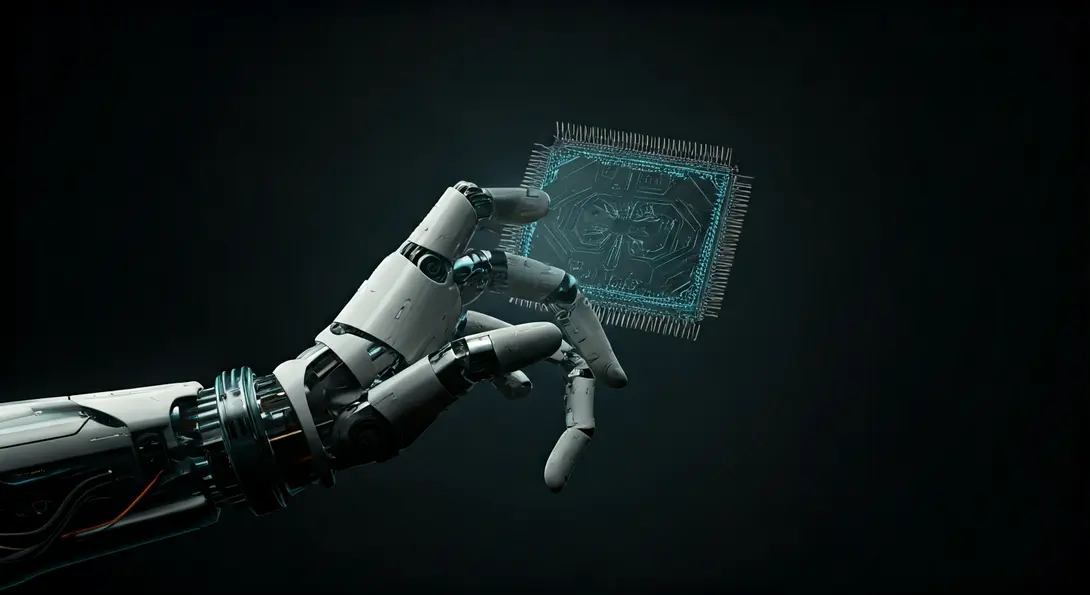
NVIDIA’s core contribution to this ambitious project lies in its artificial intelligence (AI) expertise and infrastructure. The heart of the Isaac GR00T platform will be the cutting-edge Jetson AGX Thor T5000 chip. This powerful processor is built upon NVIDIA’s advanced Blackwell architecture, signifying a leap in computational capability for robotics.
The company states that the Jetson AGX Thor T5000 offers an impressive 128 GB of memory and boasts a staggering computing power, capable of executing over two quadrillion (2,000 trillion) AI operations per second. This immense processing capability is crucial for running complex AI models that allow robots to perceive, reason, and act intelligently.
NVIDIA’s commitment to advancing AI inference capabilities is a cornerstone of its strategy, enabling these robots to perform complex tasks efficiently and in real-time, moving beyond mere theoretical concepts to practical applications.
Specialization in Action: Unitree’s Structure and Sharpa’s Dexterity
Each partner brings unique strengths to the Isaac GR00T initiative. The physical construction of the humanoid robots will be provided by Unitree, known for its agile and robust robotic designs. Unitree will contribute its advanced H2 robot design to the project, forming the structural foundation.
Sharpa, a specialist in advanced manipulation, is responsible for developing the crucial five-fingered robotic hands. These hands are engineered to facilitate extremely precise tasks, mimicking human dexterity. Such tasks include, but are not limited to, handling tools, carefully transferring objects, and manipulating very small components. The project creators highlight the sophistication of these hands, noting their ability to perform delicate operations, even going so far as to accurately deal playing cards.
Humanoids for Real-World Impact: Beyond the Tech Demo
A key emphasis from the project’s creators is that their goal extends beyond merely showcasing another robot at technology exhibitions. The ultimate aim is to develop machines that are truly prepared to execute specific and valuable tasks in authentic, real-world conditions. This focus on practical application underscores a shift from experimental prototypes to functional workforce integration.

David Li Yifan, the founder of Sharpa, expressed optimism that once the Isaac GR00T platform is made available, manufacturers will be able to more rapidly design and produce their own robot constructions. This acceleration will allow for greater customization, enabling these robotic solutions to be tailored precisely to a diverse range of specific applications and industries. This aligns with broader trends in robotics, including initiatives to bring child-sized robots into homes, highlighting the growing demand for versatile autonomous assistants.
NVIDIA’s Strategic Vision: Advancing Physical AI
This strategic collaboration is deeply aligned with NVIDIA’s broader vision and long-term strategy. For several years, the company has been a prominent developer of solutions related to “physical artificial intelligence.” This concept refers to AI systems that operate and interact directly within the non-digital, physical world, as opposed to purely virtual or computational environments.
In addition to the Isaac GR00T announcement at Computex 2026, NVIDIA also showcased its Cosmos 3 model. Cosmos 3 is designed to significantly enhance AI systems’ ability to understand their environment and interpret human behavior more effectively. This represents another critical component of NVIDIA’s expanding strategy, which increasingly involves substantial investment in the fields of robotics and the aforementioned physical artificial intelligence.
Frequently Asked Questions (FAQ)
The Isaac GR00T platform is significant because it aims to provide a comprehensive framework and set of guidelines for building humanoid robots, rather than just a single robot. This initiative by NVIDIA, in collaboration with Unitree and Sharpa, is designed to cover the entire development process, from AI model training to real-world deployment, thereby accelerating the creation of autonomous, human-like machines capable of practical tasks.
This collaboration enhances NVIDIA’s robotics initiative by bringing together specialized expertise. NVIDIA provides the advanced AI processing power with its Jetson AGX Thor T5000 chip. Unitree contributes its proven humanoid robot structures, specifically the H2 design. Sharpa adds highly specialized, five-fingered robotic hands, crucial for intricate manipulation tasks. This combined effort creates a holistic platform for advanced humanoid development.
Physical AI is central to NVIDIA’s long-term strategy for robotics. It refers to AI systems designed to operate and interact directly within the physical world, enabling robots to understand environments, perform complex actions, and make decisions autonomously. This focus ensures that NVIDIA’s AI advancements translate into practical, tangible applications for robots beyond digital simulations, leading to more capable and versatile autonomous machines.
The Jetson AGX Thor T5000 chip, central to the Isaac GR00T platform, is based on NVIDIA’s advanced Blackwell architecture. It features 128 GB of memory and delivers immense computing power, capable of exceeding two quadrillion (2,000 trillion) AI operations per second. These specifications highlight its capability to handle the complex AI models required for advanced humanoid robot perception, reasoning, and control.
Source: TechRadar
Opening photo: Gemini
About Post Author
