
Contents
Off-Grid Living: Powering a Home with Repurposed Laptop Batteries
Imagine disconnecting from the conventional power grid, relying solely on an ingenious energy system built from an unexpected source: old laptop batteries. This might sound like a futuristic fantasy or even a joke, but for one resourceful individual, it’s a living reality. An enthusiast from an online renewable energy forum embarked on this ambitious project, creating a robust, off-grid infrastructure that has been powering his home for almost a decade and remains in impeccable condition.
A Decade of Sustainable Innovation
In November 2016, a user known as Glubux shared his pioneering project on the online forum “Second Life Storage.” He unveiled his plan to power his home using a combination of discarded laptop batteries and solar panels—a testament to innovation and sustainable living.
The Scale of the Project
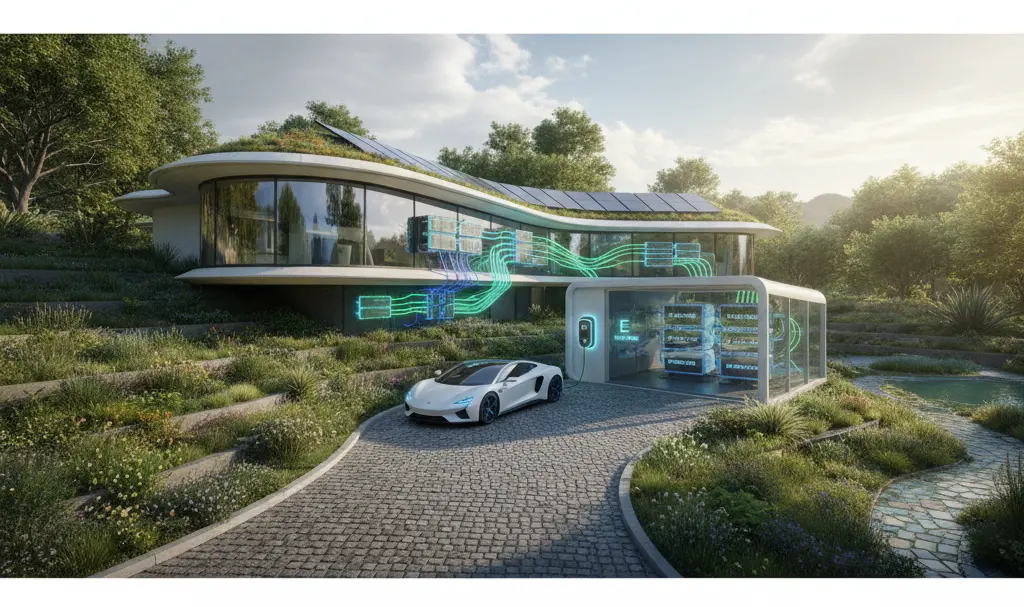
Glubux’s endeavor began with collecting 650 individual battery cells, a number that eventually grew to over a thousand. To house this impressive setup, he even constructed a dedicated building, affectionately termed his “command center,” which functions as the heart of his home’s power supply.
How the System Works
The process Glubux developed for his system is remarkably straightforward:
- Disassembly: He carefully removes individual cells from old laptop battery packs.
- Configuration: These individual cells are then interconnected to form larger, more complex battery banks.
- Integration: Finally, these battery banks are linked to a photovoltaic (solar) system, where sunlight continually replenishes their stored energy. This synergy between repurposed batteries and solar technology highlights accessible methods for achieving energy independence, much like the energy savings discussed in articles about home solar panel installations.
Durability and Evolution
As of his last update in late 2024, Glubux proudly reported that he hadn’t needed to replace a single battery cell in his decade-old system. The only significant upgrades involved replacing older solar panels with more efficient, newer models, further enhancing his system’s performance and reliability. This longevity underscores the potential for repurposing existing technology to create lasting sustainable solutions, a concept that aligns with broader discussions on the future of removable batteries and device repairability.
Beyond the Home: Charging Electric Vehicles
The ingenuity of Glubux’s system extends beyond merely powering his home. He also uses the stored energy from his laptop battery banks to charge his electric vehicles, including a Tesla and a Nissan. The system is meticulously designed to distribute the load evenly, preventing overloads and ensuring efficient power delivery to both his household and his vehicles.
The Future is Bidirectional: Vehicle-to-Home (V2H) Technology
While powering an electric car from a home’s electrical system is a common practice, the reverse—using an electric vehicle to power a home—is an emerging and increasingly viable solution known as Vehicle-to-Home (V2H) technology.
Understanding V2H
V2H systems allow electric vehicles to not only draw power from the grid but also to send stored energy back into a home, effectively turning the vehicle into a mobile power bank. This capability is particularly useful during power outages or for optimizing energy consumption by drawing power from the car during peak electricity price hours.
Technical Requirements and Cost
It’s important to note that not all electric vehicles support V2H technology. Only cars equipped with bidirectional charging capabilities, coupled with a specialized charger and additional components like an inverter, can facilitate this energy flow. While highly beneficial, these installations are not inexpensive, with costs typically ranging up to $13,000 for a comprehensive setup.
Vehicles Supporting V2H
As V2H technology evolves, more manufacturers are integrating this feature into their vehicles. Notable models that support V2H include:
- Tesla Cybertruck
- Volvo EX90
- Taiga electric personal watercraft
These examples highlight the growing trend towards more interconnected and flexible energy ecosystems, where vehicles play a dual role in transportation and home energy management.
Frequently Asked Questions (FAQ)
What are the main benefits of an off-grid system using repurposed batteries?
The primary benefits include energy independence, reduced electricity bills, and environmental sustainability through repurposing electronic waste. It also provides resilience against power outages, offering a reliable power source during grid interruptions.
Is it safe to build an energy system with repurposed laptop batteries?
Building such a system requires significant technical knowledge and safety precautions. Laptop batteries (lithium-ion cells) can be hazardous if mishandled, overcharged, or short-circuited. It is crucial to have expertise in electronics, battery management systems (BMS), and safety protocols, or to consult with professionals, to prevent risks like fires or explosions.
How long do repurposed laptop batteries typically last in an off-grid system?
The lifespan can vary significantly based on the quality of the original cells, how they are managed (e.g., charge/discharge cycles, temperature), and the overall design of the battery management system. As demonstrated by Glubux’s nearly decade-long project, with proper care and management, these cells can offer substantial longevity, far beyond their initial intended use.
What are the biggest challenges in implementing a V2H system?
Key challenges include the high initial cost of specialized equipment (bidirectional charger, inverter), the limited number of vehicles currently supporting V2H technology, and the complexity of integrating it with existing home electrical systems. Additionally, local regulations and utility company policies might impact installation and operation.
Source: Mein-MMO. Opening photo: NongAsimo / Adobe Stock, Patryk Kosmider / Shutterstock
About Post Author
