Contents
Paramount Sweetens Bid for Warner Bros. Discovery, Escalating Battle with Netflix
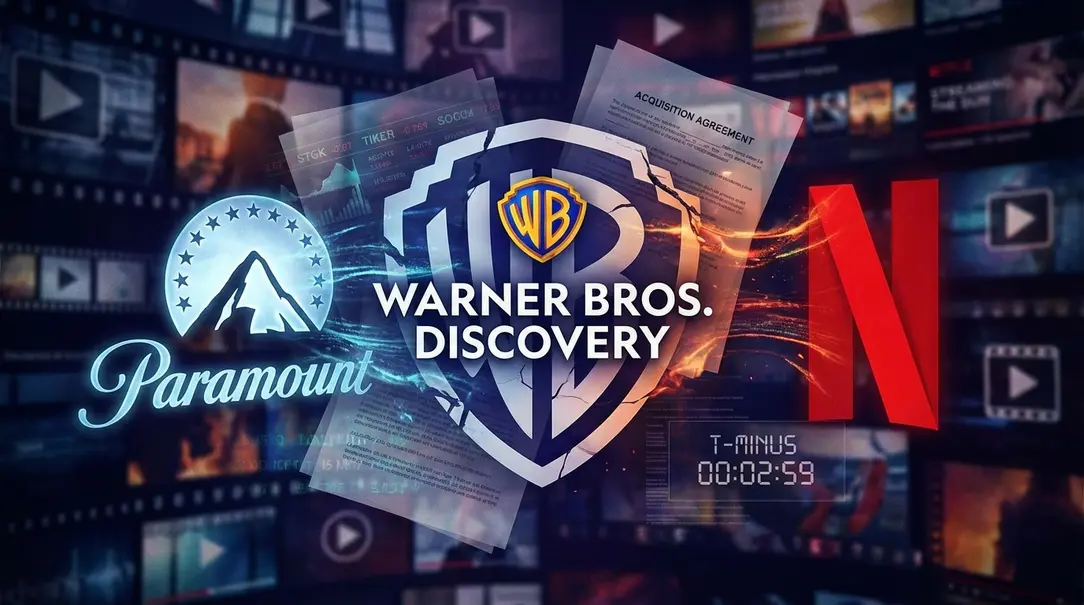
The highly contested battle for ownership of Warner Bros. Discovery (WBD) has taken another dramatic turn. Paramount has reportedly submitted an updated and more compelling offer to acquire the media giant, directly challenging Netflix, which was previously considered the frontrunner in this high-stakes acquisition race.
The Ongoing Saga for Warner Bros. Discovery
What has become an intricate corporate “telenovela” in the entertainment industry, the acquisition of Warner Bros. Discovery has seen bids from multiple major players. Just recently, Netflix appeared to be the clear favorite to secure a controlling stake in the studio behind iconic franchises like DC Comics, Harry Potter, and HBO. However, Paramount has now re-entered the fray, significantly enhancing its previous proposal in a move designed to sway WBD shareholders.
Paramount’s Revised Offer Details
Paramount’s updated bid maintains the per-share price from its earlier offer but introduces several critical additions aimed at increasing its attractiveness and providing financial security to WBD shareholders and stakeholders.
Key Components of the New Bid:
- Per-Share Price: The core offer remains at $30.00 per share for Warner Bros. Discovery stock.
- Delay Compensation Fee: A crucial new element is an additional “delay compensation fee” of $0.25 per share. This fee would be paid to WBD shareholders for each quarter that the transaction is delayed beyond January 1, 2027, providing a financial incentive for a timely completion or compensation for prolonged uncertainty.
- Penalty to Netflix: In a bold strategic move, Paramount has committed to paying Netflix a substantial penalty of $2.8 billion if Paramount’s offer is ultimately rejected in favor of another bidder. This demonstrates Paramount’s confidence and willingness to absorb significant costs to achieve the acquisition.
- Debt Assumption: Beyond the potential penalty, Paramount has also pledged to assume and repay $1.5 billion of Warner Bros. Discovery’s existing debt, further sweetening the deal by alleviating WBD’s financial liabilities.
Strong Financial Backing for Paramount’s Bid
The extensive financial commitments in Paramount’s offer are backed by a robust funding structure, ensuring the feasibility of the proposed acquisition:
- Ellison Family Capital Commitments: The deal is slated to be financed by $43.6 billion in capital commitments from the Ellison family, indicating strong private investment backing.
- Debt Financing: An additional $54 billion will be secured through debt financing, rounding out the substantial financial package required for such a large-scale acquisition.
Industry Reactions and Concerns
David Ellison, CEO of Paramount, has publicly advocated for his company’s offer, asserting its superiority over Netflix’s proposal and directly appealing to Warner Bros. Discovery shareholders to reject competing bids. He emphasizes the comprehensive nature and financial assurances provided by Paramount’s terms.
However, the potential acquisition has not been without controversy. The International Union of Cinemas recently issued a strong appeal against the WBD takeover. Their primary concern is that such a consolidation could lead to significant changes in how cinematic premieres are handled, potentially reducing or eliminating traditional theatrical releases in multiplexes, a move that could profoundly impact the cinema industry.
Source: The Hollywood Reporter
Frequently Asked Questions (FAQ)
What is Warner Bros. Discovery (WBD)?
Warner Bros. Discovery is a global media and entertainment company formed from the merger of WarnerMedia and Discovery, Inc. It owns a vast portfolio of brands including Warner Bros. Pictures, HBO, CNN, Discovery Channel, Cartoon Network, and many others, with significant assets in film, television, and streaming.
Why are Paramount and Netflix interested in acquiring WBD?
Acquiring WBD would significantly bolster the content libraries, intellectual property, and market share of either Paramount or Netflix. For Paramount, it means massive vertical integration and a stronger position in the streaming wars. For Netflix, it would provide an unparalleled boost to its content catalog and reduce reliance on third-party licensing, cementing its lead in the global streaming market.
What is a “delay compensation fee” in an acquisition?
A “delay compensation fee,” sometimes referred to as a “ticking fee,” is a payment mechanism in an acquisition agreement. It compensates the target company’s shareholders for any delays in closing the transaction beyond a specified date. It incentivizes the acquiring party to complete the deal promptly and provides shareholders with some return if the process is prolonged.
About Post Author