

Contents
Samsung Galaxy Watch 8 vs. Clinical ECG: Unveiling Diagnostic Potential
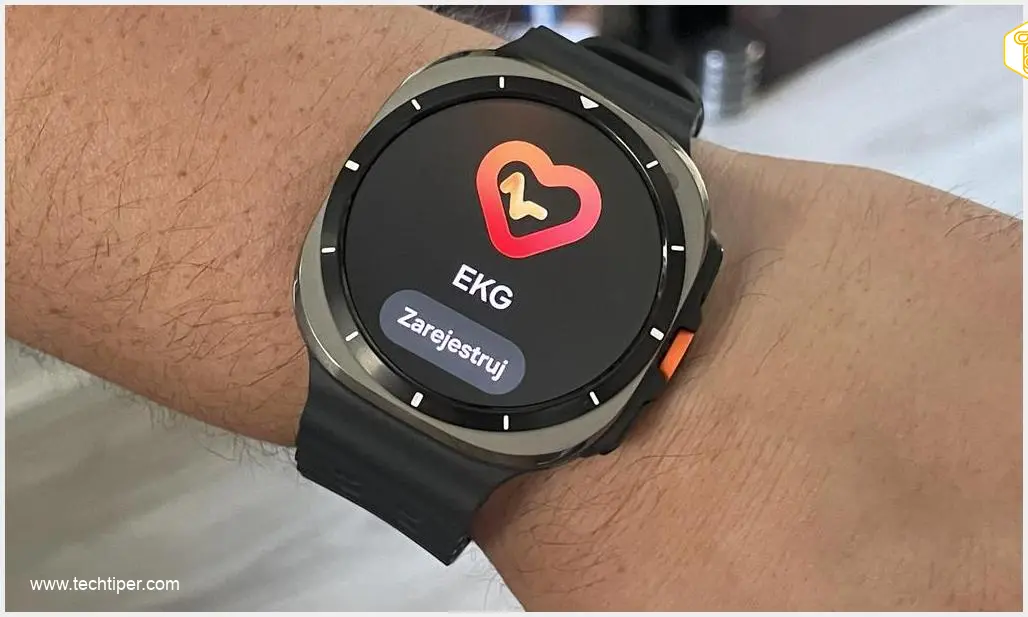
The Samsung Galaxy Watch 8 recently underwent an independent evaluation at an Argentine cardiology center, where its performance was benchmarked against a clinical 12-lead electrocardiogram (ECG). This marks one of the most compelling studies to date, demonstrating that a consumer smartwatch can generate data of a quality beneficial not only to users but also to medical professionals.
The Study: Galaxy Watch 8 Against Clinical ECG
The research was conducted in Argentina, and its findings were presented at the National Congress of Cardiology 2026 in Rosario. A team of cardiologists meticulously compared readings from the Galaxy Watch 8 with a comprehensive 12-lead ECG. The study encompassed 507 recordings from 225 patients within a hospital setting.
The medical team highlighted a diagnostic equivalence between the smartwatch measurements and the clinical apparatus. This significant finding suggests that, in numerous scenarios, the Galaxy Watch 8 could serve as a genuine support tool for assessing heart rhythm.
The patient cohort included individuals with:
- Atrial fibrillation
- Premature ventricular contractions
- Post-cardiac surgery conditions (including those who underwent Tetralogy of Fallot correction)
- Implanted pacemakers
- Pediatric patients
Such a diverse clinical profile enhances the study’s credibility, ensuring the test was not limited to “ideal” users without underlying health conditions.
Transforming Smartwatch Readings into Vector ECG
The study leveraged a unique tool called the ECG Calculator Watch. This innovative system utilizes measurements from the Galaxy Watch 8 alongside vector calculations to determine the heart’s electrical axis. The smartwatch gathers sequential readings from various points, including the wrist and ankle. By analyzing potential differences and employing vector modeling, it can estimate the heart’s axis in a manner comparable to a classic ECG examination.
The average margin of error recorded was 5.9 degrees, a figure the authors consider to represent excellent agreement with the reference clinical measurement.
This sophisticated approach sets the study apart from typical wearable device tests, which usually focus on whether a one-dimensional recording from a smartwatch can correctly detect conditions like atrial fibrillation. Here, researchers took a significant step further, aiming to approximate the functionality of a full 12-lead ECG through a clever combination of readings and mathematical analysis. Consequently, the Galaxy Watch 8, when integrated with this developed algorithm, can not only record heart rhythm but also provide information similar to that routinely used by cardiologists for diagnosis.
Clinical Data Versus Marketing Claims
It is crucial to note that this study is not another “case study” commissioned by a manufacturer, but rather genuine clinical research conducted by physicians and presented to their peers. It was based on real patient data, and its results were published at a scientific cardiology conference.

Samsung’s commitment to health technology extends beyond this study. The company has previously collaborated with leading institutions like Massachusetts General Hospital, Chung-Ang University, and Stanford Medicine on specific clinical applications of its sensors. Keeping your smartwatch updated is crucial for optimal performance and security; users can find guidance on updates, such as those for the Galaxy Watch 4 or review the latest enhancements like the February security update for the Galaxy Watch 6 Classic.
However, experts continue to emphasize that despite these promising results, no application or smartwatch should replace standard diagnostic procedures or regular visits to a medical specialist. The Galaxy Watch 8 and similar devices are best viewed as a “first line” monitoring tool—a means to detect warning signals, document symptoms, and increase personal health awareness, rather than an independent diagnostic tool for complex heart diseases.
Other Smartwatch-Related Studies
Several other studies have explored the capabilities of smartwatches in cardiac monitoring:
Comparison with Clinical Electrocardiographs
One study investigated whether four popular smartwatches with ECG functionality could meet the requirements of clinical electrocardiographs according to the IEC 60601-2-25:2011 standard. The authors evaluated the Apple Watch Series 9, Samsung Galaxy Watch 6, Fitbit Sense 2, and Withings ScanWatch, comparing them against a Philips TC30 clinical electrocardiograph (considered the gold standard).
The findings indicated that all tested smartwatches are suitable for reliable monitoring of sinus rhythm and heart rate within typical ranges. However, their capabilities varied when dealing with extreme heart rates and in measuring subtle changes in ECG morphology. Among the analyzed models, the Apple Watch Series 9 and Fitbit Sense 2 demonstrated the greatest potential for clinical applications extending beyond basic heart rate measurement and atrial fibrillation detection.
Atrial Fibrillation Detection Accuracy
A slightly older study compared the Apple Watch Series 5, Samsung Galaxy Watch Active 3, and Withings Move ECG for their ability to detect atrial fibrillation (AF). All three smartwatches achieved high sensitivity and specificity in AF detection, but they differed significantly in the number of unclassifiable recordings. Apple and Samsung models performed better than Withings in this regard. After excluding ambiguous readings, all three devices approached “hospital-level” accuracy.
Electrophysiologists were generally able to interpret most of the recordings very well. However, ECGs from Samsung devices were more frequently categorized as difficult or uninterpretable. This practical observation underscores that signal quality and the percentage of “indeterminate” results are as crucial as the sensitivity and specificity metrics themselves.
Frequently Asked Questions (FAQ)
Based on an independent study conducted in an Argentine cardiology center, the Samsung Galaxy Watch 8 demonstrated diagnostic equivalence with a 12-lead clinical ECG for assessing heart rhythm in a diverse patient group. The average error margin for determining the heart’s electrical axis was 5.9 degrees, indicating very good agreement with clinical measurements.
No, while smartwatches like the Galaxy Watch 8 offer promising monitoring capabilities, experts emphasize they should not replace standard diagnostic procedures or regular consultations with a medical specialist. They are best used as a “first line” tool for monitoring, detecting warning signs, and documenting symptoms, rather than for diagnosing complex heart conditions independently.
Source: Sammy Fans, Samsung, Science Direct, Frontiers in Cardiovascular Medicine.
Opening photo: Jolanta Szczepaniak / Android.com.pl
About Post Author
