

Contents

3D Printing Revolutionizes Construction: Europe’s Largest Residential Building Erected in Record Time
Could a fully functional residential building be created using a 3D printer? The answer is a resounding yes. A French developer has proven this by constructing a multi-story building in the town of Bezannes, demonstrating that advanced manufacturing techniques can significantly accelerate construction timelines. Thanks to this innovative method, on-site work for this remarkable project took just over a month.

Rapid Construction: A New Era for Housing Development
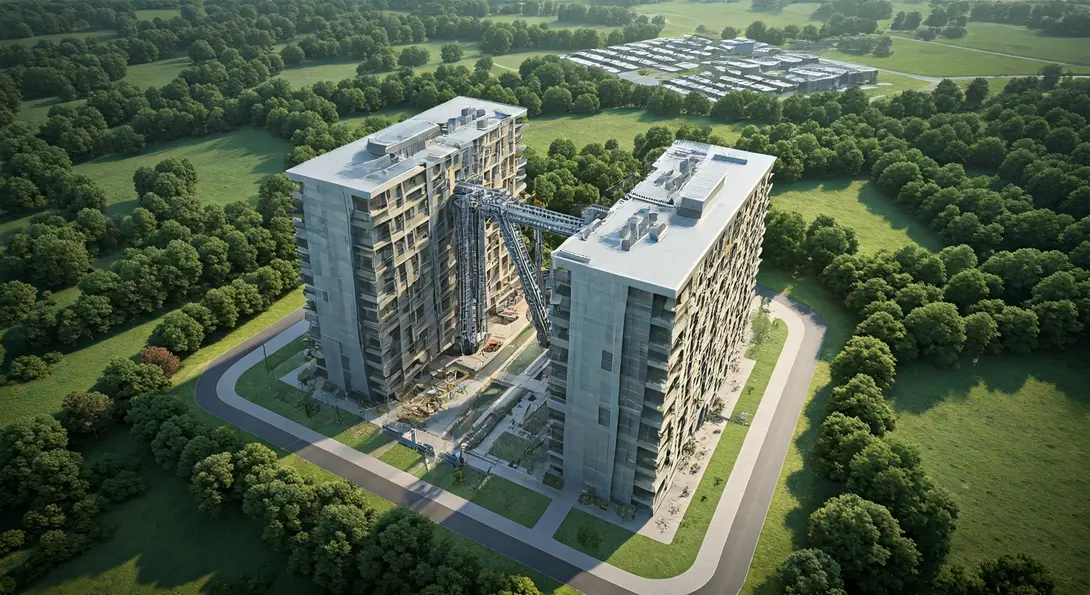
In April 2025, the first residential building constructed with 3D printing technology was completed in Bezannes, a town near Reims, France. This groundbreaking project was a collaboration between the developer Plurial Novilia and PERI 3D Construction.
The building features twelve social housing units spread across three floors. All structural loads are supported by walls printed from Holcim Lafarge concrete, known for its exceptional strength and durability. This approach not only streamlines the construction process but also utilizes high-performance materials for long-lasting structures.
Unprecedented Efficiency in Building
Utilizing 3D printing for construction proved incredibly efficient, allowing the entire building to be erected in a mere 34 days. The project reached a raw shell state approximately 50% faster than what would be expected with conventional construction methods. This significant reduction in build time has profound implications for addressing housing needs globally.
Looking ahead, another ambitious project using this method is already planned. This next venture aims to construct 40 apartments, leveraging two 3D printers simultaneously to further enhance efficiency and scale. The rapid advancements in construction automation, as seen in projects like this, mirror the accelerating pace of innovation across various industries, including advanced manufacturing and AI-driven robotics. For more on how cutting-edge technology is reshaping our world, check out our insights on Elon Musk’s Terafab Semiconductor Factory in Texas.
Beyond Construction: Diverse Applications of 3D Printing
While 3D printing is making waves in construction, its applications extend far beyond, reaching into fields that were once considered the realm of science fiction. The medical sector, in particular, is witnessing remarkable breakthroughs.
It might seem that medicine, with its constant advancements, could no longer surprise us. However, some of its innovations can still be quite astonishing. Among these is the creation of internal organ fragments using 3D printers.
Several years ago, scientists at Oxford University proposed a similar concept: “printing” missing parts of the brain. Such reconstructed structures could not only improve patients’ chances of recovery but also provide researchers with invaluable information about the functioning of the human brain. The integration of advanced manufacturing with biological sciences highlights a future where technology addresses complex human needs, a theme often explored when discussing the intersection of Generation Z, housing wealth, AI, and the future.
Frequently Asked Questions (FAQ)
3D printing offers significant advantages such as drastically reduced construction times (up to 50% faster than traditional methods), lower labor costs, reduced material waste, and increased design flexibility. It can also help address housing shortages more rapidly.
Specialized concrete mixtures, like the Holcim Lafarge concrete used in the Bezannes project, are commonly employed. These materials are formulated for high strength, rapid setting, and optimal flow through the 3D printing equipment.
Yes, 3D printed buildings are designed to meet or exceed conventional construction standards. The use of high-strength concrete and adherence to strict engineering principles ensure that these structures are robust, durable, and safe for habitation.
The future of 3D printed construction looks very promising, with plans for larger projects involving more housing units and multiple printers working concurrently. This technology is expected to play a crucial role in sustainable urban development and addressing global housing challenges.
Source: PERI 3D Construction
Opening photo: Gemini
About Post Author
