

Contents

The 900,000-Year-Old Genetic Bottleneck: How Humanity Almost Went Extinct
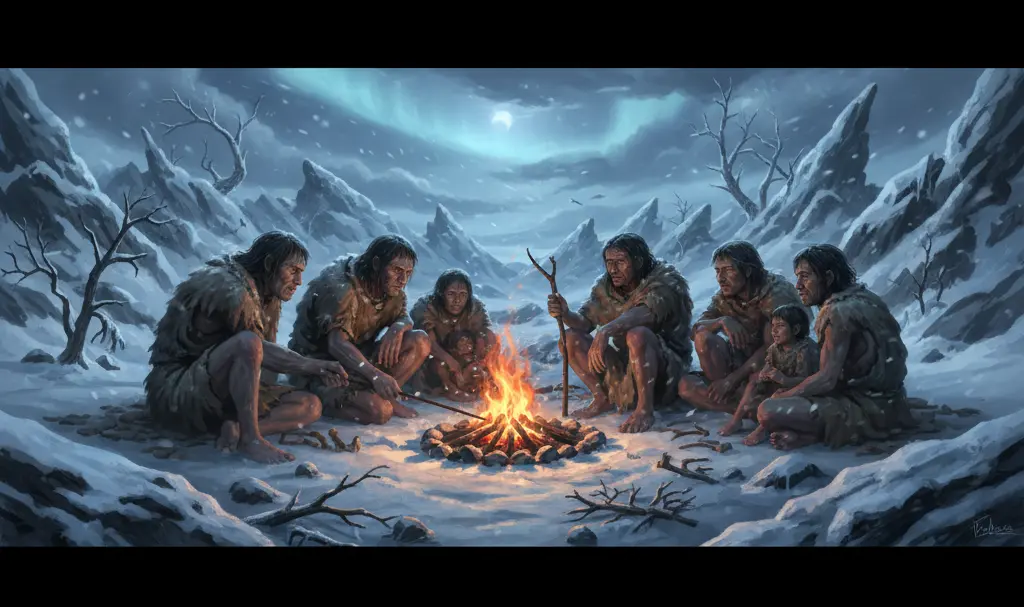
Modern scientific research has shed new light on a dramatic chapter in our evolutionary history—one that nearly erased our ancestors from the face of the Earth. According to genomic researchers, approximately 900,000 years ago, the human ancestral population collapsed, leaving only a tiny fraction of breeding individuals alive. Consequently, humanity balanced precariously on the edge of biological extinction for over a hundred millennia.

The Critical Moment We Almost Disappeared
For decades, paleontologists and geneticists have been puzzled by a glaring gap in the fossil record dating between 950,000 and 800,000 years ago. A breakthrough recently came via an innovative analytical tool called FitCoal (Fast Infinitesimal Time Coalescent Process). This methodology allowed scientists to look back through time and accurately reconstruct ancient population dynamics directly from the genomes of modern humans.
By analyzing genomic data from over 3,000 individuals across diverse global populations, researchers uncovered a staggering statistic: during this ancient epoch, our ancestors lost nearly 98.7% of their population. In evolutionary biology, this severe reduction is known as an extreme genetic bottleneck.
- Breeding Population: The effective breeding population crashed to an estimated 1,280 individuals.
- Duration: This wasn’t a brief catastrophe. The bottleneck persisted continuously for around 117,000 years.
- Genetic Impact: This prolonged restriction in the gene pool perfectly explains why modern humans display remarkably low genetic diversity compared to other primate species.
Was Climate Change the Primary Culprit?
Scientists strongly suspect that abrupt, severe climate shifts during the Early-Middle Pleistocene transition triggered this demographic disaster. The planet experienced a shift toward longer and more intense glacial cycles. This transition resulted in drastic drops in sea surface temperatures and triggered prolonged, devastating droughts across Africa and Eurasia.
These harsh environmental shifts decimated traditional food sources, forcing early hominins to struggle for survival in increasingly barren landscapes. Surviving extreme ecological pressure requires incredible adaptation, much like the evolutionary resilience observed in the horseshoe crabs Cape Cod conservation success story.
However, the immense evolutionary pressure exerted by these unforgiving conditions may have actually catalyzed crucial biological developments. Researchers speculate that this exact period drove significant modifications in chromosome structure. This genetic restructuring likely paved the way for the emergence of the common ancestor of modern humans, Neanderthals, and Denisovans. While the vast majority perished, the survivors possessed an extraordinary capacity for adaptation that permanently altered the trajectory of human evolution.
How Extreme Conditions Shaped Our DNA
This dark evolutionary chapter finally closed roughly 813,000 years ago when the hominin population began a rapid recovery. Scientists attribute this demographic rebound to a few key advancements:
- Mastery of Fire: Harnessing fire provided warmth, protection, and the ability to cook food, vastly increasing nutrient absorption.
- Climate Stabilization: A shift toward a more hospitable climate allowed our ancestors to reclaim and expand into previously abandoned ecological niches.
While the idea that only 1,280 survivors gave rise to the over 8 billion people living today seems almost unfathomable, genomic data suggests this resilient group forms the foundation of all modern humanity across the globe. Unlocking these ancient survival secrets is just as compelling as piecing together prehistoric behaviors, such as the fascinating discoveries detailed in the Oviraptor dinosaur nest incubation experiment.
Scientific Debate and Skepticism
As with many groundbreaking studies, these findings have sparked rigorous debate within the scientific community. Some researchers criticize the conclusions, arguing that the FitCoal model might overstate the severity of the bottleneck.
Skeptics suggest the model could be misinterpreting specific genetic variations. Rather than reflecting a massive population crash, these genetic signatures might be the result of a highly structured population network—where human ancestors lived in small, localized, and somewhat isolated bands. Alternate analytical methods applied to the same genomic data can explain these variations without requiring such a dramatic drop in human numbers. The debate continues, underscoring the complexity of unraveling our ancient origins.
Frequently Asked Questions (FAQ)
What exactly is a genetic bottleneck, and how does it affect modern humans?
A genetic bottleneck occurs when a population’s size is drastically reduced for at least one generation. Because only a few individuals survive to pass on their genes, the genetic diversity of the entire future population is severely limited. For modern humans, this means we share far more identical DNA with one another than many other species do, making us biologically unified but also more susceptible to certain hereditary vulnerabilities.
How can scientists determine the population size from 900,000 years ago?
Scientists use complex computational models, like the FitCoal method, to trace the lineage of genetic variations backward through time. By analyzing the DNA mutations present in modern human populations, these algorithms can calculate the “effective population size” required in the distant past to produce the specific patterns of genetic diversity we see today. A severe lack of diversity points directly to a historically small population.
Did other ancient hominin species exist during this bottleneck?
Yes, other hominin populations likely existed around the globe. However, the specific genetic lineage that eventually led to modern Homo sapiens, Neanderthals, and Denisovans was the one that experienced this extreme squeeze. The harsh environmental conditions may have actually driven the evolutionary divergence of these different hominin branches from a common ancestral group that barely survived the climate crisis.
Source: UniladTech, Science. Opening photo: Gemini
About Post Author
