

Contents

The Near-Extinction of Humanity: How 1,280 Individuals Saved Our Species
Modern scientific research is shedding new light on dramatic events from our species’ distant past—events that nearly led to the total extinction of humanity. Geneticists and paleoanthropologists estimate that roughly 900,000 years ago, the population of our ancestors shrank drastically, leaving alive only a tiny fraction of individuals capable of reproduction. For over 100,000 years, early humanity teetered on the very edge of biological annihilation.

The Genetic Bottleneck: A 117,000-Year Crisis
For a long time, scientists were puzzled by a striking gap in the fossil record dating back between 950,000 and 800,000 years ago. The answer to this mystery was finally unlocked using an innovative analytical method known as FitCoal (Fast Infinitesimal Time Coalescent Process). This breakthrough technology allowed researchers to accurately read the deep demographic history recorded within the genomes of modern humans.
By analyzing genomic data from over 3,000 individuals across diverse global populations, researchers discovered that humanity lost an astounding 98.7% of its total population during this period. In evolutionary biology, this phenomenon is referred to as an extreme genetic bottleneck.
Scientists estimate the “effective breeding population” of Homo ancestors during this prolonged crisis was a mere 1,280 reproducing individuals. Astonishingly, this was not a short-lived disaster. This critical state persisted continuously for approximately 117,000 years.
To put this into perspective, if our population numbers were that low today, our species would be classified as critically endangered. This drastic reduction in our ancestral gene pool perfectly explains why modern humans exhibit significantly lower genetic diversity compared to many other primate species.
What Caused the Near-Extinction of Our Ancestors?
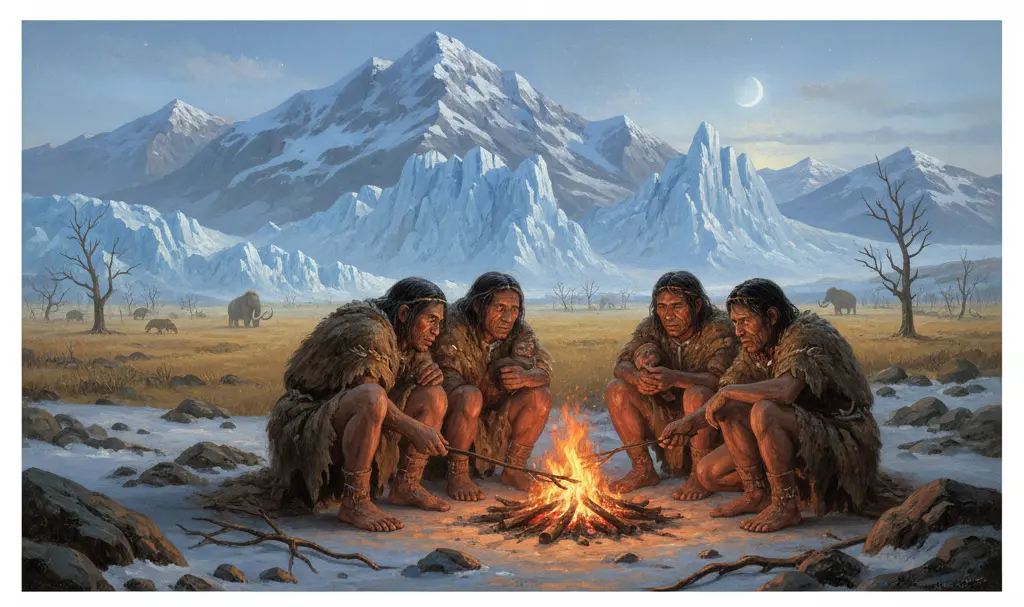
Researchers suspect that sudden, radical climate shifts during the Pleistocene epoch were the primary drivers of this demographic catastrophe. The planet transitioned into more intense and prolonged glacial cycles. This environmental upheaval resulted in several devastating consequences for early hominids:
- Plunging Temperatures: Drastic drops in sea surface temperatures disrupted global weather patterns.
- Severe Droughts: Vast regions across Africa and Eurasia experienced prolonged, crushing dry spells.
- Widespread Food Scarcity: The destruction of traditional flora and fauna forced early humans to fight for survival in an increasingly barren, hostile landscape.
Understanding these ancient environmental shifts is as critical to decoding human history as modern climate modeling is to our future. Just as scientists today must continuously analyze complex environmental data to correct errors in coastal threat maps related to sea-level rise studies, paleoanthropologists must meticulously decode ancient climate records to understand past mass-extinction events.
How Extreme Conditions Shaped Human DNA
While the evolutionary pressure caused by these harsh conditions resulted in massive loss of life, it also acted as a powerful catalyst for change. The sheer resilience required to reproduce and protect offspring in such unforgiving climates highlights incredible evolutionary adaptations. These survival instincts are a hallmark of life on Earth, echoing the fascinating, protective parental behaviors recently analyzed in the Oviraptor dinosaur nest incubation experiment.
Scientists speculate that this severe bottleneck period triggered significant modifications in the structure of human chromosomes. This intense genetic pressure likely led to the emergence of the last common ancestor shared by modern humans, Neanderthals, and Denisovans. Although the vast majority of the population perished, those who survived possessed an extraordinary capacity for adaptation, forever altering the course of human evolution.
The Road to Recovery
The end of this dark era arrived around 813,000 years ago when the human population finally began a rapid expansion. What triggered this sudden recovery? Anthropologists believe two major factors were at play: a shifting, more hospitable climate, and a monumental technological leap—the mastery of fire. Harnessing fire allowed our ancestors to keep warm, safely cook a wider variety of foods, and confidently expand into newly available ecological niches.
While the idea that all of humanity across every continent today descends from a core group of just 1,280 survivors may sound like science fiction, genomic evidence firmly supports it.
Scientific Skepticism: Is the Bottleneck Theory Flawless?
It is important to note that the scientific community thrives on debate, and some researchers have criticized the definitive conclusions of these findings. Skeptics argue that the mathematical model used in the FitCoal study might be exaggerating the severity of the population drop. They suggest that the genetic variations observed might not necessarily stem from an absolute decline in human numbers, but rather from the fragmented structure of ancient populations, where smaller groups lived in isolation from one another. Alternative genomic testing methods applied to the same datasets sometimes offer models with less dramatic population crashes.
Regardless of the exact numbers, there is little doubt that our ancestors faced an unparalleled existential threat during the mid-Pleistocene. Their survival against insurmountable odds is the very reason we are here today.
Frequently Asked Questions (FAQ)
What is the FitCoal method, and how does it trace human ancestry?
FitCoal (Fast Infinitesimal Time Coalescent Process) is an advanced computational and genomic analysis tool. By evaluating the genomes of thousands of modern individuals from various global populations, scientists can look backward through time to map out historical population sizes, revealing genetic bottlenecks and evolutionary splits.
Does a population of 1,280 mean there were exactly that many humans alive?
No. The figure of 1,280 refers specifically to the “effective breeding population”—the estimated number of adults actively contributing their genetics to the next generation. The total population, which includes children, the elderly, and non-reproducing individuals, would have been slightly higher, though still dangerously small.
How did mastering fire help end the genetic bottleneck?
Mastering fire revolutionized hominid survival. It provided a reliable source of warmth during harsh glacial cycles, offered protection from predators, and allowed early humans to cook their food. Cooking unlocks more calories and nutrients from meat and tough plants, which supported brain growth and overall population recovery.
Source: UniladTech, Science & Opening photo: Gemini
About Post Author
