

Contents
The Hidden Cost of AI: Why Knowing the Truth About a Message Changes Everything
Artificial Intelligence is increasingly being used in almost every area of our lives, including helping us draft daily text messages and emails. Although most people lack the ability to distinguish a text generated by AI from one written by a human, their perception drastically sours once they discover the truth. These fascinating insights stem from a recent psychological experiment detailed in The Conversation.
The Illusion of the Human Touch: We Assume Everything is Genuine
In our daily interactions, we almost automatically assume that the author of the message we receive is a living, breathing human being. The experiment asked participants to evaluate deeply personal messages—including heartfelt apologies—without knowing whether they were penned by a person or an AI chatbot like ChatGPT.
The results were telling: respondents who were kept in the dark about the text’s origins rated the AI-generated messages just as positively as those they believed were human-written. Surprisingly, even tech-savvy individuals who regularly use AI tools failed to suspect any artificial involvement, falling for the illusion just as easily as those who rarely use such technology.
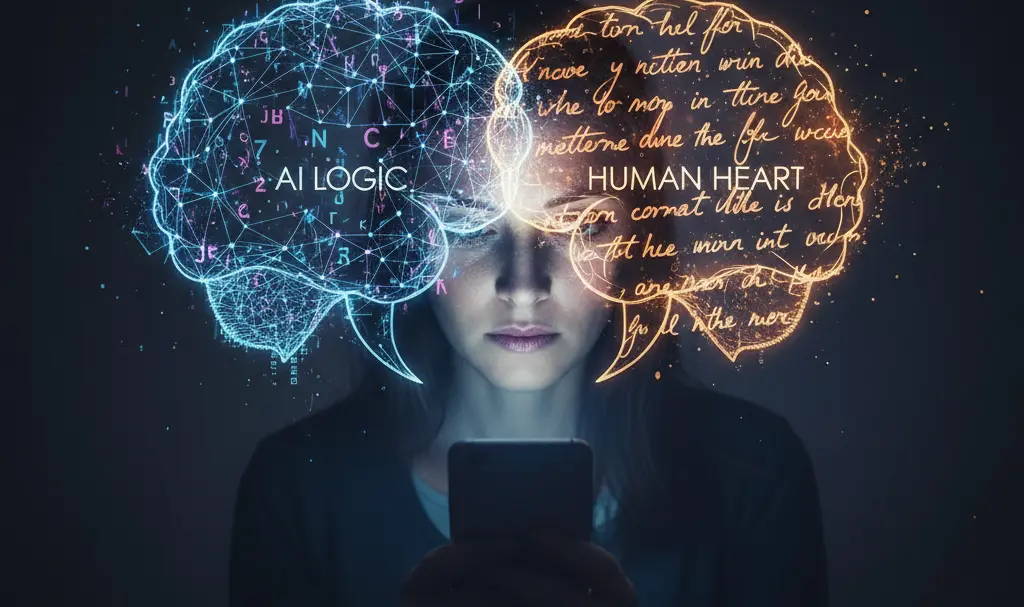
To truly convey authentic emotions, we often find ourselves grappling with the AI authenticity dilemma and human imperfection in the digital age, realizing that mechanical perfection cannot replace genuine human sentiment.
The Backlash: What Happens When the Truth is Revealed?
The situation changed diametrically the moment the recipient was informed that the message was generated by AI. Once the curtain was pulled back, the senders were immediately judged far more harshly.
Recipients viewed the senders as:
- Insincere: The emotional weight of an apology or personal note vanished.
- Lazy: Relying on an algorithm to do the emotional heavy lifting was seen as a lack of effort and respect.
- Inauthentic: The foundational trust required for interpersonal communication was compromised.
This pushback against automated communication echoes broader societal sentiments, similar to public figures like Pamela Anderson speaking out against AI, championing human imperfection and authenticity over artificial gloss.
How AI is Reshaping the Future of Communication
The core conclusion of the experiment is somewhat paradoxical: using AI to communicate works perfectly fine—until the recipient finds out who actually wrote the message.
Researchers note that the growing popularity of AI will soon fundamentally alter how we interpret the written word. We are already witnessing this shift in sectors like the job market. Traditional written methods, such as cover letters, are rapidly losing their significance in recruitment. Because these documents can be easily generated by AI, many companies now prefer to base their hiring decisions on personal recommendations, direct interviews, and face-to-face evaluations.

Key Takeaways for Maintaining Authentic Relationships
- Choose Your Medium Wisely: Use AI for drafting routine, professional, or administrative emails where emotional depth is not required.
- Embrace Direct Contact: If you need to convey genuine emotion, resolve a conflict, or apologize, put the keyboard down. Opt for a direct face-to-face conversation or a traditional phone call.
- Value Imperfection: A slightly clumsy but sincere message written by you will always hold more long-term value than a perfectly curated AI script.
Frequently Asked Questions (FAQ)
Why do people judge AI-generated apologies so harshly when they find out the truth?
Trust and personal effort are the core components of a genuine apology. When someone uses AI to craft a deeply personal message, the recipient perceives a lack of emotional investment and time, which makes the sender appear lazy and emotionally disconnected.
Will AI completely replace traditional written communication like cover letters?
While AI will automate many routine communications, highly personal or critical written formats are actually losing their value rather than being replaced. Employers and individuals are increasingly prioritizing face-to-face interactions or voice calls to verify genuine intent, emotional intelligence, and authenticity.
Source: The Conversation. Opening photo: Gemini.
About Post Author
