

Contents
A Scientifically Proven Method to Eliminate Microplastics from Your Drinking Water
We have all heard about the health risks associated with microplastics entering our bodies. Thankfully, there are proven methods to minimize our exposure. Taking a few small steps—such as ditching bottled beverages in favor of glass and educating yourself on why you should never do this with plastic containers when storing food—can significantly improve the safety of your meals.
However, there is also a scientifically confirmed, highly effective method for removing nano- and microplastics directly from your tap water. It is inexpensive, requires no high-tech equipment, and is not time-consuming.
The Hidden Danger: What Are Nano- and Microplastics?
Microplastics are practically everywhere, making them incredibly difficult to eliminate completely. They are broadly categorized by size:
- Nanoplastics: Extremely tiny plastic particles measuring less than 1 micrometer (1 µm, or one-thousandth of a millimeter).
- Microplastics: Larger plastic fragments ranging in diameter from 1 µm up to 5 millimeters.
Both types of particles have infiltrated global ecosystems and are regularly found in our water supply, soil, air, and the food chain. They enter the human body through the ingestion of contaminated food and liquids, the inhalation of airborne particles, and even through the skin when using cosmetics containing microscopic plastic beads.
Why Are Microplastics Harmful to Human Health?
One of the greatest threats associated with microplastics is their ability to absorb and transport toxic substances. These tiny fragments act like sponges in the environment, attracting and binding to harmful chemicals, including:
- Agricultural pesticides
- Heavy metals
- Industrial chemical pollutants
Once these toxin-laden particles enter the human body, they can trigger a cascade of negative health effects. While the long-term impact of microplastic ingestion is still a subject of ongoing medical research, current analyses strongly suggest they can cause inflammation, cellular damage, and negatively disrupt the delicate human gut microbiome.
Understanding environmental hazards requires accurate science. Just as errors in sea-level rise studies can obscure the true extent of coastal threats, ignoring the invisible presence of microplastics masks an immediate, daily danger to our health. Because these particles have become ubiquitous, completely avoiding them is virtually impossible—but we can drastically reduce our exposure.
The Simple Solution: Boiling and Filtering Hard Water
The first and most critical step in reducing your microplastic intake is choosing tap water over commercially bottled water. Plastic bottles themselves frequently shed microscopic plastic particles directly into the liquid they hold. But tap water isn’t perfectly pristine either. Fortunately, research provides an accessible way to purify it further.
A groundbreaking study conducted by scientists from Jinan University and published in the journal Environmental Science & Technology Letters revealed that simply boiling and filtering hard tap water can effectively extract microplastics.

How the Boiling Method Works
The secret lies in the natural minerals found in “hard” tap water. When hard water boils, the calcium carbonate present in the water crystallizes and forms a solid scale or precipitate. As these mineral structures form, they trap and encapsulate the floating nano- and microplastic particles.
To safely remove microplastics from your drinking water at home, follow these steps:
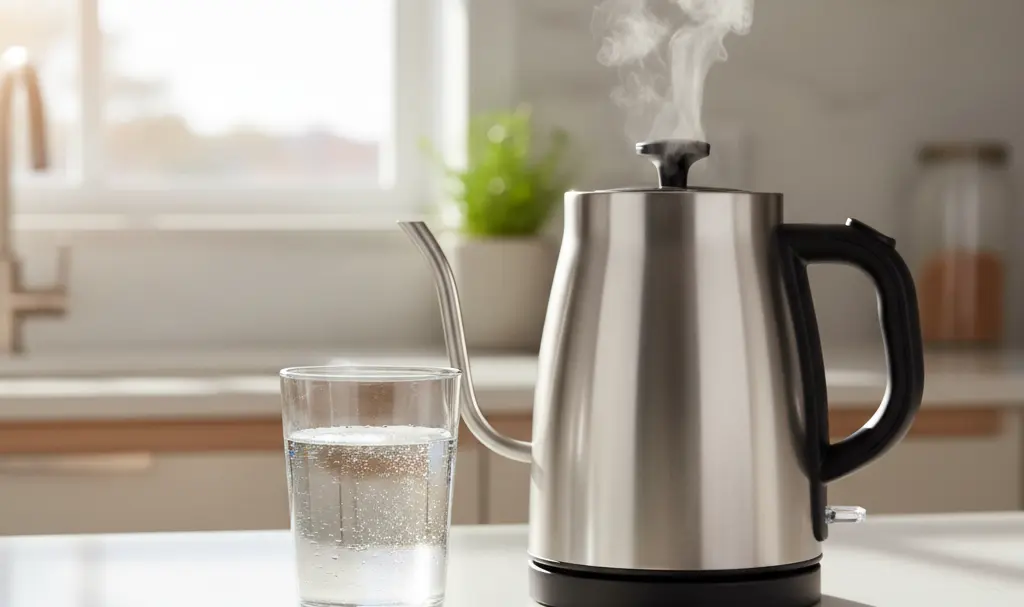
- Boil the water: Bring your tap water to a rolling boil in a standard kettle or pot.
- Let it cool: Allow the water to sit so the calcium carbonate (along with the trapped plastics) can precipitate and settle as a solid scale.
- Filter the residue: Pour the cooled water through a basic paper coffee filter or a fine stainless-steel mesh to catch the remaining sediment and plastic particles.
Does Water Hardness Matter?
Yes, the mineral content of your water drastically impacts the effectiveness of this method. The researchers’ experiments demonstrated a clear contrast:
- In hard water: High calcium content (approximately 300 mg of calcium carbonate per liter) allows the boiling process to eliminate up to 90% of all microplastics.
- In soft water: Lower mineral content (less than 60 mg of calcium carbonate per liter) reduces the efficiency, eliminating only about 25% of the microplastics.
By simply utilizing the natural chemistry of hard water, you can take control of your drinking water quality and drastically reduce your daily intake of invisible plastics.
Frequently Asked Questions (FAQ)
Can I use a standard paper coffee filter to remove the precipitated microplastics?
Yes. Once the water has been boiled and the calcium carbonate has successfully encapsulated the microplastic particles, pouring the cooled water through a standard paper coffee filter is highly effective at catching the solid residue and preventing it from ending up in your drinking glass.
Does boiling water remove chemical pollutants like heavy metals or pesticides that aren’t attached to plastics?
No. While boiling is an excellent method for killing biological pathogens and trapping microplastics via mineral scale, it does not evaporate or remove dissolved heavy metals or chemical pesticides. For complete purification from dissolved chemical toxins, a high-quality reverse osmosis or activated carbon filtration system is recommended.
If I have a water softener installed in my home, will this boiling method still work?
The efficacy of this method drops significantly with artificially softened water. Research indicates that in soft water (containing less than 60 mg of calcium carbonate per liter), boiling only encapsulates and removes about 25% of microplastics, compared to the 90% removal rate seen in mineral-rich hard water.
Source: Science Daily & Opening photo: Gemini
About Post Author
