

Contents

Maximize Your Productivity: How AMD AI Processors Save You 16 Hours a Week
If you work on a computer every day, there is a very high chance you are already leveraging artificial intelligence tools. Because of this rapid shift, AMD recently commissioned two comprehensive studies to determine whether an AI-capable processor—specifically one equipped with a Neural Processing Unit (NPU) for handling local AI models—can tangibly speed up your workflow. The findings are nothing short of remarkable.

Do AI-Compatible Processors Actually Make You Faster?
The first study primarily focused on measuring the time spent on administrative and routine tasks that pull professionals, particularly software developers, away from their core responsibilities. The results indicated that in extreme scenarios, an employee could reclaim up to 16 hours a week—the equivalent of two full working days.
A specialized NPU allows the computer to process complex machine learning tasks locally rather than relying entirely on cloud servers. This means faster response times, greater privacy, and significantly lower latency. Here is a breakdown of how a dedicated AI processor impacted specific daily activities:
- Summarizing unread emails (Microsoft Copilot+): 2 minutes (down from 16 minutes).
- Drafting meeting notes in Microsoft Teams: 9.5 minutes (down from 10.5 minutes).
- Summarizing project reports (e.g., a single Jira ticket): 3 minutes (down from 11 minutes).
- Creating and editing documents: 13 minutes (down from 21–23 minutes).
- Vibe coding applications from existing templates: 17 hours (down from an astounding 93 hours).
The most substantial time savings were observed in lengthy, complex tasks such as rapid software prototyping. In fact, understanding how anyone can become an app creator with Google vibe coding highlights why business owners are increasingly purchasing new computers based on their AI capabilities. The frequency of app prototyping within an enterprise is quickly becoming a key metric for hardware upgrades.
AMD Ryzen AI Pro Processors Exceed Microsoft Copilot Requirements
To take full advantage of Microsoft Copilot+ features locally, your computer requires a processor with an NPU capable of at least 40 TOPS (Trillions of Operations Per Second). The currently available AMD Ryzen AI Pro chips offer approximately 50 TOPS, providing a comfortable buffer for more demanding AI workloads.
If you are looking to build a comprehensive AI productivity tool belt, investing in hardware that exceeds baseline requirements is a smart strategic move. However, it is crucial to remember that artificial intelligence should be used wisely as an assistant, rather than a complete replacement for human critical thinking.
The Signal65 Report: Long-Term Productivity Gains
It is also worth noting the findings of a second report prepared by Signal65. This study tracked a specific set of daily workflow tasks and found that an AI-equipped PC reduced execution time from 91 minutes down to just 65 minutes. This translates to completing tasks 36% faster compared to a standard, non-AI computer.
Over the course of a year, this daily efficiency compounds into roughly 7 weeks of saved time. While this leap in productivity is incredibly enticing, businesses must be careful to use these newfound hours effectively. The ultimate goal should be reducing employee burnout and improving work quality, provided that the increased productivity does not simply result in an endless multiplication of new, stressful duties.
Frequently Asked Questions (FAQ)
What is an NPU and why is it essential for modern computing?
A Neural Processing Unit (NPU) is a specialized hardware component integrated into modern processors, such as the AMD Ryzen AI Pro. Unlike traditional CPUs or GPUs, NPUs are designed specifically to execute machine learning algorithms and local AI models efficiently. This allows AI tasks to be processed directly on the device, significantly reducing latency, improving data privacy, and optimizing power consumption.
How do AMD’s processors compare to the hardware requirements of Microsoft Copilot+?
Microsoft Copilot+ PCs require a minimum of 40 TOPS (Trillions of Operations Per Second) of NPU performance to run advanced local AI features smoothly. Current AMD Ryzen AI Pro processors exceed this requirement, offering around 50 TOPS. This added performance margin ensures better multitasking capabilities and future-proofs the system for upcoming, more demanding AI software updates.
Is the 16-hour weekly time saving applicable to all professions?
While the exact amount of time saved will vary depending on your specific role, the AMD and Signal65 studies highlight the most significant savings in software development, project management, and intensive administrative positions. Tasks that require heavy data summarization, extensive email correspondence, and automated code generation yield the highest return on time. However, even standard office workers will experience a noticeable reduction in the time spent on repetitive tasks.
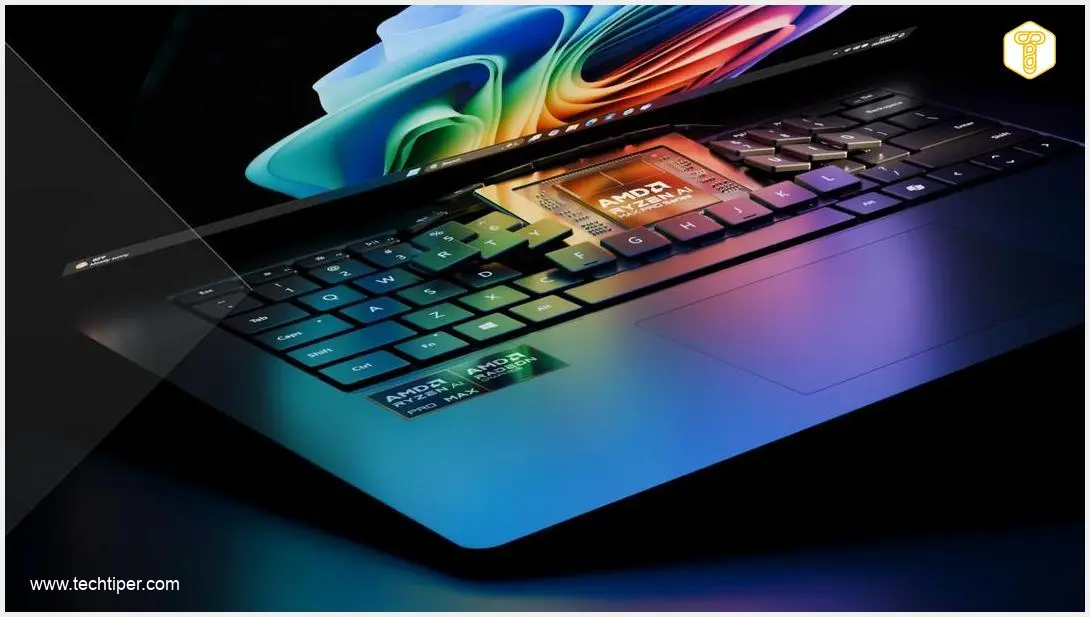
Source: AMD. Opening photo: AMD / press materials
About Post Author
