

Contents
The Apple Lisa: A Revolutionary Failure That Shaped Modern Computing
Not every groundbreaking technology finds immediate success. The history of the Apple Lisa demonstrates that even a product introducing features now common to nearly every computer user can be hampered by its price, hardware limitations, and market timing. This is the story of Apple’s ambitious project that, despite its commercial struggles, laid the foundation for the personal computing revolution.Apple Lisa Aimed to Revolutionize Computer Interaction
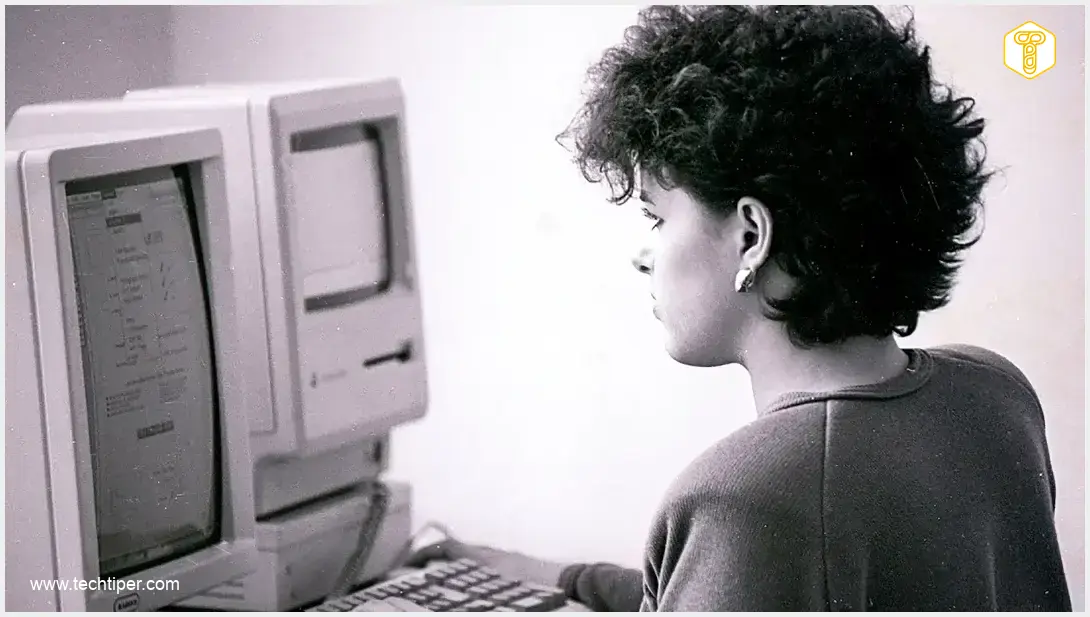
Apple unveiled the Lisa computer on January 19, 1983, positioning it as a machine for business and office applications. The project was built on an evolving approach to human-computer interaction, featuring a bitmap display, a mouse, and a graphical user interface (GUI) with windows, icons, and menus. This intuitive operating model was later popularized by the Macintosh and subsequently by Microsoft Windows. While Apple officially stated that LISA stood for “Local Integrated System Architecture,” Andy Hertzfeld, a member of the original Macintosh team, revealed that the acronym was actually a nod to Steve Jobs’ daughter, Lisa Brennan. It’s important to note that the Lisa wasn’t the world’s first device with a GUI. Such solutions were previously developed at Xerox PARC, with the Xerox Star hitting the market in 1981. However, Apple’s significant contribution was bringing this graphical operating method to the personal computer market, making it more accessible to a broader audience. In a nod to its legacy, the Computer History Museum, with Apple’s permission, released the source code for the Lisa’s system and applications to commemorate its 40th anniversary.Innovation Proved Too Expensive
The Apple Lisa launched with a staggering price tag of $9,995, which translates to nearly $25,000 in today’s money. In stark contrast, an IBM PC cost around $1,565 at the time. This massive price difference severely limited the device’s appeal to businesses, its intended target market, especially since Apple lacked the enterprise sales experience that IBM possessed. Technical challenges further compounded its problems. Although the Lisa’s operating system supported multitasking, it proved too demanding for its Motorola 68000 processor, resulting in sluggish performance. The first version also suffered from unreliable “Twiggy” floppy disk drives. Furthermore, the limited suite of pre-installed applications did little to encourage external developers to create their own software for the platform, hindering its ecosystem growth.Macintosh Took the Idea Further
Just one year after the Lisa’s debut, Apple introduced the Macintosh in January 1984. Priced at $2,495, the Macintosh was significantly more affordable. This lower price point was achieved by stripping away some of Lisa’s advanced features, such as a hard drive and true multitasking. However, it retained the revolutionary GUI and mouse interaction, making it an instant hit with consumers. Despite the Lisa’s commercial struggles, Apple continued to believe in the project’s underlying technology. A successor, the Lisa 2, was released, featuring a more reliable Sony floppy drive. Further iterations included the Lisa 2/5 (equipped with a 5 MB ProFile hard drive) and the Lisa 2/10 (with a 10 MB hard drive). The Lisa 2/10 was later rebranded as the Macintosh XL, enabling it to run Mac applications, effectively bridging the gap between the two platforms. However, with the Macintosh available at a far more accessible price, the Lisa’s fate was sealed. Apple ceased its production in 1985, fully focusing on the burgeoning success of the Macintosh. The legacy of Apple’s innovation continues today, as the company consistently pushes boundaries, often with premium pricing.What Happened to the Unsold Computers?
Following the discontinuation of sales, a portion of the remaining Lisa inventory was acquired by Sun Remarketing. This company received the last 7,000 units on consignment, modernizing and reselling them at a reduced price. However, this effort eventually concluded when Apple decided to take a tax write-off for the remaining unsold units. In a rather dramatic turn of events in September 1989, Apple buried approximately 2,700 unsold Lisa computers in a landfill in Logan, Utah. This act marked the symbolic end of what was arguably one of the most revolutionary yet commercially unsuccessful projects in computing history. This period also highlights the intense competition and rapid evolution in the tech world, reminding us that even successful platforms can face challenges, as seen with the gradual decline of Hackintosh.Apple’s “Best Failure”
Steve Jobs envisioned creating something far superior to Apple’s existing machines, and with the Lisa, he succeeded technologically, even if it was a market flop. The solutions and innovations developed for the Lisa project were instrumental in shaping and advancing technologies that influenced many subsequent Apple products. Without the Lisa, the Macintosh might not have existed in its current form, and perhaps even Microsoft Windows wouldn’t have emerged as it did. While Windows first appeared in 1985, it didn’t achieve widespread popularity until Windows 3.0 in 1990. The Lisa’s story is a testament to how even commercial failures can lay crucial groundwork for future successes, demonstrating the often-unseen pathways of technological evolution.Frequently Asked Questions (FAQ)
The Apple Lisa was primarily a commercial failure due to its prohibitively high price of $9,995 (nearly $25,000 today) compared to competitors like the IBM PC. Additionally, it suffered from performance issues due to an underpowered processor for its multitasking OS and unreliable “Twiggy” floppy drives. Apple also lacked experience in selling to the enterprise market, its primary target.
Despite its commercial struggles, the Apple Lisa was a technological pioneer. It introduced a graphical user interface (GUI), mouse, windows, icons, and menus to the personal computing market. These innovations were refined and successfully implemented in the Apple Macintosh, which in turn inspired Microsoft Windows, fundamentally changing how people interact with computers worldwide.
After its discontinuation, some unsold Lisa units were resold by Sun Remarketing. However, in September 1989, Apple famously buried approximately 2,700 unsold Lisa computers in a landfill in Logan, Utah, as part of a tax write-off. This event marked the definitive end of the Lisa’s commercial life.
No, the Apple Lisa was not the first computer with a GUI. Earlier systems like those developed at Xerox PARC, and products like the Xerox Star (released in 1981), featured GUIs. However, the Lisa was crucial in bringing this advanced interaction model to the mainstream personal computer market, paving the way for widespread adoption by the Macintosh and later Windows.
Source: Invention & Technology, FossBytes, IEEE Spectrum. Opening photo: @coldbeer / Pexels.com
About Post Author
