
The StepX Neo, an “agentic” AI smartphone from Chinese startup StepFun, aims to eliminate manual app usage by entrusting tasks to advanced AI. Running on Step AOS, the world’s first AI-native operating system for intelligent agents, and featuring the built-in Amoo agent, this device raises a crucial question: are we ready to cede control to artificial intelligence?

Category: AI
The End of the Google Era: If AI Doesn’t Recommend You, You Don’t Exist
Explore how AI chatbots are revolutionizing consumer behavior, diminishing the importance of traditional Google search rankings, and becoming the new arbiters of online visibility and purchasing decisions. Learn why businesses must adapt to AI recommendations to remain relevant.
Data Centers Under Fire: Public Opposition to AI Enters Politics
The rapid proliferation of data centers crucial for AI is sparking widespread opposition across the U.S., leading to nationwide protests, stalled investments, and legislative action. Concerns center on high energy and water consumption, as well as transparency in development.
China Accelerates Quantum Race: New Design Could Simplify Quantum Computer Deployment
A new quantum computer, the Qinghe No. 1, presented at WAIC 2026, promises a revolution in quantum computing by eliminating the need for bulky cryogenic infrastructure. Utilizing neutral atom technology, this innovation could allow quantum machines to fit into standard server racks, marking a significant departure from traditional superconducting designs. While technical details are pending, this development highlights a global shift towards more accessible quantum solutions and intense research interest from major tech players like Google and other startups.
Meta Patents Mood Detection System: AI to Continuously Analyze User Voice
Meta has secured a patent for an AI system designed to analyze user emotions through voice, environmental sounds, and daily activity. This technology aims to create a comprehensive emotional profile, but raises significant privacy concerns due to its continuous monitoring capabilities.
Gemini Intelligence in One UI 9: Samsung Confirms Changes and Sets New AI Standards
Samsung’s One UI 9 is set to revolutionize Galaxy smartphones with the deep integration of Google’s Gemini Intelligence. This article explores the groundbreaking AI features, hardware requirements, and Samsung’s journey toward a smarter mobile experience, ushering in a new era of personalized and powerful artificial intelligence.
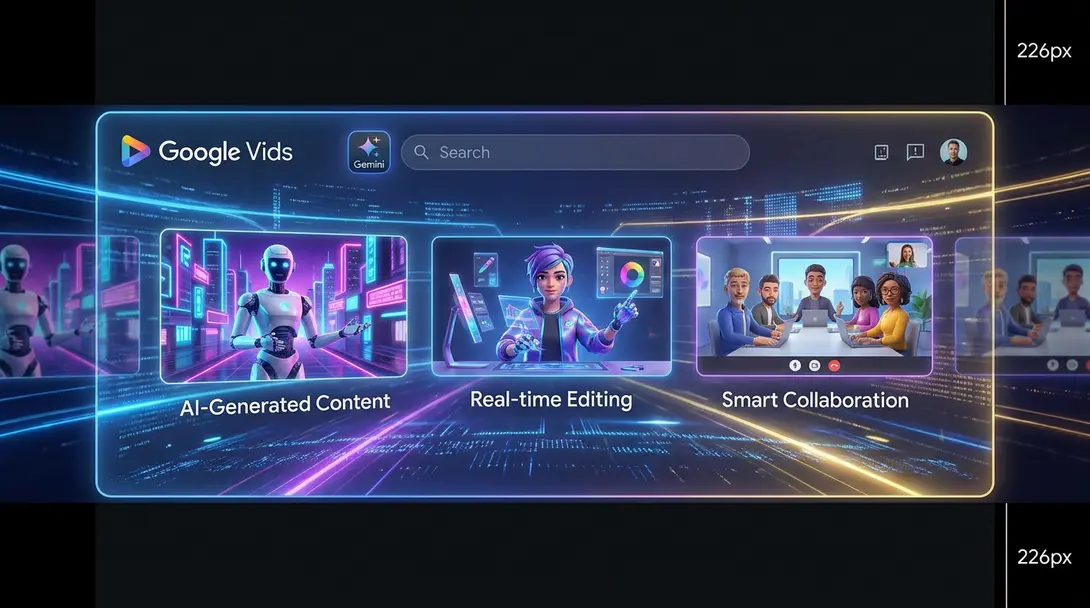
The New Era of AI Video in Google Vids: Create Your Clone from a Photo and Voice Sample
Google Vids, powered by generative AI including Gemini Omni and personal avatars, is transforming corporate video production. Now, creating and editing professional-quality videos is as straightforward as writing a document, eliminating the need for cameras, editors, or prior experience. Discover how this innovative platform integrates advanced AI to simplify video creation for training, marketing, and internal communication.
Samsung Expands AI for Video Editing: New Feature in One UI 9
Samsung is set to introduce “My FanCam” in One UI 9, a new Galaxy AI-powered feature designed to enhance video editing by intelligently tracking subjects in post-production. This innovation aims to simplify dynamic framing and improve user experience, alongside other enhancements like Horizontal Lock and updated Bixby settings.
Gemini Focuses on Personalization: A Tailored Experience for Every User
Google’s Gemini AI is set to introduce significant voice personalization features, allowing users to customize attributes like energy, formality, warmth, and speed. This update, spotted in a beta version of the app, positions Gemini as a strong competitor in the evolving AI assistant landscape.
Watching Netflix? Over 300 Productions Have Already Leveraged AI
Netflix recently announced its latest financial results, revealing that over 300 of its productions have incorporated AI models. This comes at a time when many of its series struggle to retain viewership in their second seasons, raising questions about the future of AI in content creation and audience engagement.
Google to Disclose Key Data Following EU Decision
The European Commission has imposed new requirements on Google under the Digital Services Act, compelling the tech giant to reveal crucial details about its AI models and operating system. These mandates aim to foster fair competition and transparency within the digital market, prompting a significant response from Google regarding user privacy and trade secrets.
Mandatory AI Content Labeling Takes Effect on August 2, 2026: Who Will Be Affected?
The EU’s AI Act, coming into force on August 2, 2026, mandates clear labeling for AI-generated or significantly modified content. This guide explores who needs to comply, what content requires disclosure, and the implications for e-commerce, social media, and creators.
It was supposed to be a smartphone, it’s a keyboard. ChatGPT creators release their first hardware.
OpenAI has ventured into hardware with the Codex Micro, a specialized keyboard for developers designed to enhance interaction with its AI coding agent, Codex. This $230 device, a collaboration with Work Louder, quickly sold out its initial batch, signaling a new direction for AI-powered tools.
Linux Guru on AI Use: A Surprising Turn
The landscape of technology is shifting, with even unexpected figures like Linus Torvalds, the creator of Linux, voicing strong support for generative artificial intelligence. This article explores his surprisingly positive stance on AI, its utility in kernel development, and the broader implications for the open-source community, highlighting why the father of Linux believes AI is an indispensable tool for the future.
Gemini Spark Updates: AI Set to Become Even More Helpful
Google is significantly expanding the reach of its Gemini Spark AI, integrating it deeper into Google Workspace to enhance productivity. The update promises faster performance and new functionalities for documents, spreadsheets, and presentations, making AI more accessible to users worldwide, with specific regional exceptions.
Turn of Events in Samsung Health and AI: It’s About Our Data
A recent controversy erupted concerning Samsung Health’s data policy, linking health data access to AI training consent. This article delves into the update, the public’s reaction, and Samsung’s subsequent clarification to reassure users.
Spotify Introduces Significant Change: Subscription No Longer Required for This Feature
Spotify is making its popular parental control features available to free account users, allowing guardians to better manage their children’s listening experience. This move is accompanied by new AI-powered conversational tools.
The First Synthetic Cell with a Full Life Cycle: What SpudCell Means for Science
Researchers at the University of Minnesota have created SpudCell, a synthetic cellular system built entirely from non-living chemical components. This artificial cell mimics fundamental biological processes like growth, nutrient intake, and division, sparking a critical debate about the current boundaries between life and its technological simulation.
Humanoid Robot Designed ‘For Life’ to Provide Companionship Unveiled
Chinese firm UBTech introduces the U1, a hyper-realistic humanoid robot designed to offer lifelong companionship, particularly for lonely individuals and the elderly, featuring advanced AI to detect human emotions.
Government Prepares Ground for Poland’s Largest Computing Center: AI Gigafactory Takes Shape
Europe is moving rapidly towards creating large-scale AI Gigafactories, and Poland is officially entering the race. This article explores the European Union’s ambitious plans for advanced AI computing infrastructure, Poland’s significant financial commitments, and the strategic implications of hosting such a vital hub for AI development and deployment across various sectors.
OpenAI Prepares Home AI Device: More Than Just a Smart Speaker
OpenAI is reportedly developing its first physical hardware product—a screenless smart speaker designed to be a human-like AI companion and an integrated smart home assistant, moving ChatGPT beyond a mere application into the user’s living space.
Gmail Gains Smarter Email Editing. Google Puts Control in Users’ Hands
Google is significantly enhancing Gmail’s “Help Me Write” feature, offering users unprecedented granular control over AI-powered email drafting. Instead of relying on predefined editing modes, users can now provide custom instructions to precisely guide the AI in modifying their messages, marking a new era of personalized communication.
Gemini 3.5 Flash will work for you. Google’s model will operate applications and browsers by itself.
Google’s Gemini 3.5 Flash now features ‘Computer Use’ integration, enabling the AI to autonomously interact with operating systems, web browsers, and applications. This breakthrough allows for advanced automation in business and development, with built-in prompt injection defenses.