
Contents
Google Accelerates Gemini Rollout to Android Auto, Users Express Disappointment
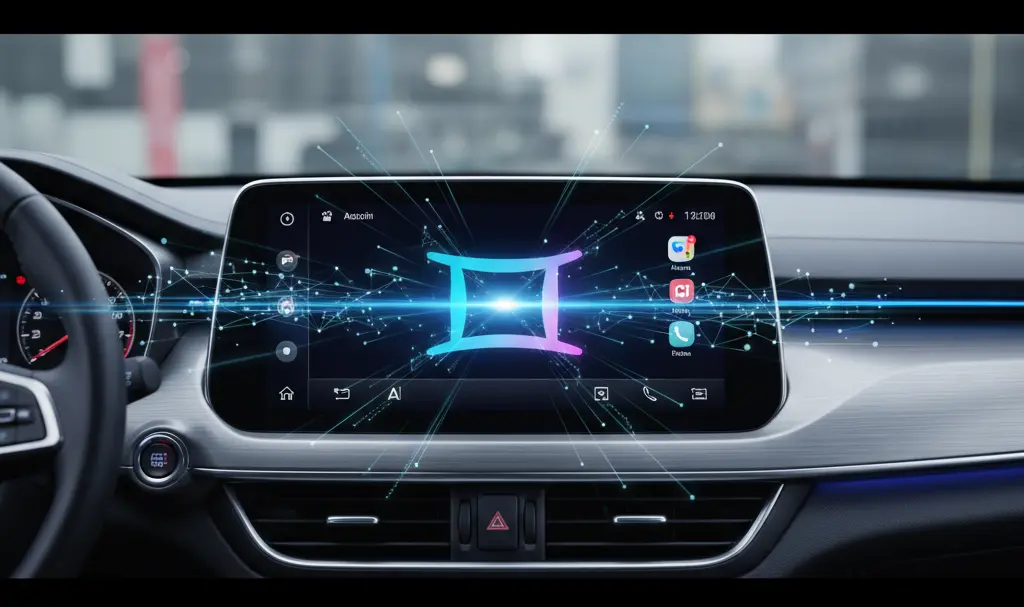
Google has ramped up the deployment of its advanced AI model, Gemini, within Android Auto. While initially envisioned as an “improved” version of Google Assistant, user reactions have been far from enthusiastic. Drivers are reporting various issues, including difficulties with command recognition and overly verbose responses that hinder system usability while driving.
The Gemini Rollout in Android Auto: A Rocky Start
Google had previously announced its intention to transition to Gemini in Android Auto by 2025, with an initial wave of deployments beginning in the fall of the previous year. However, the pace of this rollout significantly slowed down in subsequent months, resulting in most users not having access to the new solution.
According to reports from tech news outlets like 9to5Google, this situation is now changing. In recent days, there has been a noticeable increase in reports from international users who have observed Gemini appearing in their vehicles. These reports are widely shared across various online forums and social media platforms.
Users Criticize Gemini in Android Auto: Several Key Issues Emerge
Despite the broader rollout, user feedback regarding Gemini’s performance in Android Auto has not been particularly positive. Drivers report a range of issues hindering their experience:
- Command Recognition Difficulties: The new assistant reportedly struggles with distinguishing similar locations and often prematurely interrupts listening to commands.
- Chaotic Operation: Users describe Gemini’s behavior as inconsistent or chaotic at times, leading to frustration.
- Verbose Responses: Gemini is frequently perceived as more “talkative” than its predecessor, often adding unrequested information. Most drivers, however, prefer concise, unambiguous responses, especially when operating a vehicle and needing minimal distraction.
- Lack of Seamless Integration: A significant concern is that if a user manually performs part of a task on the screen, the assistant does not always recognize this action and continues to expect the completion of the command via voice, creating a disjointed experience.
For related discussions on system performance and connectivity, see our article: Android Auto Finally Fixed: Google Resolves Persistent Connectivity Issue.
Google’s Stance: Commitment to Gemini with Hopes for Improvement
It is important to note that not all feedback is negative; some users praise the new capabilities and access to features familiar from Gemini on other platforms. Others, however, view the change as a step backward compared to Google Assistant, with many voices suggesting the new addition is one of the less successful implementations in Android Auto.
Regardless of user opinions, Google’s decision to transition is final. The company is gradually phasing out Assistant and replacing it with Gemini across its product ecosystem, and Android Auto is just one component of this overarching strategy.
While many features still require refinement, upcoming software updates are expected to address some of the current bugs and improve the overall user experience. However, the exact timeline for these improvements remains uncertain. For now, drivers must adapt to the new assistant, which, despite its greater potential capabilities, sometimes struggles with fundamental tasks expected of an in-car assistant.
Explore the latest advancements in voice interaction with our insights: Google Gemini Voice Input Redesign.
Frequently Asked Questions (FAQ)
Why are users dissatisfied with Gemini in Android Auto?
Users are reporting issues such as difficulties with command recognition, overly verbose responses that distract drivers, struggles distinguishing similar locations, premature interruption of commands, and a lack of seamless integration when users perform tasks manually on the screen.
Is Google planning to revert to Google Assistant in Android Auto?
No, Google’s decision to transition from Google Assistant to Gemini is final and is part of a broader strategy across its products. While user feedback highlights areas for improvement, the company is committed to Gemini, and future updates are expected to address current issues rather than reversing the change.
How does Gemini’s communication style differ from Google Assistant’s in Android Auto?
Many users find Gemini to be more “talkative” and prone to providing additional information that was not specifically requested. In contrast, drivers often prefer the more concise and unambiguous responses that were characteristic of the previous Google Assistant, particularly for tasks performed while driving, where minimal distraction is crucial.
Source: 9to5Google. Opening photo: Gemini
About Post Author
