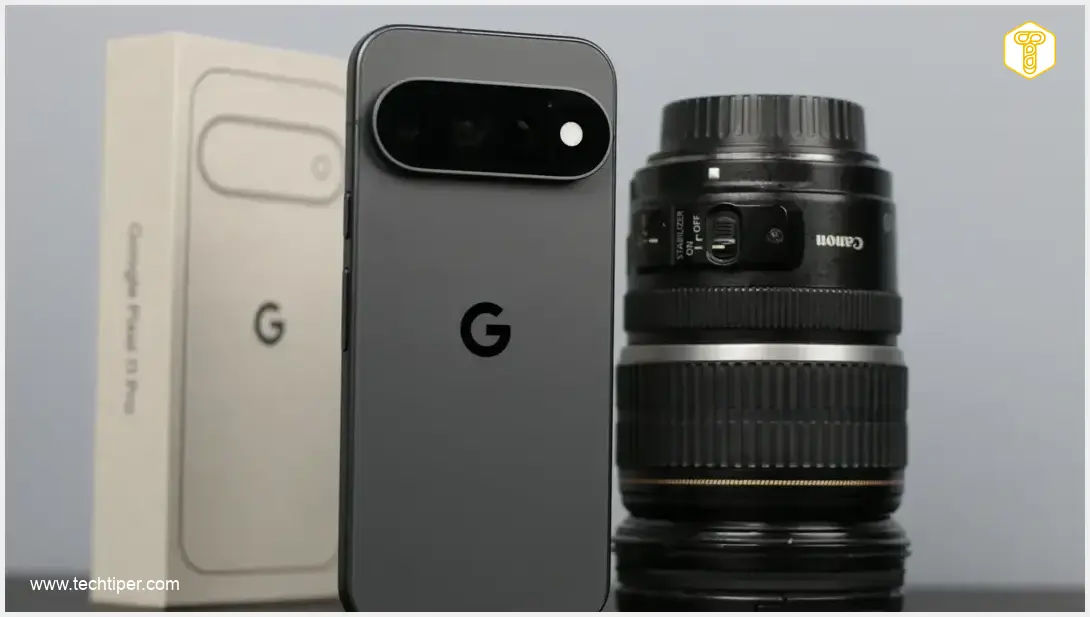
Google Pixel 11 Pro Review
-
Design & Build Quality
-
Display Quality
-
Battery Life & Charging
-
Cameras: Photo & Video
-
Software & Performance
Compact Flagship Excellence with Long-Term Appeal
The Google Pixel 11 Pro delivers a premium Android experience in a compact form factor, boasting an exceptional display, advanced computational photography, and unparalleled software support for seven years. While its battery life is typical for its size and it comes at a flagship price, its refined performance and user experience make it a top contender for those seeking a powerful, smaller device.
Advantages
- Compact, premium design and robust build quality.
- Exceptional and bright OLED display (up to 3600 nits peak).
- Industry-leading 7 years of software and security updates.
- Advanced camera system with excellent computational photography across all lenses.
- Pure Android 17 experience with strong, optimized Tensor G6 performance.
- Fast and accurate in-display fingerprint reader.
Disadvantages
- Battery life necessitates daily charging, especially under heavy use.
- High flagship price point.
- No charger or headphones included in the box.
- HiLight LED functionality is currently limited compared to competitors.
- Absence of Dolby Vision support for display.
- 8K video recording has limitations (main camera only, no 10-bit color).
Contents
Google Pixel 11 Pro Review: The Compact Flagship Redefining Android
The Google Pixel 11 Pro arrives with high expectations, positioned as the benchmark for premium Android smartphones. As a device directly from Google, the steward of the Android operating system, its performance and features are scrutinized with a critical eye, especially considering its flagship price point. This review dives deep into what makes the Pixel 11 Pro stand out, or where it falls short. A significant aspect of the Pixel 11 Pro is its size. In an era of increasingly large smartphones, Google continues to cater to users who prefer a more compact device. While offering an XL variant, the standard Pixel 11 Pro aims to deliver a top-tier experience without the massive footprint. This commitment to a smaller form factor doesn’t imply compromise in performance, though it naturally means a smaller battery. Let’s dismantle the Pixel 11 Pro and examine its advantages and disadvantages.Unboxing, Specifications, and Pricing of the Google Pixel 11 Pro
Google embraces an eco-conscious approach with its smartphone packaging. The Pixel 11 Pro comes in a compact box made from thin, recycled materials. Inside, you’ll find a minimalist selection: essential paperwork, a SIM tray tool, and a one-meter USB-C to USB-C cable. Don’t expect a charger or headphones in the box, reflecting a growing industry trend towards reducing electronic waste. Given the absence of a bundled case, users might consider purchasing one immediately. For this review, an accessory case, the Pixelsnap Clear Case, was tested. Priced at approximately $60, it’s a well-made, if basic, protective cover. Constructed from durable plastics, it fits snugly, safeguarding both the screen and the camera bump. While the bottom edge remains exposed, the case’s material is less prone to wear and tear than typical silicone alternatives, and fingerprints are less visible. Crucially, it maintains full compatibility with magnetic wireless charging (Qi2). However, it does make the phone’s surface slightly more slippery. The Pixel 11 Pro’s pricing starts at around $1300 for the base model (12GB RAM / 256GB storage), increasing to approximately $1450 for the mid-tier option (16GB RAM / 512GB storage), and topping out at about $1725 for the premium variant (16GB RAM / 1TB storage). These prices represent a notable increase compared to last year’s Pixel models, solely reflecting differences in memory and storage configurations. Compared to its direct competitors, such as the Samsung Galaxy S26 and the iPhone 17 Pro, the Pixel 11 Pro’s price aligns more closely with Apple’s offering. Interestingly, the cost of the reviewed Pixel 11 Pro is comparable to that of a Samsung Galaxy S26 Ultra. While Google’s device boasts newer technological innovations due to its more recent release, it’s worth remembering that the iPhone 18 series will soon be unveiled, potentially shifting the competitive landscape. Here’s a detailed look at the Google Pixel 11 Pro’s technical specifications:- **Display:** 6.3-inch OLED (Super Actua), FullHD+ resolution (2856×1280, 20:9, 495 ppi), 87% screen-to-body ratio, up to 3600 nits peak brightness (2400 nits HBM), 120Hz LTPO adaptive refresh rate, 10-bit color depth (1.07 billion colors), HDR10+.
- **Processor:** Google Tensor 6 with Titan M3 security chip, 3nm lithography, CPU: 1x ARM C1-Ultra (4.1 GHz), 3x ARM C1-Pro (3.4 GHz), 3x ARM C1-Pro (2.65 GHz), GPU: PowerVR C-Series CXTP-48-1536.
- **RAM:** 12GB or 16GB LPDDR5 RAM.
- **Storage:** 256GB, 512GB, or 1TB UFS 4.0 (Zoned).
- **Cameras:**
- **Front:** 42 Mpx (f/2.2, PDAF).
- **Rear:**
- 50 Mpx (f/1.7, PDAF, OIS).
- 48 Mpx (f/2.8, periscope telephoto, PDAF, OIS, 5x optical zoom).
- 48 Mpx (f/1.7, ultrawide, PDAF).
- **Battery:** 4850 mAh, 30W wired charging (USB PD3.0, PPS), 25W wireless charging (magnetic, Qi 2.2).
- **Connectivity:** Dual SIM (5G, Nano SIM + eSIM), Wi-Fi 7 (802.11be), Bluetooth 6.0, NFC, UWB, USB-C (3.2).
- **Other Features:** In-display fingerprint reader, IP68 water and dust resistance, stereo speakers, HiLight interface.
- **Operating System:** Android 17. For more information on the latest Android version, see Android 17 Features and Release Date.
- **Dimensions:** 152.7 x 71.9 x 8.4 mm.
- **Weight:** 204g.
- **Construction:** Corning Gorilla Glass Victus 2 on front and back, aluminum frame.
- **Color Options:** Canyon (copper pink), Olive (sage), Fog (light gray), Obsidian (matte gray).
Design and Build Quality
True to the Pixel line, the Pixel 11 Pro, without the “XL” moniker, emphasizes a compact design—a significant advantage for many users. However, the combination of advanced internals and an aluminum frame results in a relatively substantial weight. Despite this, the Pixel 11 Pro doesn’t feel heavy; it offers a reassuring, premium heft in hand. The front of the smartphone presents a classic design, protected by the latest and most durable Corning Gorilla Glass. Beneath this robust glass, Google has integrated an ultrasonic in-display fingerprint reader, which operates with impressive speed and accuracy. Naturally, a flagship-grade selfie camera is also present. The Pixel 11 Pro features a very thin speaker grille. The bezels around the screen are uniform but not excessively thin, ensuring comfortable handling and minimizing accidental touches. A minor oversight is the absence of a factory-applied screen protector. The Pixel 11 Pro maintains the classic “glass sandwich” construction with aluminum edges. The back, finished in a matte hue characteristic of its color variant, minimalizes fingerprint smudges, which are only noticeable under specific lighting conditions. Google has also cleverly concealed most regulatory markings, contributing to an uncluttered and aesthetically pleasing design. The distinctive camera island remains, protruding noticeably but positioned symmetrically, preventing the phone from wobbling when laid on a flat surface. A novel feature in the Pixel 11 Pro is the HiLight LED, which doubles as an interface. This allows for color-coded notifications for selected alerts, such as Gemini interactions or incoming calls from favorite contacts. While its functionality is currently limited, making it less versatile than Nothing’s Glyph interface, it represents a promising step forward.Display and Image Quality
One of the most highlighted improvements in the Pixel 11 Pro over its predecessor is the display’s brightness. Considering the Pixel 10 Pro was already a leader in this regard, the 11 Pro delivers an exceptional visual experience. While the advertised 3600 nits is a laboratory peak, it effortlessly achieves around 1500 nits in manual indoor settings and nearly 2600 nits under direct sunlight. A minor point of contention is Google’s continued omission of Dolby Vision support. However, users typically don’t choose a compact phone like the Pixel 11 Pro for extensive movie watching. Nevertheless, it fully supports HDR10 and HDR10+ and is compatible with all major streaming services, ensuring excellent content quality. Color reproduction, in particular, is outstanding. Google has implemented a 120Hz refresh rate, a standard for flagship devices. The Pixel 11 Pro dynamically adjusts this rate (LTPO), ensuring smooth visuals in compatible applications while conserving battery life when high refresh rates aren’t needed.Battery Life and Charging
Opting for a small yet fully-featured Pixel means accepting a smaller battery capacity. The Pixel 11 Pro’s battery is marginally smaller than its predecessor (4850 mAh vs. 4870 mAh). However, it features a new processor designed for improved power management. Despite these optimizations, daily charging remains a practical necessity for the Pixel 11 Pro. Fortunately, moderate usage allows the phone to comfortably last from morning to evening. Only under intensive workloads, such as sustained gaming or demanding applications, will you need to look for a charger after approximately four hours. Regarding charging speeds, the compact battery doesn’t allow for exceptionally fast results. Google caps the wired charging at 30W, which takes about 1.5 hours to fully replenish the battery. The first 30 minutes deliver just over 50% charge. On the other hand, wireless charging has seen an upgrade, now supporting 25W (up from 15W) via the Qi2 standard with magnetic alignment. A full wireless charge takes approximately 2 hours, with around 40% achieved in 30 minutes. Importantly, the accessory case does not negatively impact charging performance or magnetic alignment.Cameras: Photo and Video Quality
Year after year, Google intensifies its efforts to create the ultimate smartphone for photography and videography. With the Pixel 11 Pro, this ambition is evident in its highly advanced camera application, which often leverages constant internet access to achieve optimal results, as much of the enhancement comes from sophisticated algorithms. The camera interface is both intuitive and powerful. Experienced photographers will appreciate the numerous manual controls, while casual users can rely on predefined profiles and the “magic shots” mode, which simultaneously captures photos and videos. Throughout the process, the phone offers prompts and suggestions to improve your shots. The Google Pixel 11 Pro supports video recording at:- FullHD (1080p) at 24, 30, and 60 frames per second (fps).
- 4K at 24, 30, and 60 fps.
- 8K at 24 and 30 fps.
All Cameras Offer Purposeful Performance
In terms of sensor technology, the Pixel 11 Pro doesn’t introduce revolutionary changes. While there are slightly larger sensors, the improvements are incremental. This means the hardware setup is largely similar to its predecessor, without a 1-inch sensor or additional telephoto lenses. Even the XL variant didn’t receive such upgrades. However, the software intelligently handles camera selection, allowing users to focus on capturing the moment. Starting with the ultrawide lens, often considered the weakest link in a multi-camera setup, it performs admirably. It’s also automatically used for macro shots. Crucially, its color reproduction, white balance, and overall contrast are consistently excellent across all lenses. In a flagship context, the only minor criticism might be that shadows occasionally appear overly dark. The refreshed periscope telephoto lens now offers up to 120x digital zoom, while its optical zoom remains at 5x. Users upgrading from the Pixel 10 Pro will be highly satisfied with the telephoto capabilities. Basic performance is well above average; if nitpicking, the sharpness is marginally less than the main camera. The main camera remains a standout feature, delivering stunning results, largely thanks to Google’s computational photography. This is where the Pixel 11 Pro truly shines, with noticeable post-production enhancements that still maintain a natural look, avoiding over-saturation or excessive detail boosting—though these can be adjusted in settings. The main sensor is consistently utilized for 1x-5x zoom, meaning digital zoom is often employed but seamlessly integrated by the software. Video recordings are exceptional in good lighting, particularly with the main camera. The image quality softens slightly in low light or when switching to the telephoto lens. Digital zoom for video should generally be avoided, as transitions, such as from 3.5x to 5x, can appear jarring. Image stabilization is notably good, though Google hasn’t followed Apple or Samsung in offering more advanced stabilization lock options. The latter are more of a novelty than a practical necessity. Recording in 8K is generally not recommended. While smooth, it sacrifices full functionality, including image quality. Thankfully, if 8K is accidentally selected, the Pixel 11 Pro concurrently saves a FullHD version.Software and Performance
For Google devices, the notion of Android overlays is irrelevant. The Pixel 11 Pro offers a pure Android experience, distinguished by Google’s proprietary services, with an increasing emphasis on Gemini-powered solutions. Regional restrictions mean that a complete suite of features might only be available in the US. However, the HiLight feature, the colorful notification LED discussed earlier, is globally available. As a Google smartphone, it’s no surprise that the Pixel 11 Pro launches with the latest Android 17. Google further commits to an impressive seven years of software support, meaning the Pixel 11 Pro will receive updates up to Android 24 (assuming the naming convention doesn’t change). Security patches will also be delivered regularly throughout this period. This level of long-term support is unparalleled in the industry, and Google Pixels famously receive updates first. In terms of performance, the Pixel 11 Pro’s computational power will satisfy most users. The proprietary Tensor G6 chip, despite losing one core compared to its predecessor, demonstrates significantly improved performance under load, ensuring smooth operation. Similarly, the integrated memory components (RAM and storage) are top-tier. However, it’s worth noting that competing Qualcomm chips may still achieve higher benchmark scores.Conclusion and Our Verdict
The Google Pixel 11 Pro review confirms its position as one of the market’s leading smartphones, especially for those seeking a true flagship experience in a compact form factor. While Google hasn’t introduced radical changes in this generation, almost every aspect has been refined, aligning perfectly with its premium status. As a Google device, the software is a major long-term advantage, not just for update frequency. Performance has been noticeably enhanced, reflecting improvements in the Tensor chip and overall optimization. The cameras have also gained new functionalities, and the display boasts even greater brightness. Of course, all these advancements come at a significant cost, a common trait among high-end smartphones, not just Google’s. It’s also important to remember that the Pixel 11 Pro doesn’t suddenly become a marathon runner in terms of battery life. The HiLight feature, while promising, still has untapped potential at the time of this review’s publication.Frequently Asked Questions (FAQ)
Absolutely. With Google’s industry-leading commitment to seven years of software and security updates, the Pixel 11 Pro is designed for excellent longevity, ensuring it remains current and secure for many years.
While the Pixel 11 Pro’s compact design necessitates a smaller battery compared to larger flagships, its optimized Tensor G6 processor ensures it can comfortably last a full day under moderate use. Intensive usage will likely require a charge by late afternoon or early evening.
No, following eco-friendly packaging trends, the Google Pixel 11 Pro includes only a USB-C to USB-C cable, a SIM tool, and documentation. You will need to purchase a charger and case separately.
The Pixel 11 Pro offers a flagship-grade camera system, distinguished by Google’s advanced computational photography. It delivers consistent, high-quality photos and videos across all lenses, maintaining natural colors and excellent detail. While hardware upgrades are incremental, the software optimization makes it a top contender in smartphone photography.
About Post Author