

Contents

TAT-8: The Fiber Optic Pioneer Resurfaces
The Transatlantic No. 8 (TAT-8) cable represented a monumental leap in global telecommunications. It was the eighth cable system laid across the Atlantic Ocean, but more importantly, it was the very first transatlantic fiber optic cable. Commissioned in 1988, TAT-8 introduced unprecedented data transfer speeds that were revolutionary for its time, fundamentally altering how Europe and North America communicated. After decades of service and subsequent decommissioning, this historical piece of infrastructure is now being carefully retrieved from the ocean floor.

The Genesis of a Global Network
Operational from December 14, 1988, TAT-8 was capable of transmitting data at an astounding 280 megabits per second (Mbps). This was a significant upgrade from the previous copper coaxial cables, which had far lower capacities. The development of this pioneering cable was a collaborative triumph, involving major telecommunications companies from the United States, France, and the United Kingdom.
When TAT-8 was launched, just before the fall of the Berlin Wall in November 1989, the future proliferation of the internet was largely underestimated. Experts initially projected that it would take a decade for the cable to reach its full capacity. Remarkably, this forecast proved dramatically incorrect; TAT-8 reached full utilization in a mere 18 months, highlighting the explosive growth of digital communication and prompting an immediate demand for even more advanced fiber optic solutions.
Impact on Transatlantic Communication
TAT-8 vastly improved the speed and clarity of telecommunications between Europe and the United States. Its high capacity allowed for thousands of simultaneous digital voice channels and nascent data traffic, fostering international business, research, and personal connections like never before. However, the rapid pace of technological innovation meant that TAT-8’s operational lifespan was relatively short; it was decommissioned in 2002, succeeded by even higher-capacity fiber optic cables.
The Complex Process of Retrieval
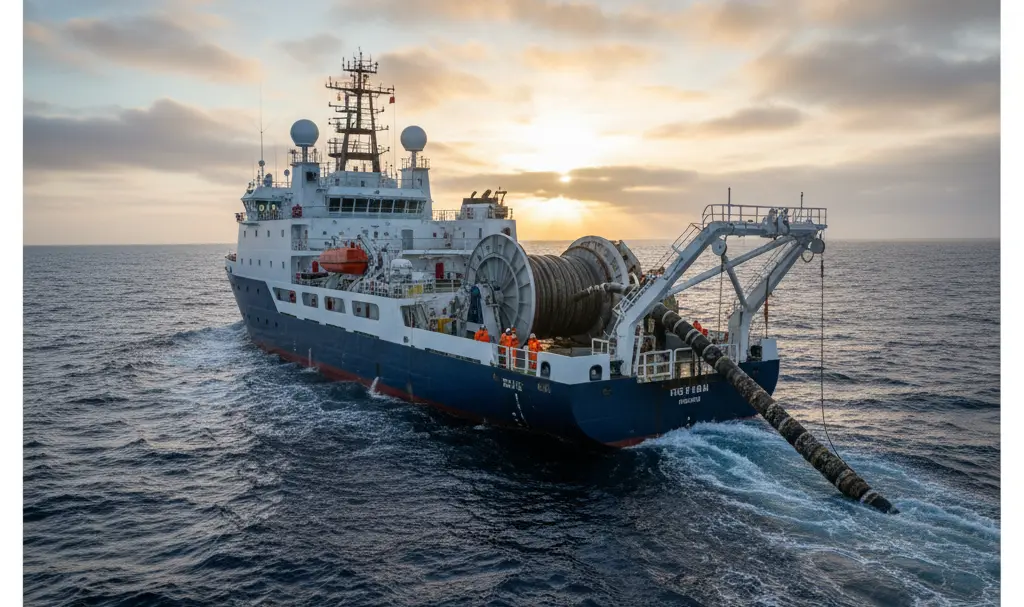
Decades after it ceased carrying data, TAT-8 is now being pulled from the ocean depths by specialized companies. This intricate operation is led by firms like Subsea Environmental Services, one of only a handful globally dedicated to recycling abandoned underwater cables. The retrieval is a testament to both modern marine engineering and the enduring legacy of the cable itself.
One notable engineering challenge for TAT-8 was its original design: an additional layer of steel armor was incorporated to protect the fiber optic strands from potential shark bites—a problem identified during early testing in the 1980s. While effective for protection, this robust design adds complexity to the modern retrieval process.
Retrieval Techniques: A Glimpse into Deep-Sea Operations
The method for retrieving these massive cables is surprisingly low-tech and demanding, reminiscent of salvaging broken telegraph cables in the 19th century:
- A specially designed hook is lowered on an extremely long line, reaching the ocean floor.
- The retrieval vessel slowly maneuvers over the cable’s known coordinates, attempting to snag it with the hook. This precise operation often takes place kilometers beneath the surface.
- Once the cable is successfully hooked, it is slowly winched aboard the ship.
- On deck, a highly specialized worker, known as a “coiler,” meticulously guides and stacks the heavy cable into the ship’s cargo hold. This manual, labor-intensive task ensures the cable fits efficiently into the limited space.
Coiling is an arduous job. An 8-hour shift is typically broken down into half-hour work and rest intervals due to the constant motion of the ship and the risk of seasickness. The expertise required for such tasks is so niche that, according to a WIRED report, some individuals with invaluable knowledge continue working well into their late 80s, underscoring the specialized nature and small community within the transatlantic cable industry.
Frequently Asked Questions (FAQ)
What was the significance of TAT-8?
TAT-8 was the first transatlantic fiber optic cable, launched in 1988. It revolutionized global communication by dramatically increasing data transfer speeds (280 Mbps) compared to previous copper cables, laying the foundation for the modern internet.
Why is TAT-8 being retrieved now?
The cable is being retrieved for recycling by specialized companies like Subsea Environmental Services. While decommissioned in 2002 due to technological advancements, its components can still be repurposed.
How challenging is the retrieval process?
The retrieval process is highly complex and labor-intensive, requiring specialized vessels and skilled personnel. It involves lowering hooks kilometers deep to snag the cable and manually coiling it into the ship’s hold, often reminiscent of 19th-century cable retrieval methods.
Source: WIRED. Opening photo: Gemini
About Post Author
