Contents
Samsung Galaxy S26 Ultra’s Privacy Display: A Brilliant Concept with Compromised Brightness and Image Quality
The Samsung Galaxy S26 Ultra was poised to showcase Samsung’s prowess in display technology. However, its innovative Privacy Display feature has unexpectedly become a focal point of controversy. Samsung has officially acknowledged a potential issue with the display’s brightness on the Galaxy S26 Ultra, directly linked to this new privacy-enhancing functionality. This trade-off between privacy and screen performance is a compromise many loyal Galaxy users didn’t anticipate.
The Innovative Privacy Display: Concept and Unexpected Side Effects
The Privacy Display on the Galaxy S26 Ultra is an advanced privacy layer, integrating both hardware and software. Unlike traditional, often bulky, physical screen protectors, this feature aims to restrict the visibility of screen content from wider viewing angles by operating at a pixel level. It achieves this using two distinct types of subpixels.
Under normal operating conditions, both subpixel types are active, contributing to a vibrant display. However, when Privacy Display is activated, the screen predominantly relies on narrower pixels. This design is intended to make it significantly harder for onlookers to view the screen from the sides, ensuring greater privacy for the user.
Samsung heavily emphasized Privacy Display as a key marketing narrative for the S26 Ultra, highlighting its uniqueness in the market and its superior convenience compared to applying physical privacy filters. A notable advantage is its flexibility: the Privacy Display can be toggled on and off with a simple switch and even applied selectively to specific areas of the screen, such as notification panels. This offers a level of adaptability that physical filters simply cannot match.
Has Screen Brightness and Image Quality Been Sacrificed?
Despite its innovative design, real-world usage has revealed concerns regarding the S26 Ultra’s screen brightness. Reports indicate that the smartphone struggles to achieve high peak brightness levels, even when the Privacy Display feature is deactivated. This issue is particularly noticeable at wider viewing angles, where the new screen appears to lose luminosity much faster than its predecessor, the Samsung Galaxy S25 Ultra.
Samsung has issued a statement acknowledging that “a certain difference” in brightness might be observed at maximum brightness when the phone is held at specific angles. However, the company asserts that the impact on daily usage should be negligible.
Beyond brightness, questions have also been raised about the display’s overall image quality. Users have reported:
- Jagged Text Edges: Text appears less smooth, with noticeable serrated edges compared to previous models.
- Uneven Colors: Some users have observed inconsistencies in color uniformity across the display.
One user, Evgeny Makarov, shared macro shots comparing the S25 Ultra and S26 Ultra displays without Privacy mode, stating, “Not good and my eyes get tired really quick with S26 Ultra. I prefer S25U display – much more clear and comfortable. Here are macro shots without Privacy mode. S26U at the bottom. S25U is on upper side.” This highlights a significant concern for visual clarity and comfort.
The “Privacy Display Gate”: Exaggeration or Legitimate Concern?
Is the “Privacy Display Gate” an overblown controversy? When viewed head-on under normal conditions, the difference in display quality between the S26 Ultra and its predecessors is often imperceptible to the naked eye. However, it is undeniable that the Galaxy S26 Ultra’s screen appears objectively darker at wider viewing angles, even with the Privacy Display feature turned off.

Samsung’s support documentation elaborates that in Privacy Display mode, the screen relies more heavily on “narrow pixels.” This can create the impression of a lower pixel per inch (PPI) count and reduced brightness, especially in very bright ambient lighting conditions. Nevertheless, Samsung maintains that indoor brightness remains comparable to the standard display mode, and the panel still surpasses the sharpness threshold at which the human eye can distinguish individual pixels. Therefore, the company encourages users to “utilize this feature with complete peace of mind.”
This situation presents a clear trade-off: is a brighter screen more important than enhanced privacy? While the S26 Ultra is objectively dimmer than the S25 Ultra, this inherent characteristic does offer a degree of assurance that onlookers will find it harder to snoop on your screen content. However, consumers have grown accustomed to Samsung’s flagship Galaxy series consistently delivering brighter displays with each new iteration. In the case of the Galaxy S26 Ultra, this represents a slight regression, leaving a lingering sense of disappointment for some.
It is plausible that Samsung will refine this technology in the second generation of Privacy Display, potentially in the Galaxy S27 Ultra, addressing the current brightness concerns and delivering a truly uncompromising experience.
Frequently Asked Questions (FAQ)
What is the Privacy Display feature on the Samsung Galaxy S26 Ultra?
The Privacy Display is an innovative hardware and software solution designed to limit the visibility of your screen content from people viewing it at an angle. It uses specialized subpixels and can be toggled on/off or applied to specific screen areas, offering a more flexible alternative to physical privacy screen protectors.
How does the Privacy Display affect the S26 Ultra’s screen brightness?
Even when the Privacy Display feature is turned off, the S26 Ultra’s screen has been reported to exhibit lower peak brightness and a more significant drop in luminosity at wider viewing angles compared to its predecessor, the S25 Ultra. Samsung acknowledges a “certain difference” but states it should have a negligible impact on daily use.
Are there concerns about image quality with the new display technology?
Yes, some users have reported issues beyond brightness, including text with jagged edges and uneven color reproduction on the Galaxy S26 Ultra’s display. This suggests that the specialized pixel structure for privacy might also subtly affect overall visual clarity.
Will Samsung address these display issues in future models?
It is anticipated that Samsung will continue to refine the Privacy Display technology. There is a possibility that the second generation of this feature, potentially in the Galaxy S27 Ultra, will improve upon the current implementation, aiming to mitigate the brightness and image quality concerns while retaining the privacy benefits.
Source: Future, Tom’s Guide, TechAdvisor, Android Headlines
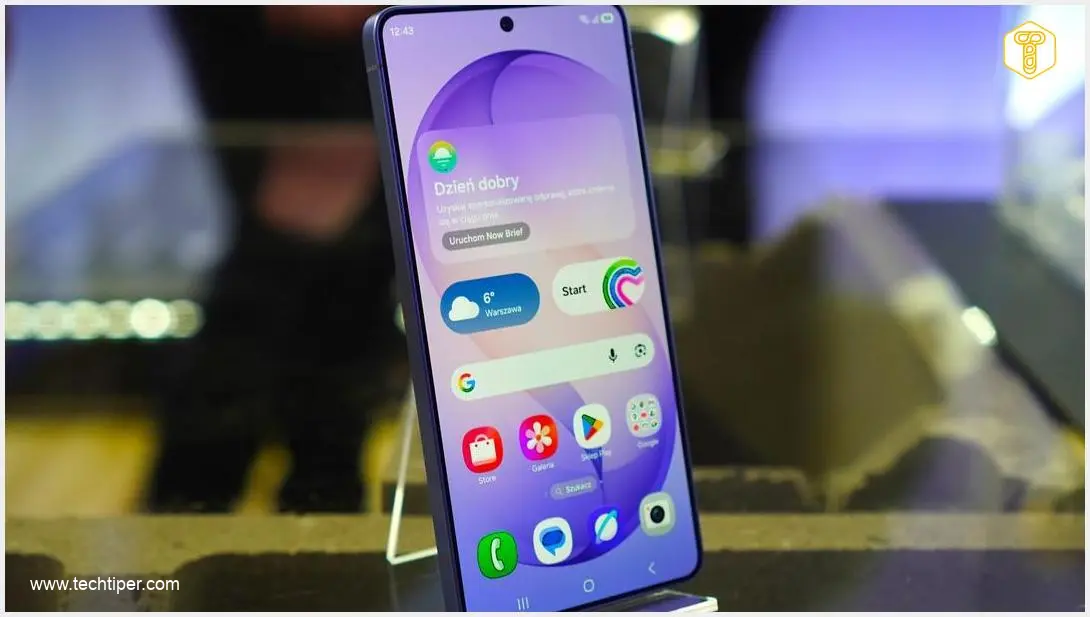
Opening photo: Krzysztof Rojek
About Post Author