Contents
Unbelievable Survival: iPhone 17 Pro Falls 1,100 Meters from Plane, Found Fully Functional
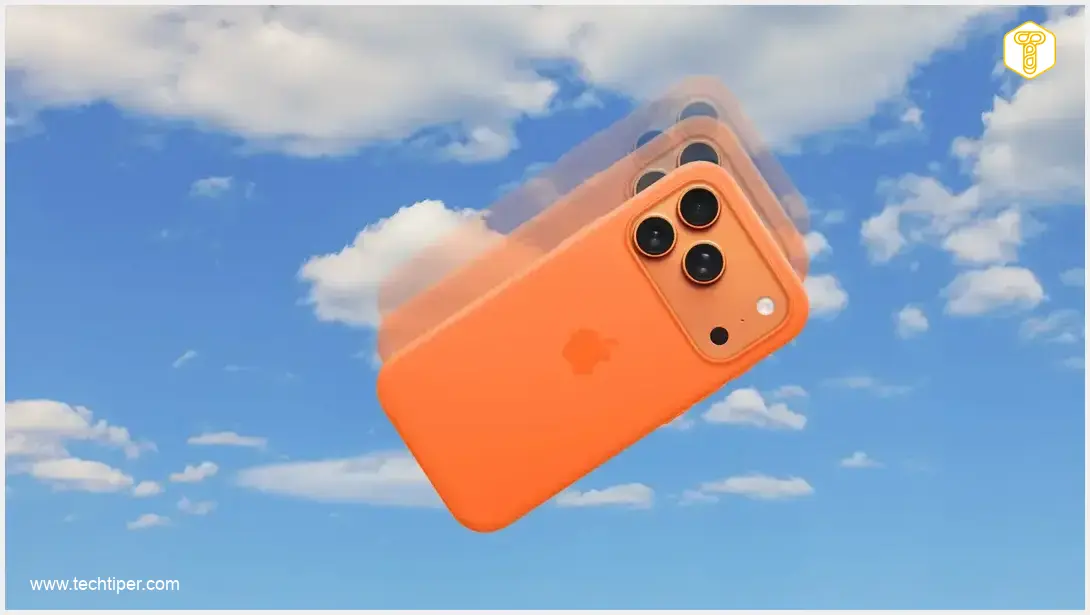
In an astonishing turn of events, an iPhone 17 Pro recently plunged from a small aircraft flying high above the Canadian province of Saskatchewan. Despite plummeting approximately 1,100 meters (about 3,600 feet), the device was not only recovered but was also found to be in working order with no significant signs of damage.
The Incredible Incident Over Saskatchewan
The remarkable incident unfolded during a flight in a Cessna aircraft. Artist Heather Cline was capturing photographs of the landscape, while her husband, David Stanchuk, piloted the plane. As Cline leaned towards an open window to get a better shot, a sudden gust of wind unexpectedly pulled her iPhone from her grasp. The smartphone began its precipitous descent from an altitude of roughly 1.1 kilometers.
Using Technology to Track the Fall
Upon landing, the couple immediately utilized Apple’s ‘Find My’ feature to pinpoint the phone’s last known location. To their amazement, the signal led them to a canola field situated near their flight path. Heather Cline had braced herself to find a shattered device, yet to her astonishment, the iPhone appeared almost pristine, looking nearly identical to how it was before its dramatic fall. It even displayed the recorded flight route on its screen.
Why Did the iPhone Survive Such a Plunge?
While the entire situation sounds highly improbable, several factors likely contributed to the iPhone’s incredible survival. Understanding these elements offers insight into the physics of falling objects and the resilience of modern technology.
The Science of the Fall: Terminal Velocity and Air Resistance
One key reason for the phone’s survival is the concept of terminal velocity. Any falling object, including a smartphone, eventually reaches a maximum speed where the force of air resistance equals the force of gravity, preventing further acceleration. For an object like a smartphone, its relatively flat shape increases air resistance, meaning it would reach terminal velocity fairly quickly and at a lower speed than a denser, more aerodynamic object. This reduced impact speed is crucial for survival.
The Crucial Role of the Landing Spot
Perhaps the most significant factor in this iPhone’s miraculous survival was its landing spot. The dense foliage of the canola field combined with soft soil provided a natural cushion. These elements would have effectively decelerated the device and absorbed a substantial portion of the impact energy. Had the phone landed on a hard, unforgiving surface such as asphalt or concrete, the outcome would almost certainly have been catastrophic, regardless of terminal velocity. This highlights how environmental factors play a massive role in the outcome of such drops.
Unanswered Questions About the Impact
Despite the successful recovery, certain details remain unknown. It is unclear at what specific angle the iPhone struck the ground, or whether it may have ricocheted off plants before its final resting place. Without a precise analysis of these variables, it’s challenging to isolate a single, definitive factor that guaranteed its survival. However, the combination of air resistance and a forgiving landing surface were undoubtedly critical.
Not an Isolated Incident: Other Amazing Smartphone Survival Stories
The Saskatchewan incident, while extraordinary, is not entirely unique. Over recent years, numerous reports have emerged detailing smartphones that have withstood extreme conditions, including prolonged submersion in water or falls from significant heights.
A notable example is the iPhone recovered after the Alaska Airlines incident in early 2024, which plummeted from approximately 4,900 meters (16,000 feet) and was found intact and operational. This particular device was reportedly protected by a durable case, underscoring how accessories can enhance resilience.

For those interested in how Apple’s devices stack up, explore comparisons like iPhone 13 Pro Max vs. Samsung Galaxy S21 Ultra or earlier models to understand evolving durability features.
Factors Determining Survival
Such incredible stories do not guarantee that every smartphone will withstand a similar fall. The likelihood of survival is a complex interplay of several factors, including:
- Manner of Fall: How the phone tumbles and its orientation during descent.
- Type of Ground: The material and texture of the surface it impacts.
- Point of Impact: Which part of the phone (screen, back, edge) hits first.
- Presence of Protection: Whether a case or screen protector was used.
- Pure Chance: Sometimes, sheer luck plays a significant role.
For Apple, the Saskatchewan story serves as an almost ready-made advertisement for the iPhone’s robustness. It’s hard to imagine a more compelling real-world test of durability than a device surviving a freefall from an airplane, culminating in a triumphant recovery.
Frequently Asked Questions (FAQ)
The ‘Find My’ feature uses a combination of GPS, Wi-Fi, and cellular data to pinpoint the location of your iPhone. Even if the device is offline, it can leverage the Find My network, where other Apple devices anonymously and securely relay its location. This creates a global, encrypted network that can help track lost items, as demonstrated by the Saskatchewan incident.
Terminal velocity is the maximum speed an object can reach during freefall. It occurs when the force of air resistance pushing up on the object equals the force of gravity pulling it down. For a smartphone, its relatively light weight and flat shape mean it will reach terminal velocity at a lower speed compared to a denser object. This reduced speed at impact significantly increases its chances of survival, as the force of impact is directly related to the speed at which it hits the ground.
While stories of smartphones surviving extreme falls are captivating, they represent exceptional circumstances rather than the norm. The survival of a phone from a significant height depends on numerous unpredictable factors, including the landing surface, impact angle, presence of protective cases, and pure chance. It is not advisable to expect your phone to withstand such an event, and protective measures like sturdy cases and screen protectors are always recommended for everyday use.
Source: Android Authority. Opening photo: Wikimedia Commons / Magnific, Apple / press materials, modified by author
About Post Author