

Contents
A Gamer Baked Their Dead Graphics Card in the Oven to Fix It
A broken graphics card can be a massive disappointment, especially when PC components are costly. However, hardware failure doesn’t always mean an immediate trip to the repair shop or the recycling bin. Sometimes, the most unconventional methods—like heating the GPU in a kitchen oven—can actually bring it back to life. This is exactly what one Reddit user recently experienced.
The Desperate Attempt: Baking a Gigabyte GTX 1080
While it sounds like an urban legend, this story is entirely true. A Reddit user going by the handle WilczeQSS shared their unusual hardware rescue mission on the platform.
The gamer was dealing with a severe issue on their 8-year-old Gigabyte GTX 1080 graphics card. The once-reliable GPU started displaying screen artifacts and eventually outputting only a dark screen. Determined to save their hardware, the user tried several conventional troubleshooting steps:
- Replacing the thermal paste to improve heat transfer.
- Installing new thermal pads on the memory modules.
- Thoroughly cleaning the hardware to remove accumulated dust.
- Updating and completely reinstalling the graphics drivers.
Unfortunately, none of these standard fixes worked. For those facing similar permanent hardware failures who prefer a modern, portable replacement, checking out the latest Nvidia RTX laptops for work, study, and play might be a safer bet than kitchen experiments.
The Oven Fix Process: How They Did It
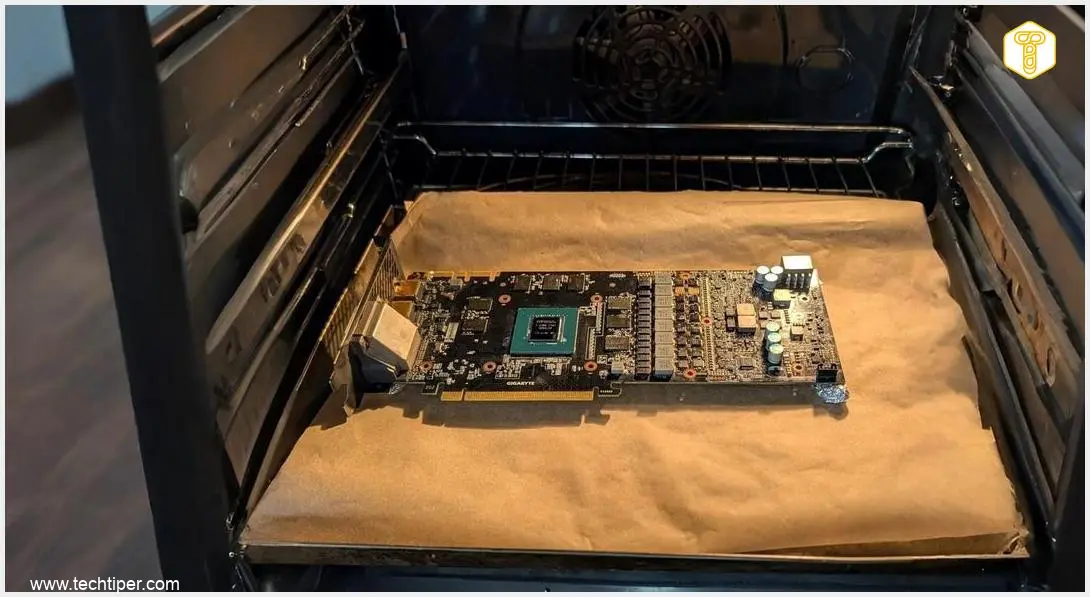
With all traditional methods exhausted, WilczeQSS decided to take a radical approach: putting the dead graphics card into a preheated oven. To their absolute shock, the GPU started working perfectly again, almost as if the hardware had never failed.
The user couldn’t hide their amazement, asking, “How did this even work?!” They even expressed optimism about finally being able to play the upcoming Forza Horizon 6 on launch day. Following advice from the community, the user made sure to thoroughly clean the oven after the “baking” process.
To help others understand the procedure, the gamer outlined their exact steps to achieve this “painless” fix without causing further damage:
- Disassemble the graphics card completely.
- Remove all plastic components, fans, and the cooling shroud.
- Prop the naked circuit board up using balls of aluminum foil.
- Preheat the oven to roughly 210-220°C (about 410-430°F).
- Bake the card for approximately 10 minutes.
- Let it cool down completely without moving it, and then “pray it works.”
The user noted that when the card eventually dies for good, they don’t plan to throw it away. “I’ll frame this graphics card. Too many memories with it,” WilczeQSS shared in the comments.
The Science Behind the Trick: Reflowing Solder
While many might assume this process is just reckless internet nonsense, it is a legitimate—albeit risky—technique known for years. Tech communities and websites like Overclockers have been discussing it since as early as 2009.

The method is commonly referred to as “reflowing.” Over time, the constant heating and cooling cycles of a heavy-duty GPU can cause microscopic cracks in the solder joints connecting the graphics chip to the printed circuit board (PCB). By heating the board to the melting point of the solder (around 200°C or 390°F), these micro-fractures can melt and fuse back together, restoring the electrical connections.
This trick is primarily used to fix black screens, visual artifacts, and severe overheating caused by failing connections. It is strictly recommended only for hardware that is entirely out of warranty and considered completely dead.
Risks and Warnings
Does the oven method work? Yes, and it has been confirmed in countless online forums over the past decade. However, it comes with significant risks:
- Toxic Fumes: Heating electronics can release hazardous chemicals and off-gas plastics. Thorough ventilation and subsequent oven cleaning are mandatory.
- Component Melting: Leaving any plastic or sensitive capacitors on the board can result in melted hardware and a ruined oven.
- Temporary Fix: Reflowing in a kitchen oven is rarely a permanent solution. Cards often fail again after a few weeks or months.
If you want to see how modern, cutting-edge cards handle extreme heat and performance under safer conditions, you might enjoy this review of the GeForce RTX 3090 Ti video card.
While the oven trick is a fascinating piece of tech lore, we highly advise against trying it unless you fully understand the risks and have nothing left to lose.
Frequently Asked Questions (FAQ)
Is baking a graphics card in the oven a permanent fix?
No, the oven method is usually a temporary fix. While it can melt the solder to repair micro-fractures and get the card running again, the underlying thermal stress issues remain. Many users report that the card will fail again within a few weeks or months, though some have gotten a year or more of extra life.
What temperature is required to reflow a GPU in a household oven?
Most users recommend heating the oven to between 200°C and 220°C (around 390°F to 430°F) for about 10 minutes. This is roughly the temperature required to melt the solder joints without immediately destroying the printed circuit board. However, temperatures fluctuate wildly in standard kitchen ovens, making this process highly risky.
Is it safe to bake electronics in the same oven used for food?
It poses health risks. Heating electronic components and solder (which sometimes contains lead or other hazardous materials) can release toxic fumes and leave harmful residue. If you attempt this, you must ensure intense ventilation, avoid inhaling the fumes, and thoroughly clean your oven afterward before cooking any food.
Source: Own elaboration. Opening photo: WilczeQSS / Reddit / screenshot, own montage
About Post Author
