
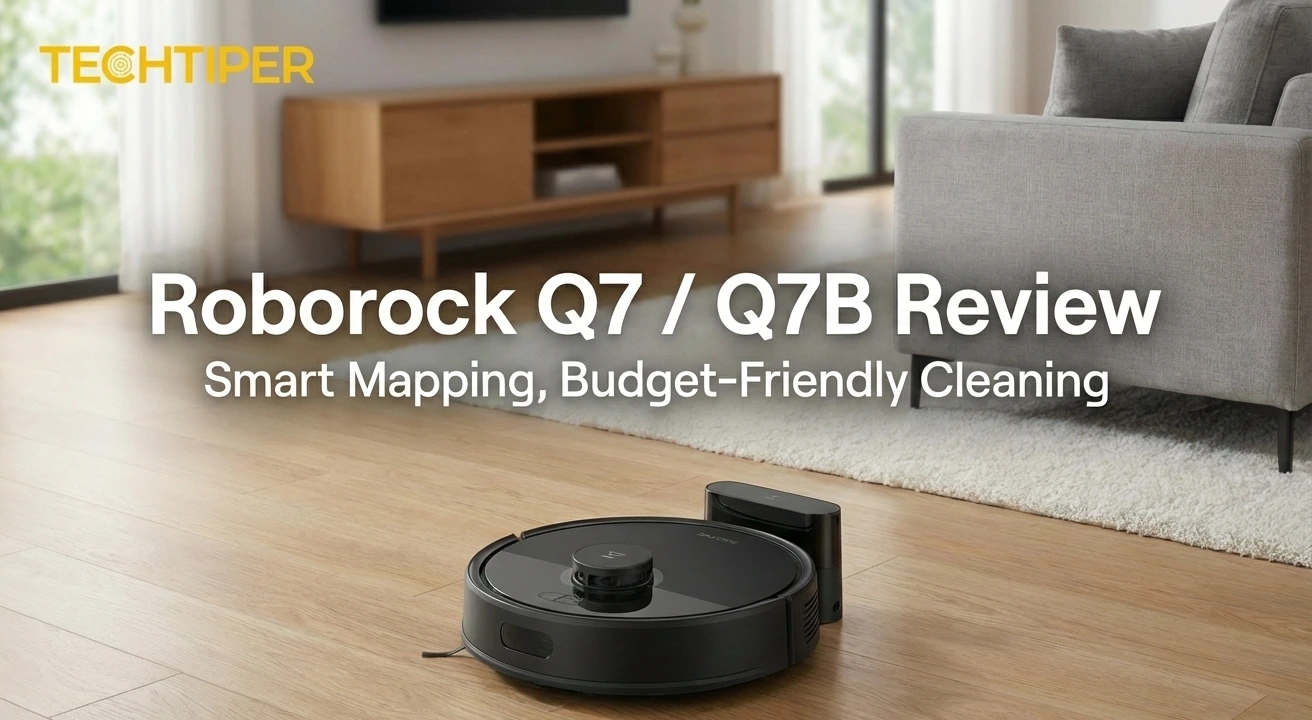
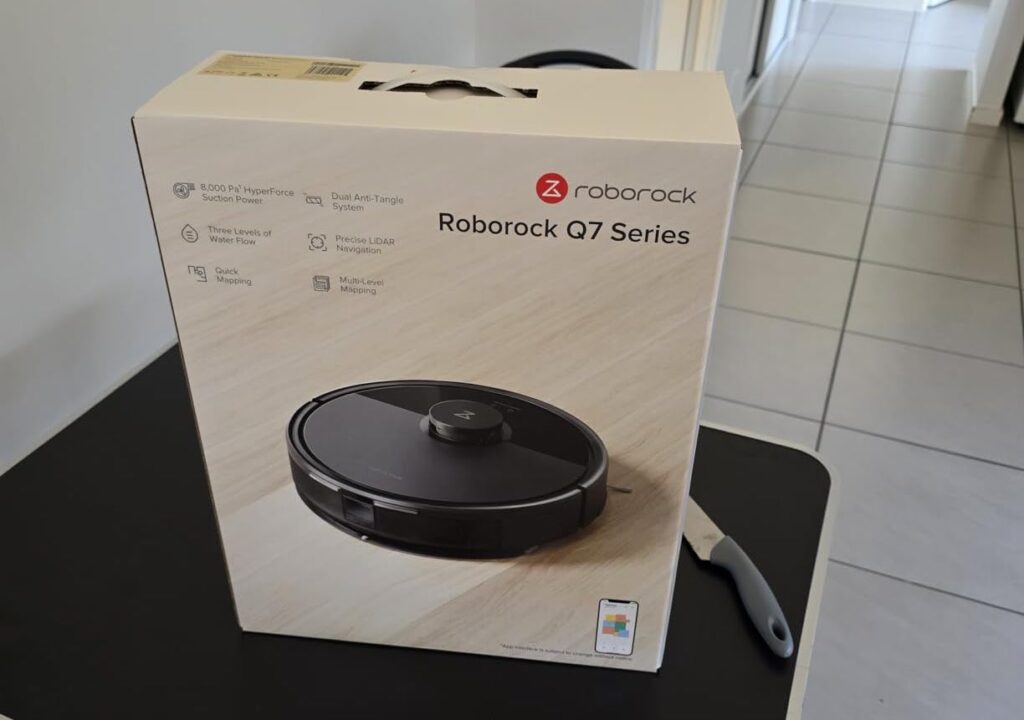
When looking at the Roborock lineup, it’s easy to get confused. You have the flagship S-series and the mid-range Q-series. We have previously reviewed the upgraded Roborock Q7 Max and the powerhouse Roborock S7 MaxV Ultra, but what about the entry-level Roborock Q7 (also known as the Q7B in some regions like Australia)?
After analyzing long-term usage reports from owners—ranging from households with a single dog to a home with 12 foster cats—we have a clear picture of where this robot shines and where it stumbles.
Is the standard Q7 a steal at ~$250-$400, or should you save up for the smarter models? Let’s dive in.
Contents
The Verdict: A “Bang for Your Buck” Specialist
If we had to summarize the Roborock Q7 in one sentence: It is a vacuuming powerhouse that lacks the “brain” of its more expensive siblings.
For users coming from older random-navigation bots (like older Roombas or Arlec models), the Q7 is a revelation. It is quieter, maps significantly better, and the self-emptying base is a game-changer. However, without the camera-based AI found in the Roborock S7 series, it requires a tidy floor to function properly.

Pros & Cons
Liked Most:
- Value for Money: Often found on sale (around $250-$400), making it significantly cheaper than the $700+ flagship models.
- Pet Hair Performance: Handles daily shedding from dogs and cats effectively.
- Lidar Navigation: Creates accurate maps and cleaning zones (unlike camera-less budget bots).
- Self-Emptying Option: The dock works reliably, making it a “set and forget” device for vacuuming.
Disliked Most:
- Poor Obstacle Avoidance: It eats socks, cables, and charges blindly into clutter.
- Basic Mopping: It’s essentially a “wet wipe” drag; do not expect it to scrub stains.
- Height Issues: The Lidar turret prevents it from going under low sofas/cabinets.
- Connectivity: Wi-Fi setup can be finicky for some users.
Vacuuming Performance: The Daily Grunt Work
The consensus among Q7 owners is that this machine is vacuum-focused.
Handling Pet Hair
One user with a dog and 12 foster cats reported that the Q7 is a “necessity” for daily maintenance. It picks up fur, litter, and debris reliably. However, it is not magic. Users with long human hair noted that it does wrap around the rollers.
- Maintenance Tip: Even though it self-empties, you must check the main brush regularly. Hair accumulates at the brush roller ends.
Suction Power
Depending on your region, specs may vary (the Q7B version in Australia/Asia claims different Pascal ratings than US models), but real-world testing shows it cleans carpets and hard floors adequately. One user noted it was “quieter than my Roomba,” allowing them to work from home without distraction.
Important Note: A user noted that the Q7 uses a single side brush. While this prevents scattering debris, some users feel it doesn’t clean corners as aggressively as dual-brush cheap models.
Navigation: Smart Mapping, Blind Driving
This is where the Q7 differs most from the high-end S7 MaxV.
The Good: The Q7 uses Lidar (Laser navigation). It maps your house perfectly, cleans in neat rows, and allows you to set “No-Go Zones” in the app. The Bad: It does not have a front-facing camera for object recognition.
The “Sock Eater” Problem
Several users reported that the Q7 will eat anything left on the floor.
- “Not uncommon that I get a message at work that it has eaten a sock or my charger.”
- “It pushes cat food bowls around.”
If you buy the Q7, you must be disciplined. You cannot leave toys, cables, or clothes on the floor. If you have a cluttered home and don’t want to tidy up before every run, you need a robot with “Obstacle Avoidance” AI, like the S7 MaxV.
The Lidar Turret Limitation
One user pointed out a specific design flaw common to Lidar bots: The sensor turret adds height. Unlike flatter, low-tech vacuums, the Q7 might not fit under low-profile couches or cabinets.
Mopping: A Nice Bonus, Not a Feature
Do not buy the standard Q7 if mopping is your priority. The Q7 uses a gravity-fed or basic electronic pump system with a static cloth. It drags a wet cloth across the floor.
- User feedback: “Mopping is ancient like a Swiffer.”
- User feedback: “Dweilen stelt niks voor” (Mopping represents nothing/is negligible).
If you need a robot that actually scrubs away dried stains, check out our Roborock S7 Review, which features the VibraRise sonic scrubbing technology.
Reliability and The “Q7B” Variant
We noticed specific complaints regarding the Q7B model (often sold in varying regions). While most users praise durability (“gaat al een aantal jaar steady mee” – lasts steadily for years), a minority of users reported firmware issues where the bumper gets stuck, or the robot becomes confused and spins in circles.
- Buying Tip: Ensure you are on the latest firmware. If your robot spins or gets lost frequently, reset the map. If the issue persists, it may be a hardware fault specific to the “B” variant’s sensors.
Conclusion: Should You Buy It?
The Roborock Q7 is the perfect example of “You get what you pay for.”
Buy the Roborock Q7 if:
- You want the Roborock mapping ecosystem at a budget price ($250-$400).
- You have pets and need daily hair removal.
- You are tidy and don’t leave socks/cables on the floor.
- You want a self-emptying dock without spending $1,000.
Skip the Q7 (and look at the Q7 Max or S7) if:
- You need active obstacle avoidance (you have messy kids or pets).
- You have lots of carpet (Q7 Max has higher suction).
- You want a robot that can scrub the floor, not just wipe it.
Final Rating: 4/5 Stars (For Value) A solid entry-level Lidar robot that requires a bit of babysitting but saves hours of sweeping.
About Post Author
