

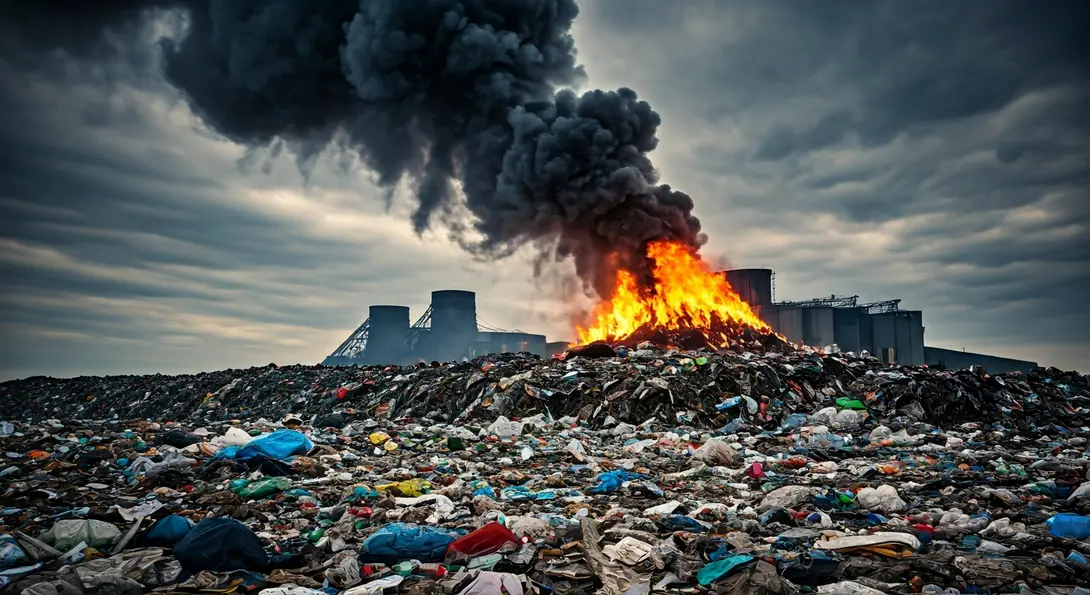
For years, societies worldwide have been encouraged to adopt environmentally conscious practices like waste segregation and participating in cleanup initiatives. While these efforts are becoming more widespread, scientists are delivering a sobering message: we are largely living in a recycling illusion. Despite our best intentions, a significant portion of global waste, particularly plastic, ends up being burned rather than genuinely recycled.

Contents

The Global Recycling Illusion: Why Our Waste Isn’t Really Recycled
The stark reality of global waste management challenges our perception of environmental responsibility. While many believe their sorted recyclables are given a new life, the journey of discarded materials often takes a darker, less sustainable path.
How Global Recycling Truly Works (or Fails to Work)
The scale of international waste trade is staggering. In 2024 alone, reports indicate that 9.34 million metric tons of plastic waste were imported by various countries. This massive movement of waste dramatically shifted after 2018 when China, previously the world’s largest importer of recyclables, halted most foreign waste shipments.
Following China’s ban, the burden of processing global waste largely fell upon Southeast Asian nations, including Indonesia. This influx led to severe environmental and social consequences in these countries. Recognizing the unsustainable practices, Indonesia banned the import of plastic waste, a measure that came into full effect in 2025. Malaysia subsequently followed suit, restricting transactions to only those countries that adhere to the Basel Convention.
The Basel Convention, an international treaty adopted in 1989 and ratified by many countries globally, aims to control the transboundary movements of hazardous wastes and their disposal. Its purpose is to protect human health and the environment against the adverse effects of hazardous wastes.
Recent research by Ellen M. Considine and other scientists from the University of Colorado sheds further light on the fate of plastic waste shipped overseas. Their findings paint a grim picture: an estimated 40% to 65% of global plastic waste sent to lower-income countries is ultimately burned. This incineration occurs both actively, in industrial facilities, and passively, as high temperatures ignite waste in open landfills. This reality stands in stark contrast to the intended purpose of recycling, which is to transform these materials into reusable plastic. The environmental implications are profound, releasing pollutants into the atmosphere and contributing to climate change.
To truly address plastic waste, it’s crucial to understand what plastics are safe for reuse and which can pose risks. For instance, knowing what to avoid when reusing plastic containers can protect your health by preventing microplastic contamination in food.
Scientists’ Proposals to Combat Waste Overproduction
The core issue, according to experts, is that many higher-income nations lack the domestic capacity to effectively recycle all their generated waste. For example, estimates from 2021 suggest that the United States can only process approximately 5-6% of its used plastic for genuine reuse. Even with significant modernization, this figure might only marginally increase to 7-9%.
Given this limited capacity, experts from Colorado and other institutions advocate for a two-pronged approach:
- Increase Recycling Effectiveness: While current systems are insufficient, continuous improvement in recycling technologies and infrastructure is essential.
- Reduce Plastic Consumption: The most impactful solution is to drastically reduce the production and consumption of new plastics.
We’ve already seen initial steps towards this goal, such as the increasing use of paper straws in fast-food establishments and manufacturers opting not to include chargers with new smartphones. These are small but significant moves towards reducing unnecessary plastic and electronic waste.
Further proposals from scientists include:
- Higher Taxes on Difficult-to-Recycle Materials: Implementing economic disincentives for products made from plastics or materials that are costly and complex to recycle.
- Standardization of Packaging: Designing packaging in a way that facilitates high-quality waste streams, making materials easier to sort and process for reuse. This approach ensures that when items are collected for recycling, they are genuinely suitable for the process, thereby reducing the likelihood of them being rejected and ultimately burned.
As discussions around environmental responsibility continue, policy changes, such as the EU’s mandate for removable batteries, highlight a broader move towards product longevity and ease of recycling, even in the tech sector.
Frequently Asked Questions (FAQ)
A significant portion of global plastic waste, estimated between 40% and 65%, is burned because many higher-income countries lack the infrastructure to process all their waste domestically. This leads them to export plastic waste to lower-income countries. Unfortunately, these recipient nations often also lack adequate recycling facilities, resulting in the waste being actively incinerated or passively burned in open landfills, instead of being genuinely reprocessed into new materials.
Scientists and experts propose several strategies to combat plastic waste. These include:
- Reducing Plastic Consumption: Prioritizing the decreased production and use of new plastics.
- Improving Recycling Infrastructure: Investing in advanced recycling technologies and facilities in all countries.
- Implementing Economic Incentives/Disincentives: Introducing higher taxes on products made from difficult-to-recycle materials.
- Standardizing Packaging: Designing products and packaging from the outset to be easily recyclable and to create high-quality waste streams.
- Policy Changes: Enforcing stricter regulations on waste export and promoting circular economy principles.
Source: The Conversation / Phys.org
Opening photo: Gemini
About Post Author
